Za’atar Roasted Salmon with Lemon
Introduction
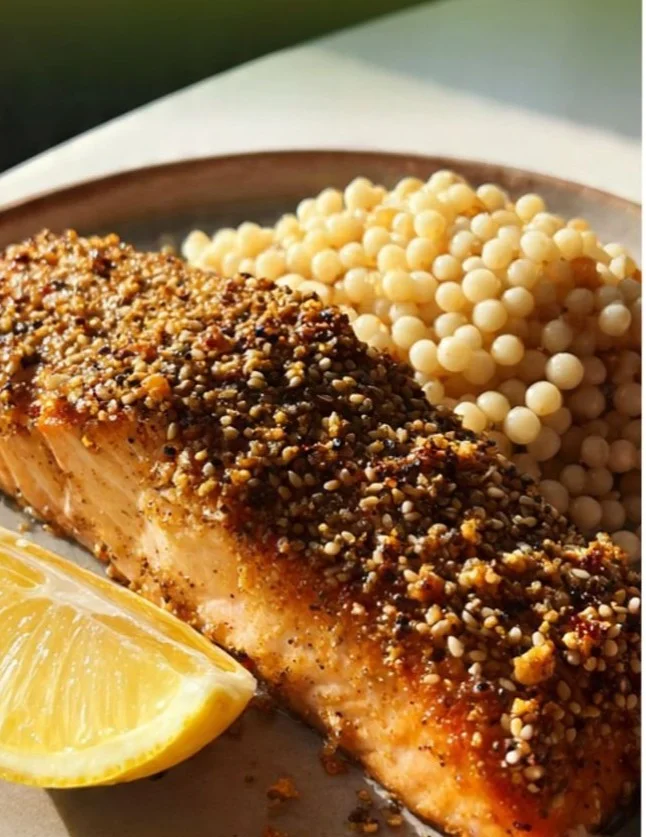
Imagine the warm, herby perfume of za’atar blooming as it meets hot, flaky salmon—bright lemon oil sizzling on the skin, the first forkful giving way to buttery flesh that melts on your tongue. This Za’atar Roasted Salmon with Lemon is an aromatic, comforting dish that balances the nutty, thyme-like notes of za’atar with the citrus lift of lemon and the rich, silky texture of well-cooked salmon. It’s the kind of meal that feels simultaneously homey and a little exotic: perfect for an easy weeknight dinner, a relaxed weekend lunch, or a crowd-pleasing centerpiece at a small dinner party.
If you like pairing salmon with bright sauces, try a complementary sauce such as the lemon butter preparation in the linked recipe for extra richness: lemon butter sauce for baked salmon.
At a Glance
- Prep Time: 10 minutes
- Cook Time: 12–15 minutes
- Total Time: 22–25 minutes
- Servings: 4 (one fillet per person)
- Difficulty Level: Easy — great for cooks of all skill levels
Nutrition Highlights
The nutritional estimates below are per serving (one salmon fillet, approximately 6 oz / 170 g cooked, with a quarter of the za’atar and olive oil). Values are approximate and calculated using government food composition data (USDA FoodData Central) for salmon and olive oil; individual results will vary by fish size, type, and exact ingredient brands.
- Calories: ~425 kcal
- Protein: ~38 g
- Total Fat: ~29 g
- Saturated Fat: ~3–4 g
- Monounsaturated & Polyunsaturated fats (including omega-3s): the salmon provides significant omega-3 fatty acids—typically around 1.5–2 g EPA + DHA per 6 oz serving (varies by species).
- Carbohydrates: ~2 g (mostly from the za’atar blend)
- Fiber: ~1 g
- Sodium: variable (add salt to taste; if limiting sodium, omit or reduce added salt)
Why You’ll Love It
- Flavor & Aroma: Za’atar adds an irresistible Middle Eastern herbal-nutty note that crisps and toasts slightly during roasting, releasing fragrant oils that pair beautifully with lemon.
- Health Benefits: Salmon is a lean, nutrient-dense protein high in high-quality protein and heart-healthy omega-3 fats—an excellent choice for a balanced diet (see guidelines from USDA and health organizations recommending regular fish intake).
- Speed & Ease: From start to finish in about 25 minutes, this is a speedy, impressive dinner when you want delicious results without fuss.
- Social & Seasonal: Bright enough for spring and summer gatherings, cozy enough for intimate autumn dinners—this recipe fits many occasions.
Cooking Directions
Ingredients:
- 4 salmon fillets (about 6 oz / 170 g each)
- 2 tablespoons za’atar spice mix
- 2 tablespoons olive oil
- 1 lemon, thinly sliced
- Salt and pepper, to taste
- Fresh parsley, chopped, for garnish (optional)
Optional ingredients and substitutions:
- Use 4 skin-on fillets for crisper texture; skinless works too.
- Substitute za’atar with 1 tablespoon sumac + 1 tablespoon toasted sesame + 1 tablespoon dried thyme if you don’t have premade za’atar.
- For lower fat, reduce olive oil to 1 tablespoon and brush very lightly instead.
- For a spicy kick, add a pinch of Aleppo pepper or smoked paprika.
Method:
- Preheat your oven to 400°F (200°C).
- Line a baking sheet with parchment paper or lightly oil a rimmed baking pan.
- Pat the salmon fillets dry and place them skin-side down (if applicable) on the baking sheet.
- Drizzle the olive oil evenly over the salmon, then sprinkle the za’atar spice mix across the fillets so they are coated.
- Season lightly with salt and a few grinds of black pepper—remember za’atar and sesame can add nuttiness, so adjust salt to taste.
- Arrange lemon slices directly on top of each fillet.
- Roast in the preheated oven for about 12–15 minutes, or until the salmon flakes easily with a fork and reaches an internal temperature of 125–130°F (52–55°C) for medium; cook longer if you prefer well done.
- Remove from the oven, garnish with chopped parsley if desired, and serve immediately.
Practical tips:
- Avoid overcooking: salmon continues to cook after removal from the oven; check for flakiness early.
- For crispier tops, broil for the last 1–2 minutes while watching carefully.
- If you’d like an alternate plating idea that pairs greens and grains with roasted salmon, see this herb-roasted salmon bowl with quinoa for inspiration.
Best Pairings
- Simple sides: roasted baby potatoes, steamed green beans, or a herby cucumber-tomato salad.
- Grain bowls: serve over quinoa or couscous with arugula and avocado for a complete meal.
- Sauces & finishes: a drizzle of extra virgin olive oil and fresh lemon juice, or a light yogurt-cucumber sauce, complements the za’atar.
- Drinks: a crisp white wine like Sauvignon Blanc, a light-bodied rosé, or sparkling water with lemon.
- Presentation tip: place the lemon slices slightly overlapping and finish with a scatter of toasted sesame seeds or chopped pistachio for texture and color.
Storing Leftovers
- Room temperature: Do not leave cooked salmon at room temperature for more than 2 hours (1 hour if ambient temperature is above 90°F / 32°C).
- Refrigeration: Store in an airtight container in the refrigerator for 3–4 days (FDA recommendation for cooked fish).
- Freezer: Wrap tightly or place in a freezer-safe container; frozen cooked salmon is best used within 2–3 months for quality. Thaw overnight in the refrigerator before reheating gently.
Chef’s Advice
- Best fish choices: Wild-caught Atlantic salmon (where available) or sockeye have great flavor; farmed Atlantic is milder and widely available—both work well.
- Texture cues: Take salmon out when it still has a slightly translucent center—carryover heat will finish it. Overcooked salmon becomes dry and chalky.
- Spice balance: Za’atar varies by brand; taste a little before seasoning. If your blend is sesame-heavy, you may want slightly less oil.
- Even cooking: Choose fillets of similar thickness so they finish at the same time. If one is much thicker, start it earlier or fold a sheet of foil loosely over the thinner pieces.
Creative Twists
- Citrus-Honey Za’atar Glaze: Mix 1 tablespoon honey with the olive oil before coating the fillets, and add extra lemon zest for a sweet-tangy finish.
- Vegan “Za’atar Roasted” Cauliflower Steaks: Replace salmon with thick-cut cauliflower steaks brushed with olive oil and za’atar, then roast 20–25 minutes until tender—great as a plant-based option.
- Middle Eastern Platter: Serve the salmon flaked over warm pita with hummus, tabbouleh, pickled red onion, and a drizzle of tahini-lemon sauce.
- Spicy Harissa Twist: Stir 1 teaspoon harissa into the olive oil before spreading for a smoky, spicy edge.
Frequently Asked Questions
Q: Can I use frozen salmon?
A: Yes—thaw overnight in the refrigerator and pat dry before seasoning and roasting.
Q: My salmon is too dry—what went wrong?
A: Most likely it was overcooked. Roast until just flaky and consider removing it at 125–130°F (52–55°C), allowing carryover heat to finish.
Q: Is za’atar gluten-free?
A: Pure za’atar (thyme, oregano, sumac, sesame) is naturally gluten-free, but some commercial blends may be processed in facilities that handle gluten—check the label if you need to avoid gluten.
Q: Can I prepare this ahead?
A: You can season the fillets and keep them covered in the refrigerator for a few hours before roasting, but roast just before serving for best texture.
Q: How can I make this lower in calories?
A: Reduce olive oil to 1 tablespoon or omit it; serve with a large salad instead of a starchy side.
Conclusion
Za’atar Roasted Salmon with Lemon is a quick, aromatic, and healthful recipe that delivers restaurant-worthy flavor with minimal effort—perfect for busy weeknights or relaxed get-togethers. If you want to explore other za’atar-and-salmon interpretations, check out this flavorful take inspired by The Toasty Kitchen: The Toasty Kitchen’s za’atar salmon. For a variation rooted in Istanbul flavors and baking technique, see this recipe offering another za’atar baked salmon perspective: Istanbul-inspired za’atar baked salmon.
If you make this, I’d love to hear how it turned out—share your photos and tweaks in the comments or on social media and join our growing community of home cooks.
Print
Za’atar Roasted Salmon with Lemon
- Total Time: 25 minutes
- Yield: 4 servings 1x
- Diet: Pescatarian
Description
Aromatic and comforting dish featuring flaky salmon seasoned with za’atar and lemon, perfect for an easy weeknight dinner or a crowd-pleasing centerpiece.
Ingredients
- 4 salmon fillets (about 6 oz / 170 g each)
- 2 tablespoons za’atar spice mix
- 2 tablespoons olive oil
- 1 lemon, thinly sliced
- Salt and pepper, to taste
- Fresh parsley, chopped, for garnish (optional)
Instructions
- Preheat your oven to 400°F (200°C).
- Line a baking sheet with parchment paper or lightly oil a rimmed baking pan.
- Pat the salmon fillets dry and place them skin-side down on the baking sheet.
- Drizzle the olive oil evenly over the salmon, then sprinkle the za’atar spice mix across the fillets.
- Season lightly with salt and black pepper.
- Arrange lemon slices on top of each fillet.
- Roast for 12–15 minutes, or until the salmon flakes easily with a fork.
- Remove from oven, garnish with parsley if desired, and serve immediately.
Notes
Avoid overcooking by checking for flakiness early; salmon continues to cook after being removed from the oven.
- Prep Time: 10 minutes
- Cook Time: 15 minutes
- Category: Main Course
- Method: Baking
- Cuisine: Middle Eastern
Nutrition
- Serving Size: 1 fillet
- Calories: 425
- Sugar: 1g
- Sodium: 350mg
- Fat: 29g
- Saturated Fat: 4g
- Unsaturated Fat: 15g
- Trans Fat: 0g
- Carbohydrates: 2g
- Fiber: 1g
- Protein: 38g
- Cholesterol: 60mg