Korean Glass Noodle Stir Fry (Japchae)
Introduction
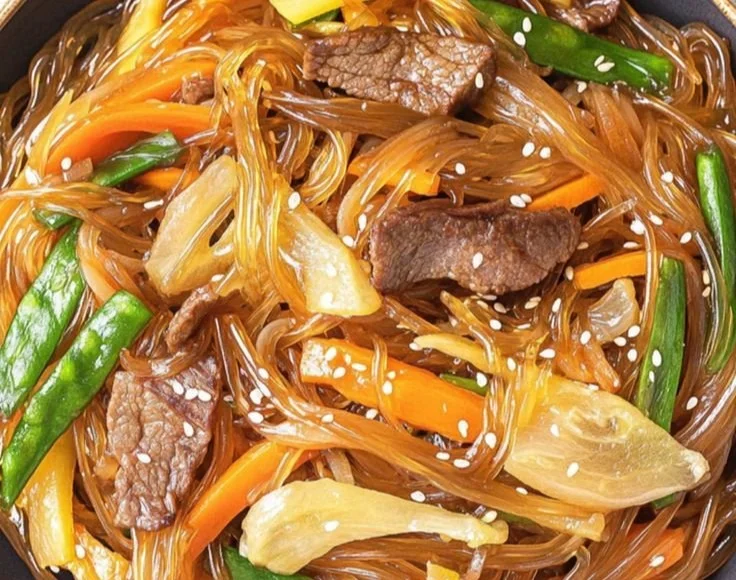
A warm, glossy tangle of translucent noodles, silked in a savory-sweet sauce, fragrant with toasted sesame and scallions — that’s the first impression of this Korean Glass Noodle Stir Fry. As the noodles hit the pan they sigh and soften; the beef caramelizes at the edges, eggs fold into ribbons, and the carrots and mushrooms add crunchy-umami contrast. On the tongue you’ll find chewy sweetness from the sweet potato noodles, honeyed saltiness from the sauce, and a toasty finish from sesame oil. It’s comfort food that feels both celebratory and everyday.
This recipe is perfect when you want a crowd-pleasing main for gatherings, a make-ahead dish for potlucks, or a satisfying weeknight meal that comes together quickly. For those who enjoy exploring stir-fry techniques, check how similar beef-handling tips apply in other recipes like this beef stir-fry techniques.
At a Glance
- Prep Time: 20 minutes (active prep: chopping, mixing)
- Cook Time: 20–25 minutes (stovetop steps, excluding noodle soaking/boiling)
- Total Time: About 45 minutes (including noodle cook time)
- Servings: 4 generous portions
- Difficulty Level: Intermediate — simple steps, some timing coordination (but very manageable)
Nutritional Breakdown
The following estimates are per serving (recipe makes 4 servings). Values were calculated using USDA FoodData Central nutritional entries and rounded for clarity. Individual values will vary depending on exact ingredient brands and cuts used.
- Calories: ~800 kcal per serving
- Protein: ~37 g
- Carbohydrates: ~97 g
- Fat: ~32 g
- Fiber: ~3 g
- Sodium: ~1,600 mg
Notes:
- These are approximate values using USDA FoodData Central for sweet potato starch noodles, beef, eggs, oils, and common vegetables. Sodium is driven primarily by the soy sauce; for lower sodium, use low-sodium soy sauce or reduce the quantity (CDC and USDA recommend monitoring sodium intake—aim for less than 2,300 mg/day for most adults).
- If you need a more precise label for dietary reasons, enter your exact ingredient brands and weights into a nutrition calculator that uses USDA FoodData Central.
Why You’ll Love It
This japchae nails the trifecta: texture, flavor, and versatility. The unique chew of sweet potato glass noodles paired with caramelized beef and delicate egg ribbons creates a mouthfeel that’s deeply satisfying. It’s nostalgic for many Koreans — a staple at holidays and family gatherings — yet approachable enough to make any weeknight feel special. It’s quick to scale up for company, and its components (noodles, protein, veg) can be swapped to suit dietary needs or fridge contents.
Step-by-Step Instructions
Ingredients
- 12 ounces (340 g) sweet potato glass noodles (dangmyeon)
- 16 ounces (454 g) beef (flank steak or sirloin), cut into thin strips
- 2 large eggs, beaten
- 1 large carrot, julienned
- 1 medium yellow onion, thinly sliced
- 3 mushrooms (e.g., shiitake or cremini), thinly sliced
- 2 cups baby spinach (about 60 g)
- 2 stalks green onion, cut into 1–2 inch pieces (use white and green parts)
- 7 tablespoons soy sauce
- 3 tablespoons honey
- 2 tablespoons brown sugar
- 2 tablespoons toasted sesame oil
- 1–2 tablespoons vegetable oil for frying
- Optional garnish: toasted sesame seeds, sesame oil drizzle
Optional ingredients and substitutions:
- To make this gluten-free: use gluten-free tamari in place of soy sauce.
- For a lighter version: reduce honey/brown sugar to taste, or replace honey with a sugar-free syrup.
- Vegetarian/vegan: replace beef with firm tofu or tempeh and omit eggs (see variations).
- Swap beef with thinly sliced chicken breast or thigh (see internal link below for technique).
Prep the sauce:
- In a small bowl, whisk together 7 tablespoons soy sauce, 3 tablespoons honey, 2 tablespoons brown sugar, and 2 tablespoons toasted sesame oil until combined. Set aside.
Cook the noodles:
2. Bring a large pot of water to a boil. Add the sweet potato noodles and boil for 10–15 minutes until tender but still slightly chewy (check package instructions for best timing). Drain and rinse under cold water to stop cooking. Cut the noodles into manageable lengths with kitchen scissors or a knife if desired.
Make the egg crepe:
3. Heat a nonstick pan with a little oil over medium heat. Pour in half the beaten eggs to make a thin crepe; cook briefly until set, flip if needed, and transfer to a plate. Repeat with remaining egg. Once cooled, roll and slice into thin strips. Set aside.
Cook the beef:
4. In the same pan, add a splash of oil over medium-high heat. Sear the beef strips in batches so they brown rather than steam. Cook until just browned and slightly pink inside, about 1–2 minutes per side (depending on thickness). Remove and set aside.
Stir-fry the vegetables:
5. Using the same pan, add a touch more oil if needed. Stir-fry in order of longest to shortest cooking time:
- Carrots first for 1–2 minutes until starting to soften.
- Add onions, cook 2–3 minutes until translucent.
- Add mushrooms, cook until they release juices.
- Add spinach and green onion tops, toss until just wilted.
Combine everything:
6. Add drained noodles to a large mixing bowl or back into the pan. Pour the prepared sauce over the noodles and toss to coat evenly.
7. Add beef, vegetable mix, and egg strips to the noodles. Gently toss to combine, making sure the sauce is evenly distributed; avoid overmixing to maintain noodle texture.
8. Taste and adjust: add more soy sauce for salt, honey for sweetness, or a splash of sesame oil for aroma.
Serve:
9. Transfer to plates or a serving platter, sprinkle with toasted sesame seeds if desired, and serve warm or at room temperature.
Practical tips:
- Avoid overcooking the noodles — they should be tender with a pleasant chew.
- Browning the beef creates flavor; don’t overcrowd the pan.
- If the noodles seem dry after combining, add a tablespoon of warm water or a little more sesame oil and toss gently.
- For consistent texture, cut the noodles after rinsing to make them easier to eat.
Best Pairings
- Serve as a main with a light cucumber kimchi or simple cucumber salad to cut the richness.
- It’s excellent alongside steamed rice for those who like extra carbs, or serve in lettuce cups for a low-carb presentation.
- For an informal meal, pair with hot green tea or a bright sparkling water with citrus.
- If you want a complete Korean-themed spread, add a bowl of clear soup or a simple banchan like seasoned spinach.
(In case you prefer chicken instead of beef, this dish can be adapted by following a reliable stir-fry approach such as in the chicken and broccoli stir-fry method — adjust cooking times for poultry.)
Storing Leftovers
- Room temperature: Not recommended to leave cooked japchae at room temperature for more than 2 hours (follow food safety guidance).
- Refrigeration: Store in an airtight container for up to 3–4 days. Reheat gently in a skillet with a splash of water or in short bursts in the microwave, stirring between intervals.
- Freezer: Not ideal — texture of glass noodles degrades when frozen and thawed. If necessary, freeze in an airtight container for up to 1 month, but expect some change in noodle chew on reheating.
Pro Tips & Tricks
- Noodle selection: Use authentic sweet potato (dangmyeon) noodles for the characteristic chew; other glass noodles (mung bean) will change texture.
- Beef cut: Choose flank, sirloin, or ribeye for flavor; slice thinly across the grain for tenderness.
- Sauce balance: Start with the listed sauce amounts, then taste. Japchae should be pleasantly sweet-savory; adjust honey or soy to your palate.
- Toast sesame seeds and use toasted sesame oil for the most authentic fragrance.
- Keep components separate while cooking (eggs, beef, vegetables) and toss at the end — this layering preserves textures and avoids overcooking delicate ingredients.
Creative Twists
- Vegan Japchae: Replace beef with marinated and pan-fried tofu or shredded king oyster mushrooms; omit eggs and increase mushrooms/spinach for heft. Use maple syrup instead of honey.
- Seafood version: Swap beef for thinly sliced squid or shrimp, adding them at the end to avoid overcooking.
- Low-sodium: Use low-sodium tamari and reduce added sugars; brighten with rice vinegar and a pinch of chili flakes for complexity.
- Extra crunchy: Add blanched julienned bell pepper or thin celery slices for crunch contrast.
- Gluten-free: Use certified gluten-free sweet potato noodles and tamari instead of soy sauce.
Recipe Q&A
Q: Can I use regular rice noodles instead of sweet potato glass noodles?
A: You can, but the texture and flavor will differ. Sweet potato noodles provide a distinct chew and translucence that define japchae.
Q: My noodles stuck together after cooking — how do I fix that?
A: Rinse them thoroughly in cold water immediately after draining and toss with a small amount of sesame oil to keep them separate.
Q: How can I reduce the sodium without losing flavor?
A: Use low-sodium tamari or soy sauce, reduce quantity, and boost umami with a small pinch of mushroom powder or a splash of mushroom-soy blend.
Q: Can I prepare this ahead of time for a party?
A: Yes — cook components separately, toss with sauce just before serving, and reheat gently if serving warm.
Q: What’s the best way to reheat leftovers?
A: Reheat in a skillet over medium-low with a tablespoon of water or oil, stirring gently until warmed through to preserve texture.
Conclusion
If you’re looking for a dish that’s both nostalgic and adaptable, this Korean Glass Noodle Stir Fry (japchae) delivers on flavor, texture, and presentation — perfect for family dinners or festive gatherings. For a deeper dive into traditional techniques and regional variations, I recommend comparing this version with My Korean Kitchen’s authentic japchae recipe and a detailed home-cook approach in Gimme Some Oven’s japchae guide. Try it, tweak it to your taste, and share your results — I’d love to hear how you make japchae your own.
Print
Korean Glass Noodle Stir Fry (Japchae)
- Total Time: 45 minutes
- Yield: 4 servings 1x
- Diet: Dairy-Free
Description
A savory-sweet stir fry featuring translucent sweet potato glass noodles, caramelized beef, and vibrant vegetables, perfect for gatherings or weeknight meals.
Ingredients
- 12 ounces (340 g) sweet potato glass noodles (dangmyeon)
- 16 ounces (454 g) beef (flank steak or sirloin), cut into thin strips
- 2 large eggs, beaten
- 1 large carrot, julienned
- 1 medium yellow onion, thinly sliced
- 3 mushrooms (shiitake or cremini), thinly sliced
- 2 cups baby spinach (about 60 g)
- 2 stalks green onion, cut into 1–2 inch pieces
- 7 tablespoons soy sauce
- 3 tablespoons honey
- 2 tablespoons brown sugar
- 2 tablespoons toasted sesame oil
- 1–2 tablespoons vegetable oil for frying
- Optional: toasted sesame seeds, sesame oil drizzle
Instructions
- Whisk together soy sauce, honey, brown sugar, and sesame oil in a small bowl; set aside.
- Bring a large pot of water to a boil. Boil sweet potato noodles for 10–15 minutes until tender but slightly chewy. Drain and rinse under cold water, cutting the noodles into manageable lengths if desired.
- Heat a nonstick pan with a little oil over medium heat. Pour in half the beaten eggs to make a thin crepe; cook until set, then transfer to a plate. Repeat with remaining eggs, roll, and slice into thin strips.
- In the same pan, sear beef strips over medium-high heat until browned and slightly pink inside, about 1–2 minutes per side. Remove and set aside.
- Stir-fry carrots for 1–2 minutes, add onion and cook until translucent, then add mushrooms and cook until they release juices. Add spinach and green onion tops, and toss until just wilted.
- In a large mixing bowl or back into the pan, combine drained noodles with the prepared sauce and toss to coat evenly.
- Add beef, vegetable mix, and egg strips to noodles; gently toss to combine without overmixing.
- Transfer to plates or a serving platter, sprinkle with toasted sesame seeds if desired, and serve warm or at room temperature.
Notes
For gluten-free, use tamari instead of soy sauce. Modify sweetness or add more vegetables based on preference.
- Prep Time: 20 minutes
- Cook Time: 25 minutes
- Category: Main Course
- Method: Stir Fry
- Cuisine: Korean
Nutrition
- Serving Size: 1 serving
- Calories: 800
- Sugar: 19g
- Sodium: 1600mg
- Fat: 32g
- Saturated Fat: 5g
- Unsaturated Fat: 27g
- Trans Fat: 0g
- Carbohydrates: 97g
- Fiber: 3g
- Protein: 37g
- Cholesterol: 210mg