Raspberry Kalakand — A Luscious Raspberry Twist on a Classic Indian Sweet
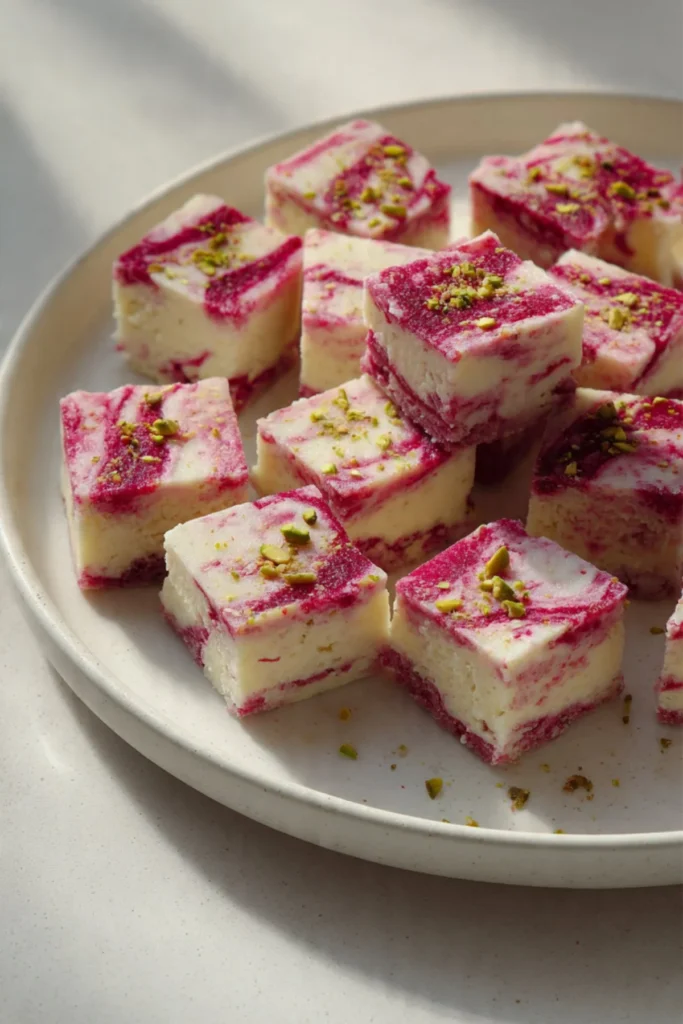
Imagine lifting a square of kalakand to your nose and inhaling a warm, milky sweetness threaded with bright raspberry perfume. The texture is luxuriously tender — grainy yet creamy, melting on the tongue like a milk fudge that remembers its farmhouse roots. A gentle cardamom whisper lingers, pistachio specks give a satisfying bite, and the tart raspberry swirls cut through the richness with a cheeky, refreshing tang.
This Raspberry Kalakand is more than a dessert — it’s a small celebration in every square. It’s perfect for festive tables when you want a modern twist on tradition, for thoughtful homemade gifts, or for slow weekend afternoons when you crave something indulgent but uncomplicated. If you’re inspired by other raspberry pastries, see this raspberry heart danishes recipe for a complementary treat idea.
At a Glance
- Prep Time: 15 minutes (plus chilling)
- Cook Time: 45–55 minutes (to reduce and thicken milk)
- Total Time: 1 hour 10 minutes (including cooling) + 2 hours chilling
- Servings: Makes 12 squares
- Difficulty Level: Intermediate — requires attention while reducing milk but no advanced techniques
Nutrition Highlights
These nutrition estimates are calculated per serving (one of 12 squares) using standard reference values from USDA FoodData Central and other nutrition databases for the listed ingredients. Values are approximate and can vary slightly by brand and exact measurements.
Per serving (approximate)
- Calories: 130 kcal
- Protein: 4.5 g
- Carbohydrates: 16.5 g
- Sugars: 15.5 g
- Dietary Fiber: 1.0 g
- Fat: 5.0 g
- Saturated Fat: 3.0 g
- Sodium: ~55 mg
Notes on accuracy: Estimates use typical values for whole milk, sweetened condensed milk, raspberries, sugar, and pistachios (USDA FoodData Central). Because sweetened condensed milk brands vary in sugar and fat content, your actual totals may shift; for tighter tracking, refer to product nutrition labels when available.
Why You’ll Love It
- Taste & Aroma: The milk reduction gives a caramelized, toasted-dairy depth that pairs beautifully with the bright, slightly tart raspberry puree. Cardamom adds a floral warmth that elevates both flavors.
- Texture: Kalakand’s signature crumbly-creamy texture is preserved while raspberry swirls make each bite lively — neither too dry nor too sticky.
- Occasion Flexibility: Elegant enough for festivals and gifting, simple enough for afternoon tea or potlucks. Make it for Diwali, Eid, a bridal shower, or for a cozy Sunday treat.
- Crowd-pleasing & Shareable: Cut into 12 perfect squares, it travels well and looks beautiful when garnished — ideal for gatherings and sharing memories.
How to Make Raspberry Kalakand
Ingredients
- 1 liter full-fat milk
- 200 grams sweetened condensed milk
- 150 grams fresh raspberries
- 2 tablespoons granulated sugar
- 1/4 teaspoon cardamom powder
- 2 tablespoons chopped pistachios
- 1 tablespoon lemon juice
Optional ingredients and substitutions
- 1–2 teaspoons rose water (optional, for a floral note)
- Use low-fat milk for a lighter version (texture will be less creamy)
- For a less sweet kalakand, reduce condensed milk by 25 g and add 1–2 tbsp evaporated milk
- Swap pistachios with almonds or cashews (chopped)
- For a vegan option, see the Variations section
Preparation (step-by-step)
- Lightly grease a square tray (about 8×8 inches) and set aside.
- Pour the full-fat milk into a heavy-bottomed pan and bring to a gentle boil over medium heat, stirring occasionally to prevent a skin from forming.
- Add the lemon juice and stir until the milk slightly curdles; this helps separate the solids (paneer-like curds) from the whey.
- Reduce heat to low and continue cooking, stirring constantly, until the milk thickens and reduces by about half. Use a spatula to scrape the bottom and avoid burning.
- Add sweetened condensed milk, granulated sugar, and cardamom powder. Stir well to combine. Keep stirring and cooking until the mixture starts to leave the sides of the pan and becomes thick but still moist.
- Blend the fresh raspberries into a smooth puree; strain if you prefer fewer seeds.
- Once the milk mixture thickens and starts leaving the sides of the pan, gently fold in the raspberry puree to create soft swirls — don’t overmix if you want visible ribbons of raspberry.
- Cook for a few more minutes until the mixture is thick but still moist and cohesive.
- Transfer the mixture into the prepared tray and spread evenly using a spatula. Sprinkle chopped pistachios on top, pressing lightly so they adhere.
- Refrigerate for at least 2 hours until set.
- Cut into 12 squares and serve chilled.
Practical tips
- Use a heavy-bottomed pan to prevent scorching during reduction.
- Stir frequently and lower the heat if the mixture looks like it will stick.
- Check doneness by noticing the mixture pulling away from the pan’s sides; that’s your cue.
- For pretty raspberry ribbons, fold the puree in gently at the end — overmixing will color the whole mixture uniformly.
- If the kalakand dries too much while cooling, sprinkle a teaspoon of milk and press gently to rehydrate.
Best Pairings
- Classic pairings: Strong Indian masala chai or a lightly brewed cardamom coffee — the spice and bitterness balance the milky sweetness.
- Western pairings: Serve with a small scoop of vanilla bean ice cream or alongside shortbread for contrast.
- For a brunch board: Pair with toasted nuts, dates, and the raspberry swirl brioche loaf for a raspberry-forward spread.
- Presentation tip: Dust lightly with edible silver leaf (varak) or a tiny sprinkle of extra pistachio before serving for a festive look.
Storage Instructions
- Room temperature: Not recommended for more than 2 hours (perishable dairy-based sweets should not sit out for extended periods). In cool climates you could keep covered for up to 4 hours, but refrigeration is safer.
- Refrigeration: Store in an airtight container for up to 5–7 days. Keep chilled until serving for best texture.
- Freezer: Wrap squares individually in plastic wrap and place in a freezer-safe container; store for up to 1–2 months. Thaw overnight in the fridge before serving. Note: freezing can slightly change texture, making it a touch denser.
Expert Tips
- Watch temperature and timing: Reducing milk is about patience more than heat — medium-low heat with consistent stirring yields a smooth, non-burnt kalakand.
- Acid trick: Lemon juice curdles milk gently; don’t add too much or the curds will become coarse. One tablespoon is usually sufficient, but the recipe uses 1 tablespoon as a guide.
- Colour control: If you want vivid raspberry bands, reserve 2–3 tablespoons of raspberry puree to ripple in after the kalakand comes off the heat, instead of folding all of it in.
- Texture cues: The mixture should be thick but moist; it will firm up further in the refrigerator. If it becomes too dry on the stovetop, add a splash of milk and stir.
- Cutting squares: Warm a thin knife under hot water, wipe dry, and slice for clean edges; repeat between cuts.
Creative Twists
- Vegan Raspberry Kalakand: Use 1 liter full-fat canned coconut milk + 200 g sweetened condensed coconut milk (or make condensed coconut milk by simmering coconut milk and sugar) and follow the same reduction method. Use agar-agar (1–2 teaspoons dissolved) if needed for a firmer set.
- Chocolate-Raspberry Kalakand: Fold in 1–2 tablespoons unsweetened cocoa powder with the condensed milk for a chocolate ribbon that pairs beautifully with raspberry.
- Saffron-Raspberry: Soak a pinch of saffron in 1 tbsp warm milk and add it with cardamom for an aromatic, festival-ready version.
- Nut-Free Option: Omit pistachios and top with toasted coconut flakes or crushed freeze-dried raspberries for crunch without nuts.
Frequently Asked Questions
Q: Can I use frozen raspberries?
A: Yes — thaw and drain them first, then puree. You may need to reduce the raspberry puree slightly to avoid adding too much extra moisture.
Q: My kalakand turned out too dry/hard. What went wrong?
A: Likely overcooked. Remove from heat earlier; if it’s salvageable, stir in a tablespoon or two of warm milk to soften before spreading.
Q: Can I reduce the sugar?
A: Yes. Sweetened condensed milk contributes most sweetness; reduce added sugar by half or omit and taste. Remember condensed milk still makes it quite sweet.
Q: Is this safe for children/pregnant people?
A: If milk and dairy used are pasteurized (store-bought milk/condensed milk), it’s generally safe. Avoid raw/unpasteurized milk. When in doubt, consult a healthcare provider.
Q: How to make this less time-consuming?
A: Use an induction cooktop with even heat and a wide heavy pan to speed reduction slightly, but maintain vigilance to prevent burning.
Conclusion
Raspberry Kalakand brings a playful, modern twist to a beloved Indian milk sweet—bright, fragrant, and perfectly shareable. Try it when you want a dessert that feels both familiar and new; it’s a small luxury that’s surprisingly approachable to make at home. For another take on raspberry and milk-based sweets, you may enjoy the inspiration shared in Emborg’s Raspberry Kalakand, and if you’re thinking of gifting or offering a different fruity barfi, consider the Mango Raspberry Barfi as a complementary choice.
If you make this Raspberry Kalakand, leave a photo and a note below — I’d love to hear how you dressed it up or which variation you tried.