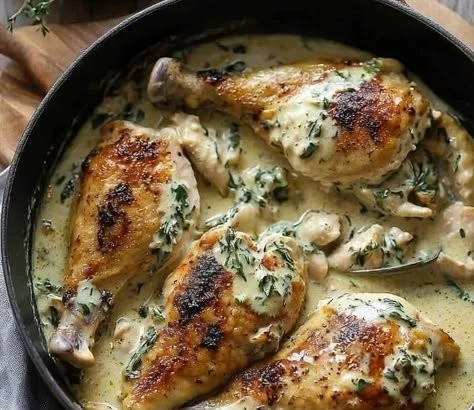
Creamy French Chicken Tarragon
There’s a reason the aroma of tarragon feels like a warm invitation: its anise-like, slightly sweet scent lifts the rich, velvety cream and browned chicken into something effortlessly elegant. Picture warm steam rising as you cut into a tender, golden chicken breast—its surface still carrying the pan’s caramelized notes—then spooning a glossy, herb-speckled sauce over steaming rice or ribbons of pasta. The first bite is silky and savory, with the bright, slightly licorice tang of fresh tarragon cutting through the cream to keep each mouthful balanced and addictive.
This dish is perfect for weeknight dinners when you want restaurant-level comfort without the fuss, small dinner parties where you want to impress with minimal stress, or a cozy Sunday supper that feels a little celebratory. If you appreciate comforting cream sauces but crave a herbal lift, this recipe answers that call. If you love creamy chicken sauces, you might also enjoy a different take on creamy chicken pasta with this cheesy garlic butter chicken bowtie pasta, which plays with similar textures and cozy flavors.
Dish Snapshot
- Prep Time: 10 minutes
- Cook Time: 20–25 minutes
- Total Time: 30–35 minutes
- Servings: 4
- Difficulty Level: Easy — great for cooks of all levels
Nutrition Highlights
Estimated nutrition per serving (recipe yields 4 servings). These figures are approximate, calculated from ingredient values in the USDA FoodData Central and aligned with guidance from sources such as the Mayo Clinic for daily nutrient context.
- Calories: ~545 kcal
- Protein: ~54 g
- Total Fat: ~31.5 g
- Saturated Fat: ~15 g
- Carbohydrates: ~3.5 g
- Sugars: ~1–2 g
- Fiber: 0 g
- Sodium: ~400–600 mg (depends heavily on chicken broth and added salt)
Notes on accuracy and health context:
- Values are estimates using USDA FoodData Central nutrient profiles for boneless skinless chicken breast, heavy cream, olive oil, and other ingredients. Individual results will vary by specific product brands and portion sizes.
- For heart-health considerations, Mayo Clinic recommends limiting saturated fat as part of a balanced diet—substituting half-and-half or a lighter cream option will reduce saturated fat and calories if desired.
Why You’ll Love It
- Flavor & Aroma: The interplay of browned chicken, garlic, and white wine creates a savory base; fresh tarragon brightens the cream so the sauce never feels too heavy.
- Ease & Speed: From stovetop to table in about half an hour—perfect for busy evenings when you want something special without fussing over many components.
- Comfort with sophistication: This dish feels cozy and homey but has a French-bistro polish that makes it great for guests.
- Family and tradition: The scent of tarragon often triggers memories of classic home-cooked meals; it’s a simple way to give weekday dinners a nostalgic lift.
How to Make Creamy French Chicken Tarragon
Ingredients:
- 4 boneless, skinless chicken breasts (about 6 oz / 170 g each)
- 1 tablespoon olive oil
- 2 cloves garlic, minced
- 1 cup heavy cream
- 1 cup chicken broth (low-sodium recommended)
- 1/2 cup dry white wine (or extra broth for alcohol-free)
- 2 tablespoons fresh tarragon, chopped (plus extra for garnish)
- Salt and pepper to taste
- Cooked rice or pasta for serving
Optional ingredients and substitutions:
- Lighter: Substitute half-and-half or a 1:1 mix of Greek yogurt (temper before adding) and milk for lower calories and fat.
- Gluten-free: Use cornstarch slurry (1 tsp cornstarch + 1 tbsp cold water) to thicken instead of flour.
- Alcohol-free: Replace white wine with additional low-sodium chicken broth and a splash of white wine vinegar or lemon juice for brightness.
- Mushroom addition: Add 1 cup sliced cremini mushrooms when sautéing the garlic for an earthy variation.
Step-by-step instructions:
- In a large skillet, heat the olive oil over medium heat.
- Season the chicken breasts with salt and pepper on both sides. Add them to the skillet and cook until golden brown and cooked through, about 6–7 minutes per side depending on thickness (internal temperature should reach 165°F / 74°C). Remove the chicken from the skillet and set aside.
- In the same skillet, add the minced garlic and sauté for about 1 minute until fragrant, scraping up browned bits from the pan.
- Pour in the white wine and deglaze the skillet, scraping the bottom to release flavorful browned bits. Let the wine reduce by about half (1–2 minutes).
- Add the chicken broth and bring to a gentle simmer.
- Lower the heat and stir in the heavy cream and chopped tarragon. Let it simmer for a few minutes until the sauce thickens slightly and coats the back of a spoon. Adjust seasoning with salt and pepper.
- Return the chicken to the skillet and spoon the sauce over each piece, warming for 1–2 minutes so the chicken finishes cooking in the sauce and absorbs flavor.
- Serve the creamy chicken over cooked rice or pasta, spooning extra sauce and fresh tarragon on top.
Practical tips:
- Avoid overcooking: Use a meat thermometer or check that juices run clear; cooking too long makes breasts dry.
- Sauce thickness: If the sauce is too thin, simmer a bit longer; for quick thickening add a small cornstarch slurry. If too thick, loosen with a splash of chicken broth.
- Temper dairy: If using yogurt as a lower-fat substitute, temper it by whisking in a few tablespoons of hot sauce before adding to the pan to reduce curdling risk.
- Don’t overcrowd the pan when browning chicken—work in batches if necessary for a good sear.
- For an even richer flavor, finish with a squeeze of lemon to brighten the sauce right before serving.
For another creamy chicken-and-pasta take that’s great when you want a quicker saucy pasta, consider our related cheesy garlic butter chicken bowtie pasta.
Best Pairings
- Carbs: Fluffy basmati rice, buttered egg noodles, or pappardelle/ribbon pasta. The sauce clings beautifully to broader noodles.
- Vegetables: Steamed green beans, sautéed spinach, roasted asparagus, or a lemon-dressed arugula salad for peppery contrast.
- Bread & finishing touches: Crusty baguette for sopping up sauce; finish with a few sprigs of fresh tarragon, cracked black pepper, and an optional dusting of finely grated Parmesan.
- Wine: A crisp, unoaked Chardonnay or a dry Sauvignon Blanc complements the cream and tarragon. For non-alcoholic pairings, a sparkling water with lemon or an herb-infused iced tea works well.
Shelf Life & Storage
- Room temperature: Do not store cooked poultry at room temperature for more than 2 hours (per USDA food safety guidance).
- Refrigeration: Store in an airtight container for 3–4 days. Reheat gently on the stovetop over low heat to preserve sauce texture.
- Freezer: Freeze in a freezer-safe container for up to 3 months for best quality; thaw in the refrigerator overnight before reheating. Note that cream-based sauces can change texture after freezing—stirring in a splash of milk or broth while reheating helps restore silkiness.
Chef’s Advice
- Quality tarragon matters: Fresh tarragon delivers the classic anise note; add it late in cooking to preserve brightness. If using dried tarragon, reduce quantity to about 1 teaspoon and add earlier to allow flavor release.
- Chicken thickness: Pound thicker breasts to an even thickness for consistent cooking. Boneless skinless thighs are a forgiving alternative if you prefer juicier meat (adjust cook time).
- Browning builds flavor: Don’t skip searing—those brown bits (fond) are the backbone of the sauce’s depth.
- Balance richness: A small squeeze of lemon or a teaspoon of Dijon mustard stirred into the sauce at the end brightens and balances the creaminess beautifully.
- Monitor sauce heat: Keep the sauce at a gentle simmer—high heat can separate cream.
Creative Twists
- Mushroom & Shallot Tarragon Chicken: Add 1 cup sliced mushrooms and 1 shallot (finely sliced) when sautéing garlic for an earthy, aromatic variation.
- Lighter Tarragon Chicken: Replace heavy cream with half-and-half or use a 1:1 mix of Greek yogurt and milk (temper yogurt before adding) to cut fat and calories while keeping creaminess.
- Vegan/Plant-Based Version: Use firm tofu or seitan seasoned and pan-fried for the “chicken”; replace heavy cream with a blended cashew cream (soaked cashews + water) or full-fat coconut milk and use vegetable broth instead of chicken broth. Use plenty of fresh tarragon and a splash of lemon to keep the flavor bright.
- Mustardy Tarragon (French Bistro-style): Stir in 1–2 teaspoons Dijon mustard with the cream for a tangy lift reminiscent of classic French bistro sauces.
Recipe Q&A
Q: Can I make this ahead of time?
A: You can prepare the sauce and cooked chicken separately, refrigerate, and reheat gently together before serving—best within 3–4 days.
Q: Can I use boneless skin-on chicken or thighs?
A: Yes. Skin-on pieces will need a slightly different sear and longer cooking; thighs are juicier and more forgiving—adjust cook time and ensure internal temp reaches 165°F (74°C).
Q: My sauce separated—how can I fix it?
A: Lower the heat immediately and whisk in a tablespoon of cold liquid (milk or broth) to help bring it together. For curdled dairy, a blender briefly can help emulsify the sauce back.
Q: How can I reduce calories without losing too much richness?
A: Use half-and-half or a tempered Greek yogurt mixture in place of some or all of the heavy cream, and reduce the olive oil to a light spray for searing.
Q: Is it safe to freeze this meal?
A: Yes, but note texture changes in cream sauces; freeze in airtight containers for up to 3 months and thaw in the fridge. Reheat gently and whisk in a splash of broth if the sauce looks separated.
Conclusion
I hope this Creamy French Chicken Tarragon recipe inspires you to bring a little bistro magic to your weeknights. If you try it, please share your photos and tweaks—small adjustments like using chicken thighs, adding mushrooms, or swapping the cream can yield deliciously different results. For a classic French perspective on this dish, explore this traditional take on Creamy French Chicken Tarragon (Poulet à l’Estragon), and for another modern creamy tarragon chicken version to compare techniques and flavors, see Creamy Tarragon Chicken | The Modern Proper. Enjoy cooking—and bon appétit!