
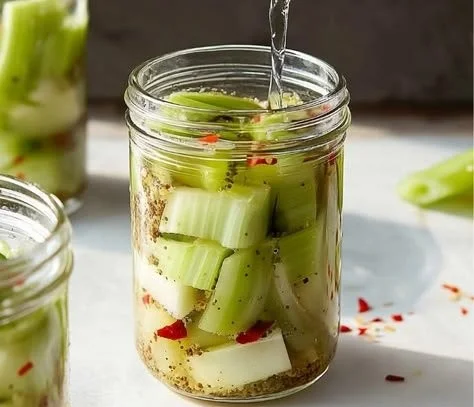
Homemade Pickled Celery
There’s something quietly magical about a jar of pickled celery: the bright, tangy aroma that lifts the senses the moment you unscrew the lid, the satisfying crunch that snaps between your teeth, and the clean, slightly sweet-tart flavor that lingers just long enough to make you reach for another piece. This recipe turns humble stalks into an irresistible condiment that sparks memories of picnics, afternoon snacks, and lively gatherings. Whether you’re spooning it into a sandwich, serving it alongside cheese and charcuterie, or using it to cut through rich, creamy dishes, these crunchy ribbons of celery bring texture and brightness to nearly every meal.
If you’re pairing these crunchy pickles with protein, consider serving them alongside crisp baked chicken tenders for a perfect balance of savory and tangy. Read on for details, tips, and creative ideas to make pickled celery a staple in your refrigerator.
At a Glance
- Prep Time: 10 minutes
- Cook Time: 5 minutes (to heat brine)
- Total Time: 1 day (includes 24 hours resting in fridge)
- Servings: about 8 small servings (as a condiment/snack)
- Difficulty Level: Easy
Nutrition Highlights
Nutrition per serving (1/8 of batch), approximate:
- Calories: 24 kcal
- Protein: 0.5 g
- Carbohydrates: 4.9 g (of which added sugar ≈ 3.1 g)
- Fat: 0.3 g
- Fiber: 0.8 g
- Sodium: ~880 mg
Notes on these values:
- Nutritional estimates were calculated from standard ingredient values (USDA FoodData Central) and standard measures for sugars and salt. The sodium figure is driven primarily by the tablespoon of table salt used in the brine—table salt contains roughly 39% sodium by weight (hence the high per-serving sodium). For daily sodium guidance, reputable sources such as the CDC and Mayo Clinic recommend limiting intake (typically under 2,300 mg/day for most adults). Adjust the salt to suit dietary needs and consult those sources for personalized recommendations.
Why You’ll Love It
- Bright contrast: The brine brings celery’s natural vegetal sweetness into sharper relief with tang and subtle sweetness from the sugar—perfect for cutting rich or fatty foods.
- Comfort with crunch: Pickled celery keeps the satisfying snap of fresh celery but adds depth and complexity that fresh alone can’t provide.
- Quick, versatile, and social: Ready to enjoy after 24 hours and ideal for gatherings—your jar will disappear fast as guests take a forkful between bites.
- Health-forward condiment: Low-calorie and flavorful, it’s a smarter way to add interest to salads, sandwiches, and snacks (just watch the sodium if you’re on a low-salt plan).
Step-by-Step Instructions
Ingredients
- 4 cups celery, chopped
- 1 cup water
- 1 cup white vinegar
- 2 tablespoons sugar
- 1 tablespoon salt
- 1 teaspoon mustard seeds
- 1 teaspoon coriander seeds
- 1 clove garlic, sliced
Optional ingredients and substitutions:
- Reduce salt to 1 teaspoon for a lower-sodium brine (taste after cooling and adjust as desired).
- Use apple cider vinegar instead of white vinegar for a fruitier note.
- Substitute honey for sugar (use 1 to 1 ratio; warm the brine more gently to help honey dissolve).
- Add 1/2 teaspoon red pepper flakes or a sliced jalapeño for heat.
- Use dill or bay leaf for a herb-forward profile.
Directions
- In a medium saucepan, combine water, vinegar, sugar, and salt. Bring to a boil, stirring until the sugar and salt dissolve.
- Add mustard seeds, coriander seeds, and garlic to the brine mixture.
- Place chopped celery in a clean jar.
- Pour the hot brine over the celery, ensuring it’s fully submerged.
- Let the jar cool to room temperature before sealing it with a lid.
- Refrigerate for at least 24 hours before enjoying. The pickled celery can be stored in the fridge for up to 2 weeks.
Practical tips:
- Use a jar large enough to allow the brine to completely cover the celery pieces—exposed celery will brown and lose crunch faster.
- Pack celery pieces uniformly for even pickling and better presentation.
- If you reduce salt, taste the cooled brine before refrigerating and adjust if necessary.
- Avoid overcooking the brine—you want hot, not boiling beyond dissolution; extreme heat can dull volatile aromatics.
Best Pairings
- Sandwiches and wraps: Bright acidity cuts through rich fillings—try it with roast beef or turkey.
- Cheese boards: Pairs beautifully with creamy cheeses (brie, goat cheese) and sharp cheddars.
- Snacks and salads: Chop and toss into green salads for a crunchy, tangy burst.
- Drinks and small bites: Use as a garnish for a Bloody Mary or alongside olives and pickled vegetables for a mezze platter. They also pair nicely with homemade baked chicken tenders.
Presentation tip: Serve the jar with small toothpicks or a tiny fork so guests can nibble without touching the brine.
Shelf Life & Storage
- Room temperature: Do not store pickled celery at room temperature for extended periods—once cooled, refrigerate. Leave at room temp only during cooling (up to 4 hours).
- Refrigeration: Store sealed in the refrigerator for up to 2 weeks; flavor may intensify over the first 3–5 days.
- Freezer: Not recommended—freezing will make celery mushy and ruin the crisp texture.
- Safety note: This is a quick refrigerator pickle, not a shelf-stable canned product. If you want long-term pantry storage, follow a tested, water-bath canning protocol from a reliable source before storing at room temperature.
Chef’s Advice
- Choose crisp celery: Look for bright green stalks with tight leaves and audible snap—this ensures the best texture after pickling.
- Uniform cuts matter: Cut celery into similarly sized pieces so each bite pickles evenly and looks attractive in the jar.
- Seed to spice ratio: Toast mustard and coriander seeds briefly in a dry skillet for 30–60 seconds to awaken oils and deepen flavor before adding to the brine.
- Control the crunch: If you want extra-crispy pickles, soak celery in an ice bath for 10 minutes before packing into jars. If you prefer softer pickles, slice thinner or let them sit longer in the brine.
- Sanitation: Use clean jars and lids to maintain freshness and avoid off-flavors.
Creative Twists
- Spicy Citrus: Add thin strips of orange zest and 1/2 teaspoon red pepper flakes for a citrusy, spicy punch.
- Turmeric & Ginger: Add 1/2 teaspoon ground turmeric and a few thin slices of fresh ginger for a golden, earthy twist with anti-inflammatory notes.
- Honey-Dill: Swap sugar for 2 tablespoons honey and add 1 tablespoon fresh dill for a sweeter, herbaceous profile that pairs beautifully with salmon or smoked meats.
- Low-Sodium: Cut salt to 1 teaspoon and increase vinegar to 1 1/4 cups; include pickling spices (bay leaf, peppercorns) for flavor without added sodium.
All Your Questions Answered
Q: Can I reuse the brine for another batch?
A: You can reuse brine once for a subsequent quick pickle, but flavor and acidity diminish. Boil the reused brine and taste—if it seems weak, make a fresh brine.
Q: How can I reduce the sodium without losing taste?
A: Reduce salt to 1 teaspoon and boost other aromatics (dill, citrus peel, garlic) and spices to compensate. Using vinegar with more acidity (like distilled white) can also help maintain tang.
Q: Can I make this sugar-free?
A: Yes—omit the sugar or substitute with a zero-calorie sweetener to taste. Honey or maple syrup are natural alternatives if you prefer.
Q: Will these be shelf-stable on the pantry shelf?
A: No. This recipe is a refrigerator pickle and should be kept refrigerated. For shelf stability, follow a tested canning procedure.
Q: My celery turned limp—what happened?
A: Likely overexposure to heat or long storage. Use very fresh celery and try the ice bath trick before packing to preserve crispness.
Conclusion
I hope this guide inspires you to transform everyday celery into a jar of zesty crunch that lifts meals and gatherings. If you want a quick reference to a similar idea or more recipe inspiration, check out this detailed take on Pickled Celery – Chef Abbie Gellman MS, RD, CDN and this shorter, simple version at Quick Pickled Celery – Two Cloves Kitchen. Try the recipe, tweak the spices, and share your results—I’d love to hear which variation became your go-to.


