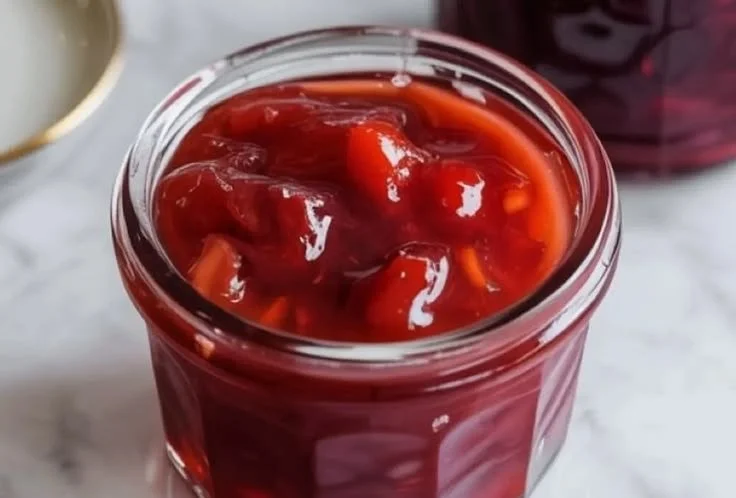
Strawberry Rhubarb Jam — a pot of ruby-red comfort that smells like sun-warmed berries and tart green stems, simmered down to glossy, spoonable bliss. The first waft that greets you is bright lemon and berry-sweetness, followed by rhubarb’s pleasant, tangy edge. On the tongue it’s a lively balance: syrupy, slightly textured from softened fruit, and utterly spreadable. It conjures cozy weekend mornings, mason-jar gifts at holiday markets, and picnic blankets dotted with fresh bread and laughter.
Make a batch when spring rhubarb first appears or anytime you want a taste of nostalgic home-cooking. It’s perfect for slow, indulgent breakfasts, last-minute hostess gifts, or turning plain yogurt and crackers into an elevated snack. If you’re inspired to pair strawberries with richer desserts, try one of my favorite remix ideas like these chocolate-strawberry cheesecake cups for a dessert that echoes the jam’s bright punch.
At a Glance
- Prep Time: 20 minutes active (plus 15 minutes standing for maceration)
- Cook Time: 10–15 minutes (active boiling)
- Total Time: About 45 minutes (including cooling and jar prep)
- Servings: Makes roughly 5 cups jam — about 20 servings (1/4 cup each)
- Difficulty Level: Easy — great for beginner canners and home cooks
Nutrition Highlights
Estimated nutrition per serving (1/4 cup; recipe yields ~5 cups / 20 servings). Nutrition estimates are based on standard ingredient values from USDA FoodData Central and rounded for clarity. If you need exact values for medical reasons, consult a registered dietitian.
- Calories: ~130 kcal
- Protein: ~0.2 g
- Total Carbohydrates: ~32 g
- Sugars (added + natural): ~30 g
- Dietary Fiber: ~0.5 g
- Total Fat: ~0 g
- Sodium: ~60 mg
- Cholesterol: 0 mg
Notes: The dominant calories come from the added granulated sugar (3 cups). For perspective on added sugar recommendations and health guidance, reputable sources such as the Mayo Clinic recommend limiting added sugars as part of a balanced diet. These nutrition estimates are calculated using USDA nutritional data for strawberries, rhubarb, and granulated sugar.
Why You’ll Love It
There are plenty of reasons to fall for this jam:
- Flavor & Aroma: The bright, sweet aroma of strawberries tempered by rhubarb’s tartness makes each spoonful refreshing and memorable.
- Memory & Comfort: It’s the kind of preserve that transports you to family kitchens and spring markets — great for gifting homemade goodness.
- Versatility & Ease: This recipe is straightforward — minimal equipment, forgiving technique, and quick cooking time means you’ll have jam the same day.
- Seasonal Celebration: When rhubarb is abundant in spring, this jam crystallizes that seasonal moment into jars you can enjoy year-round.
Preparation Guide
Ingredients
- 2 cups strawberries, hulled and mashed
- 2 cups rhubarb, chopped (about 1/2-inch pieces)
- 3 cups granulated sugar
- 1/4 cup lemon juice (fresh preferred)
- 1 package fruit pectin (optional; use if you prefer a thicker set)
- 1/2 teaspoon salt
Optional ingredients and substitutions: - Use 2 1/2 cups sugar for a slightly less sweet jam, or substitute 1 cup of the granulated sugar with honey (note: honey will alter flavor and set).
- For a lower-sugar jam, use a low- or no-sugar pectin (follow manufacturer’s directions).
- Add 1 teaspoon vanilla extract or 1/2 teaspoon ground cinnamon for a warmed flavor twist.
- For pectin-free, cook longer to achieve set; expect more of a spoonable, compote-like texture.
Directions
- In a large pot, combine the mashed strawberries and chopped rhubarb.
- Stir in the sugar and lemon juice, and let it sit for about 15 minutes until the fruit releases its juices. This maceration helps dissolve the sugar and draws out flavor.
- Heat the mixture over medium heat, stirring until the sugar is dissolved.
- If using, stir in the fruit pectin according to package instructions (some pectins call for mixing with a bit of sugar or adding at a specific temperature).
- Bring the mixture to a rolling boil, and cook for about 10–15 minutes or until it reaches the desired consistency. Stir frequently to prevent scorching.
- Test the jam by dropping a spoonful onto a cold plate; if it holds its shape (wrinkling when nudged), it’s ready.
- Pour the hot jam into sterilized jars and seal them immediately. If you plan to preserve long-term, process jars in a boiling water bath according to safe canning guidelines.
- Let the jars cool completely at room temperature before storing. Enjoy your strawberry rhubarb jam on toast, biscuits, or in desserts!
Practical tips while cooking:
- Avoid over-stirring during the final boil to reduce foam and preserve fruit texture.
- Use a wide, heavy-bottomed pot so the mixture cooks evenly and reduces efficiently.
- If you see excessive foam, skim gently with a spoon — this yields clearer jam.
- Don’t rely solely on time — use the cold-plate test for doneness.
Best Pairings
- Classic: Spread warm on buttered toast, biscuits, or scones for an instant upgrade.
- Breakfast: Swirl into plain yogurt or oatmeal for brightness and sweetness.
- Cheese board: Pair with soft brie or goat cheese, crackers, and toasted nuts.
- Baking: Use as a filling for thumbprint cookies, layer cakes, or dolloped on shortcakes.
- Drinks & Sauces: Stir a spoonful into sparkling water for a quick refresher, or reduce further for a glaze on roasted pork.
For a decadent dessert pairing, try it alongside a rich tart like this chocolate-strawberry tart — the jam’s brightness cuts through chocolate richness beautifully.
Storing Leftovers
- Room temperature (opened jars left out): Not recommended for safety. Once opened, refrigerate.
- Refrigeration: Once opened, keep in the refrigerator for up to 3 weeks.
- Unopened, properly canned jars: Store in a cool, dark place for up to 12–18 months (follow USDA canning safety guidelines).
- Freezer: Freeze in freezer-safe containers for up to 8–12 months. Leave headspace for expansion.
Note: If you processed jars in a boiling water bath, confirm seals before long storage; a popped lid indicates a failed seal and should be refrigerated and used promptly.
Chef’s Advice
- Fruit choice matters: Choose ripe strawberries ( fragrant, deep red) and firm rhubarb stalks (crisp, not limp). Freshness yields brighter flavor.
- Pectin decision: Use pectin for a consistent, jammy set. If you prefer a more rustic, spoonable preserve, skip pectin and cook a bit longer, watching closely. Low-sugar or no-sugar pectins require following their specific instructions.
- Texture cues: A few visible soft strawberry or rhubarb pieces add rustic charm — avoid over-pureeing unless you want a smooth jam.
- Acid balance: Lemon juice is essential — it brightens flavor and helps pectin set. Don’t skip it.
- Safety: If canning, follow USDA and local extension office guidance for safe water-bath processing times based on jar size and elevation.
Fun Flavor Ideas
- Lavender & Lemon: Add 1 to 1 1/2 teaspoons culinary lavender buds (lightly crushed) during the simmer for floral notes. Use sparingly.
- Ginger Rhubarb: Stir in 1–2 teaspoons grated fresh ginger while cooking for a spicy lift.
- Balsamic Strawberry-Rhubarb: Replace 1 tablespoon of lemon juice with 1 tablespoon aged balsamic vinegar for depth and acidity.
- Orange Zest & Cardamom: Add 1 teaspoon orange zest and 1/4 teaspoon ground cardamom for a warm, citrusy twist.
- Reduced Sugar Version: Use a no-sugar pectin and 1 1/2 cups sugar or a natural sweetener alternative—follow the pectin manufacturer’s directions for proportions.
Frequently Asked Questions
Q: Can I skip the pectin?
A: Yes. Skipping pectin yields a looser, spoonable preserve that’s more like a compote. Cook longer and use the cold-plate test to check set.
Q: My jam is still runny after cooking—what can I do?
A: Return to a rolling boil to reduce more, or stir in a little pectin (follow the pectin package for late additions). Cool and test again.
Q: How do I prevent mold?
A: Always use sterilized jars and clean utensils. Refrigerate after opening and consume within 3 weeks. Properly processed sealed jars can be stored longer at room temperature.
Q: Can I reduce the sugar for health reasons?
A: Yes—use low/no-sugar pectin or reduce sugar and accept a shorter shelf-life and different texture. For guidance on sugar intake, consult reputable health resources like the Mayo Clinic.
Q: Can I use frozen fruit?
A: Yes. Thaw and drain excess liquid, then proceed with the recipe; you may need to cook a bit longer to reach set.
Conclusion
I hope this strawberry rhubarb jam inspires you to slow down, fill jars with sunshine, and share sweet—and slightly tart—moments with friends and family. For a step-by-step canning-focused version and tips, see Heartbeet Kitchen’s Strawberry Rhubarb Jam (for canning!) guide, and for a classic recipe reference you can compare techniques with the Allrecipes Strawberry-Rhubarb Jam Recipe. If you try the recipe, please leave a comment below or share a photo — I love hearing how your jars turned out.