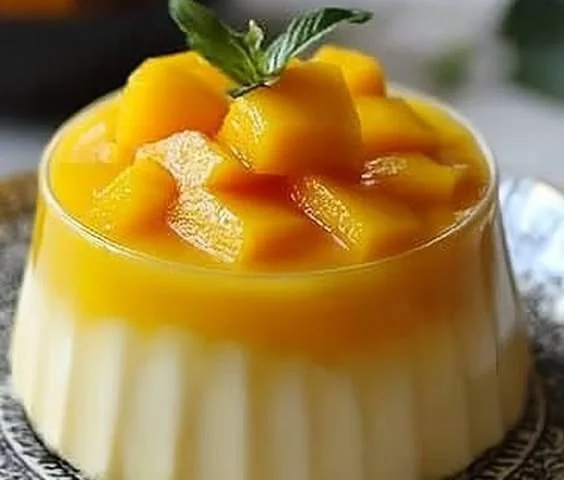
Mango Pudding — a silky tropical treat
Close your eyes and imagine the first spoonful: bright, sun-warmed mango rolling across your tongue, the gentle creaminess of coconut, a hint of vanilla, and a delicate velvet texture that melts rather than chews. The aroma is pure summer — floral, fruity, and a little indulgent. This mango pudding is the kind of dessert that feels celebratory yet comforting: it’s simple enough for a weeknight finish, elegant enough for dinner guests, and nostalgic enough to remind you of beach vacations or family gatherings around a chilled dessert on a warm evening.
This recipe is perfect for hot afternoons when you want something refreshing but not heavy, for potlucks (it travels well), or for festive occasions where colorful, light desserts are welcome. If you enjoy straightforward mango desserts, you may also appreciate this easy mango pudding that leans even more on quick prep and minimal ingredients.
Dish Snapshot
- Prep Time: 15 minutes
- Cook Time: 5–7 minutes
- Total Time: about 2 hours 25 minutes (includes chilling)
- Servings: 4 (about 1/2 cup to 3/4 cup each, depending on ramekin size)
- Difficulty Level: Easy
Nutrition Highlights
Nutrition estimates are provided per serving (recipe yields 4 servings) and are approximate, calculated using USDA FoodData Central values for whole ingredients. If you alter ingredients (low-fat coconut milk, less sugar, etc.), values will change.
Estimated nutrition per serving:
- Calories: ~245 kcal
- Protein: ~1.8 g
- Total Carbohydrates: ~30 g
- Sugars: ~25 g
- Dietary Fiber: ~1.3 g
- Total Fat: ~14.6 g
- Saturated Fat: (~12 g, depending on canned coconut milk)
- Sodium: ~40 mg (depends on added salt)
Notes on nutrition: This version is rich and creamy because it uses canned (full‑fat) coconut milk. For a lighter pudding, substitute light coconut milk or a combination of coconut milk and low-fat dairy milk — that will reduce calories and saturated fat. These numbers are estimates; for more precise tracking, weigh your exact ingredients and consult USDA or similar government nutrition databases.
Why You’ll Love It
- Flavor & Texture: The mango provides bright fruity sweetness and a floral aroma while coconut milk gives a silky mouthfeel that cushions the mango’s acidity. The optional cornstarch adds a custard-like set without egg.
- Ease and Speed: From puree to chill, active work is under 20 minutes; the fridge does the rest.
- Sociability & Seasonal Joy: Mango pudding makes excellent single-serve presentations for parties and is a naturally seasonal dessert for late spring through summer when mangoes are at their peak.
- Customizable and forgiving: It works with fresh or frozen mango and adapts to lower-sugar or vegan preferences with simple swaps.
Preparation Guide
Ingredients
- 2 ripe mangoes, peeled and chopped (about 2 cups mango puree)
- 1 cup (240 ml) canned full‑fat coconut milk (or light coconut milk for a lighter version)
- 1/4 cup (50 g) granulated sugar, adjust to taste
- 1 teaspoon vanilla extract
- 1 tablespoon cornstarch (optional — for a firmer set)
- Pinch of salt
Optional ingredients and substitutions:
- Lemon or lime zest: 1/2 teaspoon for brightness
- Sweetened condensed milk: replace sugar + part of coconut milk for a richer Hong Kong–style pudding (increases calories)
- Dairy milk (whole or 2%): swap for coconut milk if you’re not vegan; texture will be lighter
- Honey or maple syrup: substitute sugar (use slightly less volume for honey)
- Agar-agar: vegan thickener alternative to cornstarch (follow package directions; agar sets firmer)
Method — step by step
- Prepare the mango puree: Place chopped mango in a blender and blend until completely smooth.
- Combine ingredients: Add the coconut milk, sugar, vanilla extract, and pinch of salt to the blender with the mango puree. Blend briefly until smooth and well combined.
- If using cornstarch: Dissolve the cornstarch in 1–2 tablespoons of cold water to make a smooth slurry. Add the slurry to the blender mixture and pulse briefly to incorporate. This prevents lumps.
- Cook gently: Pour the mixture into a medium saucepan and heat over medium heat, stirring constantly with a silicone spatula or whisk. Cook until it thickens slightly and coats the back of the spoon — about 5–7 minutes. Do not let it boil vigorously; a gentle simmer is enough to activate the thickener.
- Cool slightly: Remove from heat and let the pudding cool at room temperature for 10–15 minutes. Stir once or twice as it cools to prevent a skin from forming.
- Chill: Pour the pudding into individual serving bowls or ramekins. Cover and refrigerate for at least 2 hours, until fully chilled and set.
- Serve: Garnish as desired and enjoy chilled.
Practical tips:
- Cornstarch lumps? Always make a slurry with cold water first.
- Want a silkier texture? Strain the blended mixture through a fine sieve before cooking.
- Check doneness: the mixture should thicken slightly during cooking — it will firm up more in the fridge.
Best Pairings
- Plain: A simple chill and spoon is divine — bright and uncluttered.
- Fresh fruit: Top with diced mango, kiwi, or passionfruit pulp for extra texture and tang.
- Toasted coconut or nuts: Sprinkle toasted coconut flakes, crushed pistachios, or almonds for crunch.
- Sauces & creams: A drizzle of condensed milk or a dollop of lightly sweetened whipped coconut cream elevates the richness.
- Beverage pairings: Pairs beautifully with jasmine tea, iced green tea, or a light Prosecco for celebrations.
- Snack idea: Serve small portions as part of a dessert sampler with bite-sized pastries.
Storing Leftovers
- Room temperature: Do not leave at room temperature for more than 2 hours; perishable ingredients (coconut milk) make it unsafe longer than that.
- Refrigeration: Store covered in the refrigerator for 3–4 days. Stir gently before serving if a slight separation occurs.
- Freezer: Not recommended — freezing changes texture (water in mango forms ice crystals and makes the pudding grainy). If you must freeze, use an airtight container for up to 1 month; thaw overnight in the fridge and re-blend or whisk to try to restore texture.
Pro Tips & Tricks
- Choose ripe, fragrant mangoes: A ripe mango yields the best flavor. Look for a fruity aroma at the stem and slight give when squeezed. Varieties like Ataulfo or Alphonso are exceptionally sweet and aromatic.
- Control sweetness: Taste the mango puree first — very ripe mangoes need less added sugar. Add sugar gradually and taste as you go.
- Texture cues: The cooked mixture should coat a spoon; it will still be pourable. It firms in the fridge, so don’t over-thicken on the stove.
- Avoid curdling or graininess: Keep heat moderate and stir continuously once cornstarch or thickener is added. If using dairy milk, temper it slowly to avoid separation.
- Presentation shortcut: For elegant servings, pour into molds and unmold onto plates, or layer with crushed biscuits for a mango-pudding parfait.
Creative Twists
- Hong Kong–style (richer, silkier): Replace a portion of coconut milk with sweetened condensed milk and strain the pudding for a velvety finish.
- Coconut-chia fusion: Fold in a few tablespoons of chia seeds after chilling for a textured, fiber-rich version (see a similar creamy idea in this coconut chia pudding recipe).
- Spiced mango: Add a pinch of ground cardamom or a strip of lime zest to the mixture while heating for fragrant complexity.
- Mango-yogurt layer: Layer mango pudding with sweetened Greek yogurt for tang and protein; great as a breakfast-on-the-go twist.
- Boozy adult version: Stir in 1–2 tablespoons of rum or mango liqueur after removing from heat and before chilling for an adult dessert.
All Your Questions Answered
Q: Can I use frozen mango?
A: Yes — thaw completely and drain any excess water, then puree. Frozen mango works well and is convenient year-round.
Q: My pudding is too thin — how do I fix it?
A: Return it to the stove, dissolve another 1 teaspoon to 1 tablespoon cornstarch in cold water (depending on batch size), whisk in and heat until it thickens. Cook gently to activate the starch.
Q: How can I reduce sugar without losing texture?
A: Reduce granulated sugar to taste; the thickening is not dependent on sugar. If using alternative sweeteners, consider their sweetness equivalence (e.g., honey) and adjust the liquid ratio if needed.
Q: Can I make this ahead for a party?
A: Absolutely — make it up to 48 hours in advance and keep covered in the fridge. Garnish right before serving.
Conclusion
I hope this mango pudding inspires you to savor something both simple and special — a dessert that’s at once tropical and homey. If you’d like a richer Hong Kong–style take on mango pudding, check out this excellent recipe with additional technique and tips: Mango Pudding (Hong Kong Style) – Hot Thai Kitchen. For a visual, step‑by‑step video walkthrough that complements this recipe, watch this helpful video tutorial: Mango Pudding (video) – Little Sweet Baker.
If you make this pudding, please share your photos and any tweaks — I love hearing how readers personalize recipes. Enjoy the sunshine in a bowl!