
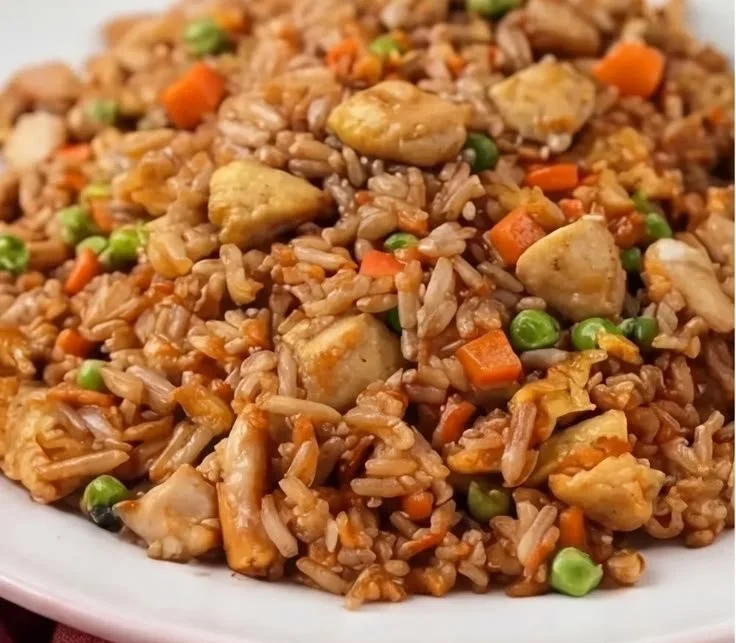
Homemade Chicken Fried Rice
At the first sizzle of oil and the quick hiss as beaten eggs hit the hot pan, the kitchen is filled with a warm, savory perfume — a mix of toasted rice, caramelized onions, and the faintly sweet tang of soy. Each forkful of this homemade chicken fried rice delivers contrast: fluffy grains separated by quick-high-heat searing, tender pockets of diced chicken, bright, crunchy peas and bell pepper, and soft-scrambled ribbons of egg. It’s the kind of comfort that tastes familiar yet exciting, the food equivalent of a well-worn sweater warmed in the sun.
This recipe is perfect for weeknight dinners when you want something fast but satisfying, for clearing out leftover rice and chicken with delicious intent, and for casual gatherings when you need a crowd-pleasing, make-ahead dish. If you enjoy exploring fried rice variations, you might also like this bold riff on the theme at bang bang fried rice, which takes different spice and sauce directions while honoring the quick, one-skillet approach.
At a Glance
- Prep Time: 10 minutes
- Cook Time: 12 minutes
- Total Time: 22 minutes
- Servings: 3 generous servings (adjust as needed)
- Difficulty Level: Easy — great for cooks of all skill levels
Nutrition Highlights
Estimated nutrition per serving (approximate):
- Calories: 430–470 kcal
- Protein: 24–28 g
- Carbohydrates: 45–50 g
- Fat: 13–15 g
- Fiber: 3–5 g
- Sodium: ~900 mg
Notes on accuracy and sources:
- These estimates were calculated using common USDA FoodData Central values for the ingredients listed and rounded for clarity. Actual values will vary with specific brands, rice type, and whether low-sodium soy sauce or additional salt is used (USDA FoodData Central).
- For context on daily sodium recommendations and health guidance, see the CDC’s guidance on sodium intake; aim to keep overall daily sodium below recommended limits (CDC).
- If you need precise tracking (for medical reasons or strict meal planning), weigh your specific ingredients and consult the USDA database or your nutrition tracking app for exact numbers.
Why You’ll Love It
- Speed and simplicity: This recipe hits savory satisfaction in under 30 minutes using mostly pantry staples and leftovers.
- Comfort with texture: Fluffy rice, tender chicken, crisp veggies, and silky egg create a dynamic mouthfeel that keeps each bite interesting.
- Crowd-pleasing familiarity: Fried rice is universally approachable — it’s nostalgic for many and adaptable to many diets.
- Economical and flexible: It’s a smart way to use leftover rice and small amounts of cooked chicken while stretching ingredients into a complete meal.
How to Make Homemade Chicken Fried Rice
Ingredients
- 2 cups cooked rice (preferably day-old and chilled)
- 1 cup cooked chicken, diced
- 2 eggs, beaten
- 1 cup bell peppers, diced
- 1 cup sweet onions, diced
- 1 cup pea pods (or frozen peas), trimmed if fresh
- 3 tablespoons soy sauce (use low-sodium if preferred)
- 2 tablespoons vegetable oil
- Salt and pepper to taste
Optional ingredients and substitutions
- Swap vegetable oil for sesame oil (use 1 tablespoon sesame + 1 tablespoon neutral oil) for toasted sesame aroma.
- Use brown rice for extra fiber (adjust texture expectations — brown rice is chewier).
- For gluten-free: replace soy sauce with tamari or coconut aminos.
- Add aromatics: 1–2 cloves minced garlic and/or 1 teaspoon grated fresh ginger for more depth.
- Spice it up: a dash of Sriracha, chili oil, or red pepper flakes.
- Vegetables: substitute or add carrots, scallions, mushrooms, or bean sprouts.
Method (step-by-step)
- Heat vegetable oil in a large skillet or wok over medium heat.
- Add sweet onions and bell peppers, sautéing until they are soft and slightly caramelized (about 4–5 minutes).
- Push the vegetables to one side of the skillet and pour in the beaten eggs. Scramble the eggs gently and, once cooked but still tender, mix them with the vegetables.
- Add the cooked chicken and rice, stirring to combine. Break up any rice clumps so grains separate and get a little toasted.
- Pour soy sauce evenly over the rice mixture, stirring until heated through and the rice has an even color.
- Add pea pods (or frozen peas) and cook for another 2–3 minutes until peas are bright and just tender.
- Season with salt and pepper to taste, remembering that soy sauce adds significant sodium; finish with a drizzle of sesame oil (optional) and serve warm.
Practical tips
- Use chilled, day-old rice for best texture. Freshly cooked rice holds more moisture and can turn mushy.
- Keep the pan hot but not smoking; high heat encourages quick sear and prevents sogginess.
- Don’t overmix after adding soy sauce — stir enough to combine but keep the rice grainy.
- If using frozen peas, add them a minute or two earlier so they thaw and warm through.
- Taste and adjust salt after soy sauce; you may not need to add extra salt.
Best Pairings
- Plain accompaniments: a simple bowl of clear miso soup or steamed greens like bok choy.
- Fattier balance: a small side of buttered corn or roasted root vegetables.
- Beverage pairings: green tea or a light lager cuts through the umami and refreshes the palate.
- Condiments: chili oil, extra soy, or a squeeze of lime for brightness.
- For a multi-dish meal idea, pair with a saucy main or appetizer — see the Classic Butter Chicken pairing idea in the variations below for a richer menu.
Keeping it Fresh
Storage instructions and safe timeframes:
- Room temperature: Do not leave cooked fried rice at room temperature for more than 2 hours (per USDA food safety guidance).
- Refrigeration: Store in an airtight container and refrigerate for up to 3–4 days.
- Freezer: Freeze in a freezer-safe container for up to 2 months. Thaw overnight in the fridge and reheat thoroughly.
- Reheating: Reheat quickly in a hot skillet with a splash of oil or in the microwave, stirring once or twice to ensure even heating. Heat until steaming hot throughout.
Chef’s Advice
- Rice type: Day-old jasmine rice works beautifully because the grains dry slightly and separate when fried.
- Heat control: A very hot pan creates a good sear; if you don’t have a wok, use the widest skillet you own.
- Egg technique: Cook the eggs separately in the pan and fold them in — this keeps them tender instead of dry and rubbery.
- Protein texture: Use shredded leftover rotisserie chicken or quickly pan-seared diced chicken breasts for best bite; pre-cooked frozen chicken can be used but may be drier.
- Flavor layering: Add sauces at the end of cooking and finish with a splash of sesame oil or a handful of scallions for brightness.
Creative Twists
- Vegan version: Replace chicken with cubed, pan-fried tofu or tempeh and use 1/4 cup chickpea flour mixed with water to mimic scrambled egg texture, plus tamari for gluten-free soy flavor.
- Pineapple & cashew: Add 1 cup diced pineapple and 1/3 cup toasted cashews for sweet-savory tropical fried rice; reduce soy sauce slightly.
- Spicy Szechuan: Stir in 1–2 teaspoons of chili bean paste (doubanjiang) and a pinch of Sichuan pepper for numbing heat; finish with scallions.
- Mediterranean twist: Swap soy sauce for a light splash of soy-free seasoning, add olives, sun-dried tomatoes, and finish with parsley (not traditional but tasty).
- Serve alongside rich mains: This fried rice is a lovely complement to a saucy curry — for example, try it next to a butter chicken dish like this butter chicken with coriander rice and naan for an indulgent weeknight feast.
Frequently Asked Questions
Q: Can I use freshly cooked rice?
A: Yes, but let it steam off and cool slightly; ideally use day-old chilled rice to avoid a mushy texture.
Q: How do I reduce sodium?
A: Use low-sodium soy sauce or tamari, limit added salt, and adjust to taste after combining ingredients.
Q: What if my fried rice is soggy?
A: Cook over higher heat, break up rice clumps, and use chilled rice. Avoid overcrowding the pan so moisture can evaporate.
Q: Can I make this ahead?
A: Yes — cook completely, cool, and refrigerate. Reheat in a hot skillet; you may want to add a splash of oil to refresh texture.
Q: How to make it gluten-free?
A: Substitute tamari or coconut aminos for soy sauce and confirm other sauces are gluten-free.
Conclusion
Try this recipe tonight and tweak it to your taste — simple swaps can turn it into a new favorite. For inspiration and alternative techniques, check out CookingClassy’s chicken fried rice recipe for bright classic flavors, and for a takeout-style spin consider Averie Cooks’ better-than-takeout version. If you make it, please share what changes you tried — photos and tips make this community richer and tastier.