
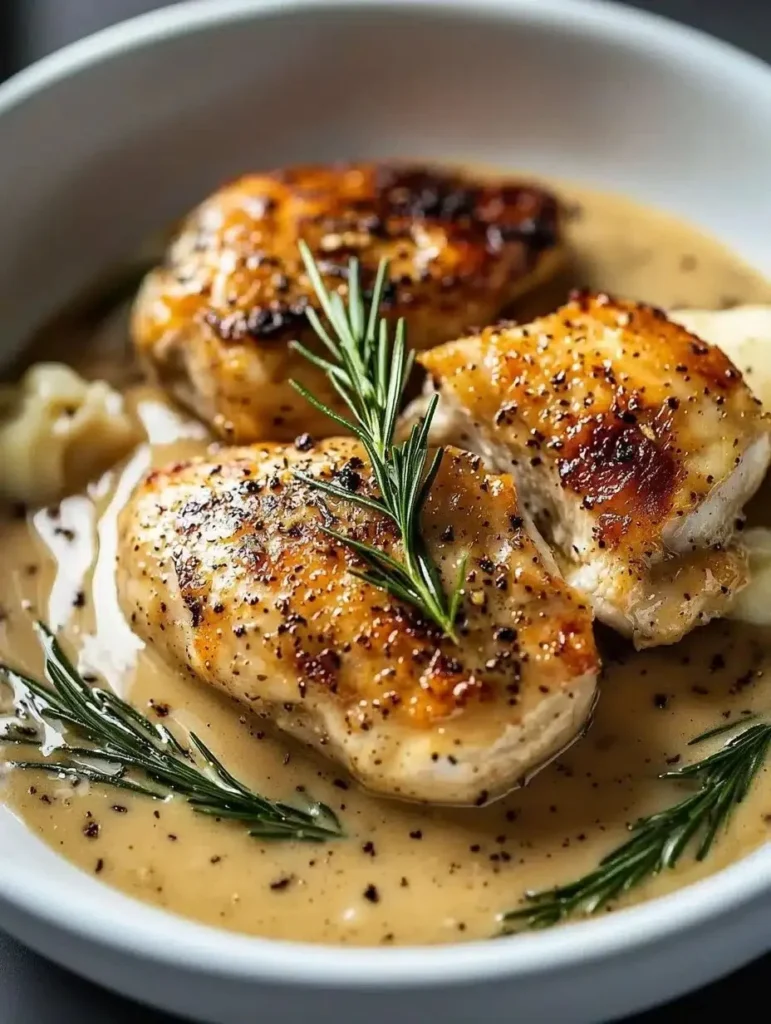
Baked Chicken with Dijon Sauce: An Incredible Ultimate Recipe
Introduction
Close your eyes and imagine a golden-baked chicken breast coming out of the oven—its surface fragrant with garlic and thyme, a thin crust catching light, and a tangy, creamy Dijon sauce that kisses each bite with bright mustard heat and a silkiness that coats your fork. The first inhale brings warm, savory notes; the first bite, tender white meat that yields easily under your fork and finishes with a gentle, peppery tang. This dish feels like a hug for the senses: comforting, confident, and quietly elegant.
This recipe is perfect for weeknight dinners when you want something fast but impressive, for small dinner parties when you want to offer comfort with a refined twist, and for holiday menus that need a lighter main course with lots of flavor. If you appreciate a crunchy edge on your baked chicken, you might also enjoy the crisp Parmesan-crusted chicken in my other recipe for a different texture and flavor contrast: crisp Parmesan-crusted chicken.
Dish Snapshot
- Prep Time: 10 minutes
- Cook Time: 25–30 minutes
- Total Time: 35–40 minutes
- Servings: 4
- Difficulty Level: Easy — great for cooks of all skill levels
Nutrition Highlights
Nutrition per serving (approximate; 1 serving = 1 chicken breast with sauce). Values are calculated using USDA FoodData Central ingredient profiles and rounded for simplicity. These are estimates intended for guidance only.
- Calories: ~420 kcal
- Protein: ~54 g
- Total Carbohydrates: ~3 g
- Total Fat: ~20 g
- Saturated Fat: ~6 g
- Cholesterol: ~150 mg
- Sodium: ~600–700 mg (will vary with your mustard choice)
- Fiber: 0–0.5 g
- Sugars: ~1 g
Notes: Estimates are based on USDA FoodData Central values for boneless skinless chicken breast, Dijon mustard, heavy cream, and olive oil. For heart-healthy guidance on saturated fat and sodium intake, consult government health resources such as the CDC or nutrition guidance from the USDA.
Why You’ll Love It
- Flavor & Texture: The interplay between tangy Dijon and rich cream creates a balanced sauce—bright but comforting. The chicken stays moist (thanks to quick searing and baking) while the sauce adds a silky finish.
- Ease & Speed: Minimal prep and a single-pan-friendly approach keep this accessible on busy evenings without sacrificing restaurant-worthy flavor.
- Entertaining & Everyday: It’s elegant enough for guests yet simple enough for a family dinner. Serve with quick sides and it feels like you put in far more effort than you did.
- Seasonal Flexibility: Works year-round—light and bright for spring, cozy for cooler months when you crave creamier sauces.
Step-by-Step Instructions
Ingredients
- 4 boneless, skinless chicken breasts (about 6 oz / 170 g each)
- 1/2 cup Dijon mustard
- 1/4 cup heavy cream
- 2 tablespoons olive oil
- 3 cloves garlic, minced
- 1 teaspoon dried thyme (or 1 tablespoon fresh, chopped)
- 1 teaspoon paprika
- Salt and pepper, to taste
- Fresh parsley, chopped, for garnish (optional)
Optional ingredients & substitutions
- Use Greek yogurt (3 tbsp) mixed with 1 tbsp milk for a lighter sauce (substitute for heavy cream).
- Swap Dijon for whole-grain mustard for texture and slightly milder heat.
- Add 1 tablespoon honey or maple syrup for a sweet-savory glaze (works especially well with roasted vegetables).
- For gluten-free diners, ensure mustard brand contains no gluten-containing additives (most are naturally gluten-free).
Method
- Preheat the oven to 400°F (200°C). Line a baking dish or rimmed sheet with foil or parchment for easier cleanup.
- Pat the chicken breasts dry and season both sides with salt, pepper, and paprika. Let rest while you make the sauce.
- In a small bowl, whisk together the Dijon mustard, heavy cream, minced garlic, dried thyme, and 1 tablespoon olive oil. Taste and adjust salt/pepper. The sauce should be nicely tangy; if too sharp, add a teaspoon of honey.
- Heat the remaining 1 tablespoon of olive oil in a large ovenproof skillet over medium-high heat. When shimmering, sear the chicken breasts 2–3 minutes per side until golden (they should release easily when ready). Searing helps lock in moisture and adds color.
- Reduce heat to medium-low and pour the mustard-cream mixture over the seared chicken, spooning a little sauce over each breast.
- Transfer the skillet (or move contents to the prepared baking dish) to the preheated oven. Bake 20–25 minutes, or until an instant-read thermometer inserted into the thickest part of each breast reads 160–165°F (71–74°C). Note: carryover heat will raise the internal temperature slightly while resting.
- Remove from the oven and let chicken rest 5 minutes; the sauce will thicken slightly as it cools. Garnish with chopped parsley and a grind of black pepper before serving.
Practical tips
- Don’t overcook: Chicken breast dries quickly. Use an instant-read thermometer for reliable doneness.
- Sauce texture: If sauce separates, whisk in a splash of hot water or an extra tablespoon of cream off-heat.
- Even thickness: Pound thicker breasts to an even thickness or butterfly them for uniform cooking.
- Make ahead: You can mix the Dijon-cream sauce up to a day ahead and refrigerate; bring to room temperature before pouring over seared chicken.
Best Pairings
- Starches: Creamy mashed potatoes, garlic-roasted baby potatoes, or a lemony quinoa pilaf.
- Vegetables: Roasted asparagus, sautéed green beans with almonds, or a simple arugula salad with lemon vinaigrette.
- Bread: Warm crusty baguette or soft dinner rolls to mop up the delicious sauce.
- Wine: A crisp Chardonnay or an unoaked Chenin Blanc will complement the cream and mustard without overpowering it.
For another chicken take that pairs wonderfully alongside lighter sides, try the Parmesan-roasted variation in this Parmesan-crusted chicken recipe for a complementary crunch and flavor profile: Parmesan-crusted chicken.
Storage Instructions
- Room temperature: Do not leave cooked chicken at room temperature longer than 2 hours (per food-safety guidance).
- Refrigerator: Store in an airtight container for up to 3–4 days. Reheat gently in a 325°F (160°C) oven until warmed through, or reheat on the stove over low heat with a splash of water or stock to loosen the sauce.
- Freezer: Freeze cooked chicken and sauce in a freezer-safe container for up to 2 months. Thaw overnight in the refrigerator before reheating. Note that cream-based sauces may separate slightly after freezing; whisk gently while reheating to restore a smooth texture.
Pro Tips & Tricks
- Best cuts: Boneless, skinless breasts are lean and quick; for juicier results, bone-in breasts or thighs can be used but will need slightly longer cooking times.
- Mustard choice: Dijon provides a clean, slightly spicy tang—use a high-quality Dijon for the most balanced flavor. Whole-grain mustard offers texture and visual interest.
- Texture cue: A well-seared surface and immediate oven finish give you both color and moisture; skipping the sear reduces browning and flavor.
- Sauce richness control: To reduce calories and saturated fat, replace half the heavy cream with low-fat Greek yogurt, whisking the yogurt in off-heat to prevent curdling.
Creative Twists
- Maple-Dijon Glaze: Add 1–2 tablespoons maple syrup to the Dijon-cream mixture for a sweet-savory balance—excellent when paired with roasted root vegetables.
- Herbed & Lemon Zest: Stir in 1 tablespoon chopped fresh tarragon or dill and 1 teaspoon lemon zest to brighten the sauce for spring menus.
- Gluten-Free & Dairy-Free: Use full-fat coconut milk (from a can) instead of heavy cream and ensure mustard is gluten-free; coconut milk will lend a subtle sweetness and keep the sauce silky.
- Spicy Kick: Add 1/4–1/2 teaspoon cayenne pepper or 1 teaspoon grainy mustard to increase heat and depth.
Frequently Asked Questions
Q: Can I use chicken thighs instead of breasts?
A: Yes—bone-in or boneless thighs work well. Thighs are more forgiving and stay juicier; reduce oven time if using small boneless thighs, or extend by 5–10 minutes for bone-in thighs and verify doneness with a thermometer.
Q: My sauce separated—how do I fix it?
A: Whisk in a tablespoon of warm water or chicken stock off the heat, or finish with a small pat of cold butter and whisk until emulsified.
Q: How can I make this lighter or lower-calorie?
A: Substitute half the heavy cream with plain low-fat Greek yogurt (stir in off-heat) and reduce olive oil to 1 tablespoon. Use whole-grain mustard for added texture and slightly fewer additives.
Q: Can I prepare this ahead for a dinner party?
A: Yes—sear the chicken and refrigerate the seared pieces and sauce separately up to 24 hours. Bake and finish in the oven about 25–30 minutes before serving.
Q: Is Dijon mustard high in sodium?
A: Many mustards are relatively high in sodium—check the label. You can reduce added salt in the recipe to compensate or look for lower-sodium mustard options.
Conclusion
This Baked Chicken with Dijon Sauce is an elegant, simple main course that balances tangy mustard with rich cream for a universally appealing dish. Try it when you want a weeknight winner or a small dinner-party standout—guaranteed to bring warmth and flavor to your table. If you enjoy the marriage of mustard and sweet, you’ll find a lovely sibling recipe in this Maple-Dijon chicken thighs recipe, which explores a sweeter glaze on darker meat. For a roasted, sweet-savory twist using maple and mustard that inspires new side pairings, see this Maple Mustard Roasted Chicken for additional ideas and flavor inspiration.
Give this recipe a try, share your photos and notes, and let’s build a community that celebrates simple, delicious cooking.
Print
Baked Chicken with Dijon Sauce
- Total Time: 40 minutes
- Yield: 4 servings 1x
- Diet: Gluten-Free
Description
A comforting and elegant baked chicken breast coated with a tangy Dijon sauce, perfect for weeknight dinners and special occasions.
Ingredients
- 4 boneless, skinless chicken breasts (about 6 oz / 170 g each)
- 1/2 cup Dijon mustard
- 1/4 cup heavy cream
- 2 tablespoons olive oil
- 3 cloves garlic, minced
- 1 teaspoon dried thyme (or 1 tablespoon fresh, chopped)
- 1 teaspoon paprika
- Salt and pepper, to taste
- Fresh parsley, chopped, for garnish (optional)
Instructions
- Preheat the oven to 400°F (200°C). Line a baking dish or rimmed sheet with foil or parchment.
- Pat the chicken breasts dry and season both sides with salt, pepper, and paprika. Let rest while making the sauce.
- In a small bowl, whisk together the Dijon mustard, heavy cream, minced garlic, dried thyme, and 1 tablespoon olive oil. Adjust seasoning to taste.
- Heat the remaining 1 tablespoon of olive oil in a large ovenproof skillet over medium-high heat. Sear the chicken breasts for 2–3 minutes per side until golden.
- Reduce heat to medium-low and pour the mustard-cream mixture over the seared chicken.
- Transfer the skillet to the preheated oven and bake for 20–25 minutes until cooked through (internal temperature of 160–165°F / 71–74°C).
- Remove from the oven and let rest for 5 minutes. Garnish with chopped parsley before serving.
Notes
For a lighter sauce, substitute Greek yogurt for heavy cream. For a sweet glaze, add honey or maple syrup. Don’t overcook the chicken to prevent dryness.
- Prep Time: 10 minutes
- Cook Time: 30 minutes
- Category: Main Course
- Method: Baking
- Cuisine: American
Nutrition
- Serving Size: 1 serving
- Calories: 420
- Sugar: 1g
- Sodium: 650mg
- Fat: 20g
- Saturated Fat: 6g
- Unsaturated Fat: 10g
- Trans Fat: 0g
- Carbohydrates: 3g
- Fiber: 0g
- Protein: 54g
- Cholesterol: 150mg