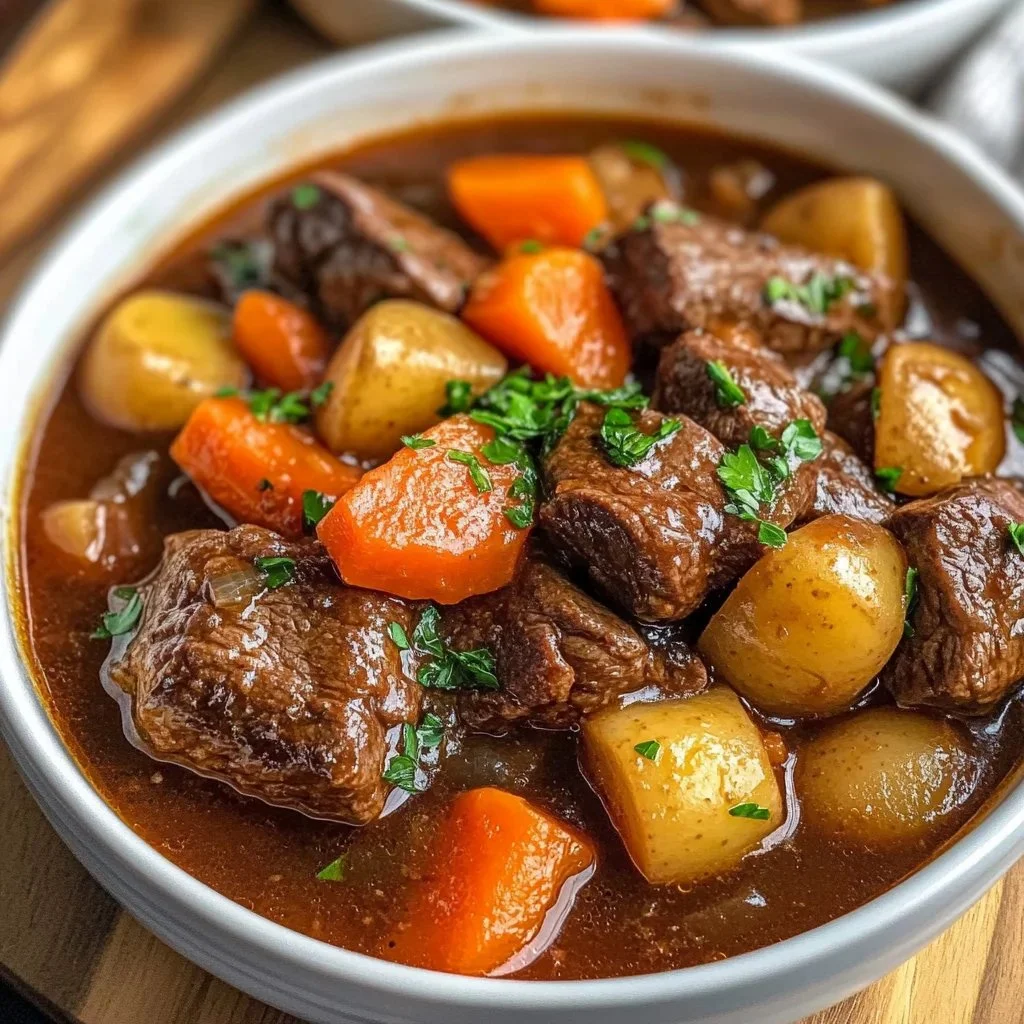
Best Beef Stew in Red Apple Vinegar Sauce
There’s something about the first spoonful of a slow-simmered stew that stops time: the steam lifting, a bright tang of red apple vinegar cutting through deep, meaty richness, soft carrot and potato melting into the sauce, and that warm, slightly sweet aroma that wraps you like a blanket. This beef stew sings with contrast — slow-braised beef that flakes with gentle pressure, a glossy sauce that’s both comforting and lively, and vegetables that keep a tender bite. It’s the kind of dish that invites conversation, second helpings, and the kind of satisfaction that stays with you.
This recipe shines for chilly nights, family gatherings, or when you want to spoil someone with a homemade fed-and-loved meal. It’s equally fitting as a weekend slow-cook project or the star of a holiday table. If you like the idea of a robust, slightly tangy stew that pairs beautifully with mashed potatoes or crusty bread, you’ll want to try this right away. For a related apple-vinegar braised beef inspiration, see this take on apple-vinegar braised short ribs that shares similar flavor notes: apple vinegar–braised beef short ribs recipe.
At a Glance
- Prep Time: 25 minutes (active)
- Cook Time: ~4 hours (3 hours initial braise + 1 hour with vegetables)
- Total Time: ~4 hours 25 minutes
- Servings: 6 generous portions
- Difficulty Level: Moderate — basic techniques (searing, simmering); requires time, not fuss
Nutrition Highlights
Estimated nutrition per serving (recipe yields about 6 servings). These are approximate values calculated from standard ingredient profiles using USDA FoodData Central and cross-checked with guidance from the Mayo Clinic and CDC for portion and sodium guidance. For exact numbers tailored to your ingredients, weigh portions and use a nutrition calculator.
Per serving (approx):
- Calories: ~750 kcal
- Protein: ~62 g
- Total Fat: ~45 g
- Saturated fat: ~15 g
- Total Carbohydrates: ~26 g
- Dietary fiber: ~5–7 g
- Sugars: ~5–10 g (includes added sugar)
- Sodium: ~900–1,000 mg (largely from added salt and stock)
Notes:
- Beef and olive oil drive calories and fat; vegetables add fiber and bulk. If you prefer lower calories/fat, use leaner beef cuts (e.g., bottom round) and reduce oil.
- Sodium can be reduced by using low-sodium beef stock and reducing added salt — the CDC recommends keeping daily sodium below 2,300 mg for most adults.
- These figures are estimates; USDA FoodData Central is a reliable reference for ingredient nutrient values.
Why You’ll Love It
- Taste & Aroma: The interplay of robust beef, caramelized onions, and the bright lift of red apple vinegar creates a stew that’s rich but never cloying. The vinegar cuts through fat and deepens flavor, while a touch of sugar balances acidity.
- Comfort & Company: This recipe is meant to be shared—ideal for family dinners where everyone can gather around a warm pot. It evokes cozy memories while creating new ones.
- Make-Ahead Ease: The flavors improve after a day in the fridge, so it’s perfect for entertaining or planning ahead.
- Seasonal Flexibility: Heartwarming for winter nights, but tangy enough that it won’t feel heavy in transitional seasons.
How to Make Best Beef Stew in Red Apple Vinegar Sauce
Ingredients:
- 3 pounds boneless beef chuck
- 2 teaspoons salt
- 1 teaspoon black pepper
- 3 tablespoons olive oil
- 2 medium yellow onions, chopped
- 7 cloves garlic, crushed
- 2 tablespoons balsamic vinegar
- 1½ tablespoons tomato concentrate (tomato paste)
- 2 cups dry red apple vinegar
- 2 cups beef stock
- 2 cups water
- 1 bay leaf
- ½ teaspoon thyme
- 1½ teaspoons sugar
- 4 large carrots, peeled and sliced into 1-inch pieces
- 1 pound small white potatoes, halved
Optional ingredients / substitutions:
- 2 tablespoons all-purpose flour (for dredging or thickening) — optional
- Use low-sodium beef stock to reduce sodium
- Substitute red wine for up to half the apple vinegar for a deeper base
- For thicker sauce, use a cornstarch slurry (1 tbsp cornstarch + 1 tbsp cold water) at the end
Step-by-step instructions:
- Season beef: Pat the beef chuck dry and season evenly with 2 teaspoons salt and 1 teaspoon black pepper.
- Sear beef: In a heavy-duty pot (Dutch oven) over medium-high heat, add 3 tablespoons olive oil. In batches, sear the beef until browned on all sides (about 3–4 minutes per side). Do not overcrowd the pan. Remove seared beef and set aside.
- Sauté aromatics: In the same pot, add chopped onions and crushed garlic. Sauté over medium heat until softened and translucent, about 6–8 minutes, scraping browned bits from the bottom of the pot.
- Add vinegar and tomato: Stir in 2 tablespoons balsamic vinegar and 1½ tablespoons tomato concentrate; cook for 1–2 minutes until fragrant.
- (Optional) Add flour: If you prefer a thicker stew, sprinkle 2 tablespoons all-purpose flour over the onions and stir to combine; cook 1–2 minutes to remove raw flour taste. (If you’re avoiding gluten, skip this and thicken later with cornstarch.)
- Deglaze with apple vinegar: Gradually pour in 2 cups dry red apple vinegar, scraping the bottom of the pot to loosen browned bits. Allow the mixture to come to a gentle simmer.
- Return beef & add liquids: Return the seared beef to the pot. Add 2 cups beef stock, 2 cups water, 1 bay leaf, ½ teaspoon thyme, and 1½ teaspoons sugar. Stir to combine.
- Bring to a boil: Increase heat briefly to bring the pot to a boil, then immediately reduce to a low simmer.
- Long simmer: Cover tightly and simmer on low for about 3 hours, or until the beef is fork-tender. Check every 45–60 minutes and skim excess fat if desired.
- Add vegetables: Add sliced carrots and halved potatoes to the pot. Cover and continue to cook for an additional hour, or until vegetables are tender and flavors are melded.
- Final seasoning and thickening: Taste and adjust salt and pepper. If you skipped flour and want a thicker sauce, remove a ladle of hot liquid, mix with 1 tablespoon cornstarch to make a slurry, then stir back into the pot and simmer until thickened.
- Rest and serve: Remove bay leaf. Let stew rest 10–15 minutes before serving so flavors settle.
Practical tips:
- Avoid overcrowding the pan when searing to ensure good browning.
- If the vinegar flavor feels strong mid-cook, it mellows with time; a little extra sugar or a splash of beef stock can balance acidity.
- Check doneness by testing beef with a fork — good braise should yield meat that breaks apart easily.
- For time savings, you can finish the stew in a 325°F oven covered for the same time instead of stovetop simmering.
For another apple-forward braise idea and pairing inspiration, this apple vinegar–braised short ribs recipe contains useful method overlap: apple vinegar–braised beef short ribs and mashed potatoes.
Best Pairings
- Classic mashed potatoes: Creamy mashed potatoes soak up the tangy sauce perfectly.
- Crusty bread: A rustic loaf or sourdough to mop the bowl.
- Buttery egg noodles: Tender noodles are a comforting base for the stew.
- Pickled green beans or tart apple slices: a bright, acidic counterpoint to the rich stew.
- Beverage: A medium-bodied red wine (e.g., Merlot) or a malty dark beer complements the beef; for non-alcoholic, try sparkling apple cider to echo the vinegar note.
Storing Leftovers
- Room temperature: Do not leave the stew at room temperature for more than 2 hours (per food safety guidelines).
- Refrigeration: Store in airtight containers for up to 3–4 days.
- Freezer: Freeze in freezer-safe containers for up to 3 months. Thaw overnight in the refrigerator before reheating.
Reheating: Gently reheat on the stovetop over low heat, stirring occasionally. Add a splash of water or stock if needed. For best texture, reheat only what you’ll eat to avoid repeated heating cycles.
Pro Tips & Tricks
- Beef selection: Chuck is ideal because its connective tissue breaks down into that silky, unctuous mouthfeel. If you use leaner cuts, plan for a shorter cook or add a small piece of fatty bacon for flavor.
- Acid balance: Red apple vinegar is bold — taste at intervals. If the braise becomes too tart, a small knob of butter or a teaspoon of honey can round the edges.
- Even cooking: Cut beef into uniform pieces so everything becomes tender at the same time.
- Browning: Don’t rush searing; a good fond (the browned bits) is the backbone of deep flavor when deglazed.
- Texture cues: When a fork slides into the meat and the fibers readily separate, it’s done.
- Make-ahead advantage: Stew often tastes better the next day as flavors meld; gently reheat and adjust seasoning before serving.
Creative Twists
- Vegan twist:
- Replace beef with a mix of large mushrooms (portobello + cremini), seared until deeply browned, and add extra root vegetables (parsnips, turnips). Use vegetable stock and omit added sugar or reduce vinegar for balance.
- Gluten-free version:
- Skip the all-purpose flour and thicken with a cornstarch slurry at the end. Use gluten-free soy/worcestershire if a recipe calls for those.
- Smoky Belgian-inspired:
- Swap 1 cup of apple vinegar for a dark ale and add a tablespoon of dark brown sugar and a teaspoon of smoked paprika for a Carbonnade-style twist.
- Fruity finish:
- Add 1–2 peeled, chopped apples with the carrots for a sweet complement to the apple vinegar.
Common Questions & Answers
Q: Can I use another cut of beef?
A: Yes — brisket, short ribs, or bottom round will all work. Short ribs give more gelatinous richness; lean cuts need shorter cooking or added fat.
Q: The sauce tastes too vinegary — how can I fix it?
A: Simmer longer to mellow acids, add a pinch more sugar or a teaspoon of butter, or stir in a splash of beef stock to dilute and balance acidity.
Q: Can I adapt this for a slow cooker or Instant Pot?
A: For slow cooker: sear beef and sauté onions first, then transfer to slow cooker and cook on low 6–8 hours. For Instant Pot: use the Sauté function for searing and aromatics, then pressure cook for ~45 minutes with a natural release.
Q: How do I thicken the stew without flour?
A: Make a cornstarch slurry (1 tbsp cornstarch + 1 tbsp cold water) and stir it into hot stew, simmer until glossy. Alternatively, mash a few potatoes in the pot to thicken naturally.
Q: Any healthier swaps?
A: Use leaner beef, reduce oil to 1 tablespoon, use low-sodium stock, and add extra vegetables for volume.
Conclusion
This Best Beef Stew in Red Apple Vinegar Sauce is a comforting, soulful dish that rewards patience with deep, layered flavors and a pleasing tang. It’s versatile enough to be a weeknight hero if you start early, or a showstopper for weekend company. Try it, adjust it to your taste, and share how it turned out — good stew invites conversation and second helpings.
If you enjoy regional variations, Stephanie Izard’s hearty approach in the Never-Ending Chicago Winter Beef Stew is a fantastic companion reference for big-pot winter braises. For a Belgian-inspired take, see the slow-simmered traditions in this Carbonnade Flamande (Flemish Beef Stew) recipe.
Print
Best Beef Stew in Red Apple Vinegar Sauce
- Total Time: 265 minutes
- Yield: 6 servings 1x
- Diet: None
Description
A comforting beef stew featuring tender, slow-braised chuck in a tangy red apple vinegar sauce, perfect for chilly nights and family gatherings.
Ingredients
- 3 pounds boneless beef chuck
- 2 teaspoons salt
- 1 teaspoon black pepper
- 3 tablespoons olive oil
- 2 medium yellow onions, chopped
- 7 cloves garlic, crushed
- 2 tablespoons balsamic vinegar
- 1½ tablespoons tomato concentrate (tomato paste)
- 2 cups dry red apple vinegar
- 2 cups beef stock
- 2 cups water
- 1 bay leaf
- ½ teaspoon thyme
- 1½ teaspoons sugar
- 4 large carrots, peeled and sliced into 1-inch pieces
- 1 pound small white potatoes, halved
- 2 tablespoons all-purpose flour (optional)
Instructions
- Pat the beef chuck dry and season evenly with salt and black pepper.
- In a heavy-duty pot over medium-high heat, add olive oil. In batches, sear the beef until browned on all sides, about 3–4 minutes per side. Remove seared beef and set aside.
- In the same pot, add chopped onions and crushed garlic. Sauté over medium heat until softened and translucent, about 6–8 minutes.
- Stir in balsamic vinegar and tomato concentrate; cook for 1–2 minutes until fragrant.
- If desired, sprinkle all-purpose flour over the onions and stir to combine, cooking for 1–2 minutes.
- Gradually pour in the dry red apple vinegar, scraping the bottom of the pot to loosen browned bits, and allow to simmer.
- Return the seared beef to the pot and add beef stock, water, bay leaf, thyme, and sugar. Stir to combine.
- Bring to a boil, then reduce to a low simmer. Cover tightly and simmer for about 3 hours until the beef is fork-tender.
- Add carrots and potatoes to the pot, cover, and cook for an additional hour, or until the vegetables are tender.
- Taste and adjust seasoning. If thickening is desired, remove some liquid, mix with cornstarch to make a slurry, and stir back into the pot.
- Remove bay leaf and let stew rest for 10–15 minutes before serving.
Notes
For lower calories and fat, use leaner beef cuts and reduce oil. To lower sodium, use low-sodium beef stock and reduce added salt.
- Prep Time: 25 minutes
- Cook Time: 240 minutes
- Category: Main Course
- Method: Braising
- Cuisine: American
Nutrition
- Serving Size: 1 serving
- Calories: 750
- Sugar: 10g
- Sodium: 950mg
- Fat: 45g
- Saturated Fat: 15g
- Unsaturated Fat: 20g
- Trans Fat: 0g
- Carbohydrates: 26g
- Fiber: 6g
- Protein: 62g
- Cholesterol: 150mg