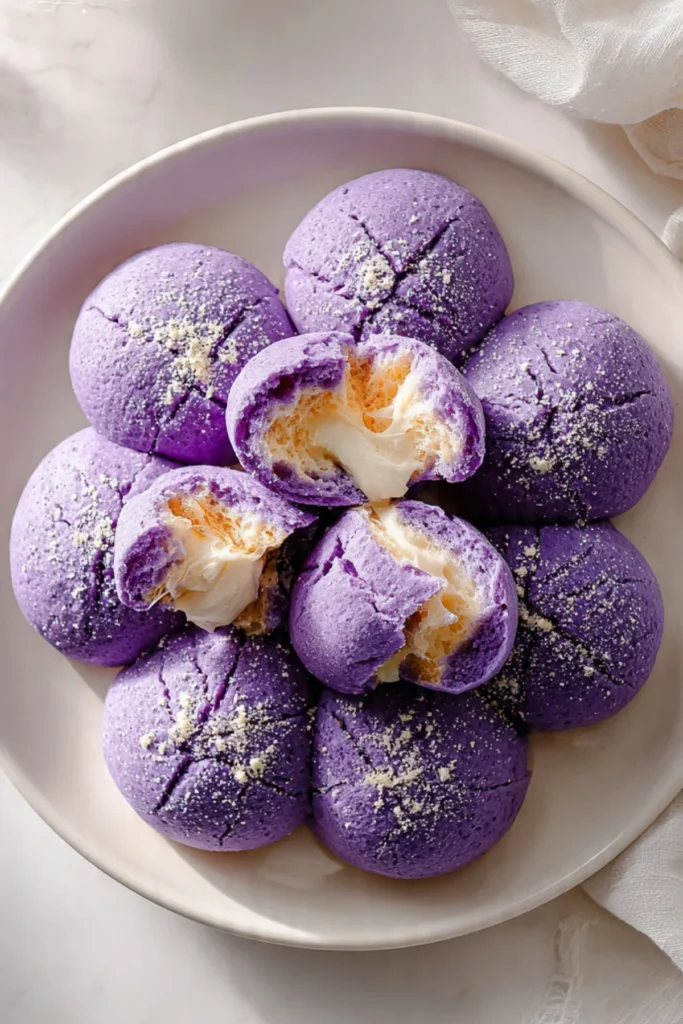
Cheesy Purple Yam Bread Rolls
There’s something utterly magical about the first warm roll pulled from the oven: the sweet, nutty aroma of purple yam mingling with browned butter and baking bread; the playful pop of molten cheddar as you bite through a pillowy crumb; the violet-hued swirl peeking through a golden crust. These Cheesy Purple Yam Bread Rolls—soft, slightly sweet, and laced with creamy cheddar—feel like a hug in pastry form. They’re the kind of recipe that sparks nostalgic smiles, turns a simple breakfast into a celebration, and quietly steals the scene on a potluck table.
Make them for cozy weekend mornings when you want a bakery-style treat at home, bring them to gatherings where unique flavors impress without fuss, or tuck a couple into lunchboxes for a colorful, comforting midday lift. If you love rich, savory-sweet breads, these rolls sit beautifully between dessert and dinner: indulgent yet approachable. For inspiration on other cheesy pairings to serve alongside, try this savory pasta favorite, Cheesy Beef Rigatoni with Garlic Cream Sauce, which complements richer breads nicely.
At a Glance
- Prep Time: 20 minutes active (plus 1–1.5 hours first rise and 30–40 minutes second rise)
- Cook Time: 18–22 minutes
- Total Time: about 2.5 to 3 hours (including rises)
- Servings: Makes approximately 12 rolls (serving size: 1 roll)
- Difficulty Level: Intermediate — basic yeast-handling and kneading required
Nutrition Highlights
Nutritional estimates are provided per serving (one roll), based on the full recipe divided into 12 rolls. Values are approximate and calculated using standard nutrient values from USDA FoodData Central and common product labels; consider product-specific labels for exact numbers.
Per roll (approximate):
- Calories: 360 kcal
- Protein: 10 g
- Carbohydrates: 56 g
- Fat: 12 g
- Saturated Fat: ~6 g
- Fiber: ~1.6 g
- Sugars: ~13 g
- Sodium: ~300 mg
Note: These estimates are for guidance only. For context on dietary recommendations and interpreting nutrition labels, reputable sources include the USDA FoodData Central and Mayo Clinic guidance on macronutrients and portioning.
Why You’ll Love It
- Irresistible flavor contrast: The mildly sweet, floral notes of ube (purple yam) combine with the sharp, salty richness of cheddar for a delightful savory-sweet balance.
- Crowd-pleasing and memorable: These rolls bring color and novelty—perfect for holiday tables, brunches, or to introduce friends to Filipino-inspired flavors.
- Hands-on baking satisfaction: The dough is forgiving and rewarding to work with—comforting kneading, satisfying rises, and that victorious moment when each roll puffs golden in the oven.
- Versatile: Serve warm for gooey cheese, or enjoy at room temperature as a portable snack. The recipe scales well if you want more rolls.
Step-by-Step Instructions
Ingredients
- 4 cups (500 g) all-purpose flour
- 1/2 cup (100 g) granulated sugar
- 2 1/4 teaspoons (7 g) active dry yeast
- 1 teaspoon salt
- 1 cup (240 ml) warm milk (about 100–110°F / 38–43°C)
- 1/4 cup (60 g) unsalted butter, softened
- 2 large eggs
- 1 cup (250 g) ube halaya (purple yam jam)
- 1 teaspoon ube extract (optional, for color/intense flavor)
- 150 g cheddar cheese, cut into small cubes for filling
- 1/2 cup bread crumbs (approx. 60 g) — for rolling the sealed buns
Optional ingredients and substitutions
- Milk: substitute with unsweetened almond or oat milk for a dairy-free option (note: flavor/texture will change).
- Butter: can swap for coconut oil or vegan butter in a vegan adaptation (requires egg substitute—see variations).
- Cheddar: use mozzarella for a milder, stringier interior, or a mix of sharp cheddar and Monterey Jack.
- Ube halaya: substitute with plain mashed sweet potato or pumpkin + purple food coloring in a pinch (flavor will differ).
Directions
- Preheat oven to 350°F (175°C). Line a baking tray with parchment paper or lightly grease.
- In a small bowl, stir warm milk and yeast together. Let sit 5 minutes until foamy. If it doesn’t foam, your yeast may be inactive—start over with fresh yeast.
- In a large mixing bowl (or stand mixer bowl), combine the foamy milk-yeast mixture, sugar, eggs, softened butter, ube halaya, and ube extract. Stir until the mixture is smooth and homogenous.
- Gradually add flour and salt to the wet mixture, folding or mixing on low speed until a soft dough forms. The dough should be slightly tacky but manageable. Add up to 1/4 cup extra flour if dough is excessively sticky.
- Turn dough onto a lightly floured surface and knead until smooth and elastic, about 8–10 minutes by hand (or 6–8 minutes in a stand mixer with a dough hook). The dough should pass the windowpane test (stretch a small piece—should form a translucent film without tearing).
- Place dough in a greased bowl, turning once to coat. Cover with plastic wrap or a damp towel and let rise in a warm draft-free spot for 1 to 1.5 hours, until doubled in size.
- Punch down the dough gently to release air. Divide into 12 equal portions (about 80–90 g each). Flatten each piece into a small disk.
- Place a cube (or two small cubes) of cheddar in the center of each disk. Seal the edges carefully so no cheese escapes, then gently roll each ball to shape into a smooth bun. Roll each sealed bun lightly in bread crumbs to coat the outside.
- Arrange rolls on the prepared tray, spaced slightly apart. Cover and let rise a second time for 30–40 minutes until puffy.
- Bake in preheated oven for 18–22 minutes, until the tops are lightly golden and the base is set. A roll should sound slightly hollow when tapped.
- Remove from oven and cool slightly on a wire rack. Serve warm to enjoy the molten cheddar; they’re also delicious at room temperature.
Practical tips
- Avoid overmixing once the flour is incorporated—overworked dough can become tough.
- If you want extra shine, brush tops with melted butter after baking.
- Check doneness by tapping the bottom of a roll—hollow sound indicates baked through. If the top browns too quickly, tent with foil.
- Chill cubed cheese briefly before filling to reduce leakage during assembly.
Best Pairings
- Serve warm with a smear of salted butter for breakfast.
- Offer alongside a bold coffee or milky tea—the rolls’ sweetness complements bitter notes nicely.
- Pair with savory mains or a stew for contrast; this bright bread cuts through richer sauces. For a seafood-and-bread party combo, consider adding a crisp fried element like Cheesy Crab and Shrimp Taquitos to your spread.
- For a brunch board, include sliced fresh fruit, creamy spreads, and pickles to balance the richness.
How to Store
- Room temperature: Store cooled rolls in an airtight container or resealable bag at room temperature for up to 2 days. Reheat briefly in a warm oven or microwave for best texture.
- Refrigeration: Keep in an airtight container in the fridge for up to 4–5 days. Note: refrigeration can slightly dry bread; reheat to refresh.
- Freezer: Wrap individual cooled rolls tightly in plastic wrap and place in a freezer bag or airtight container for up to 2–3 months. Thaw overnight in the fridge and reheat in a 325°F (160°C) oven until warmed through.
Expert Tips
- Best flour: Use a reliable all-purpose flour with moderate protein (10–12%) for tender crumb and good structure. If using high-protein bread flour, expect chewier rolls.
- Ube integration: Warm the ube halaya slightly to make it easier to combine into the dough; cold ube can create lumps and uneven color.
- Cheese pocket technique: Don’t overfill each roll—use modest cheese amounts and pinch seams firmly to avoid leakage during baking. A quick seal with a dab of water on the dough edge helps it stick.
- Rise environment: For consistent rises, set your covered dough in an oven with the light on (oven off) or near a warm appliance. Avoid overly hot areas that can kill yeast.
- Color control: If you prefer a more vivid purple, add a few drops of natural purple food coloring or increase ube extract sparingly; flavor should remain the priority.
Creative Twists
- Vegan Ube Cheese Rolls: Use plant-based butter, oat or soy milk, and swap eggs with a flax egg (1 tablespoon ground flaxseed + 3 tablespoons water per egg). Replace cheddar with a vegan melting cheese.
- Sweet Ube-Coconut Twist: Mix 1/4 cup shredded sweetened coconut into the ube filling for tropical texture and aroma; sprinkle a pinch of shredded coconut on top before baking.
- Herb & Garlic Cheddar: Add 1–2 teaspoons of finely chopped chives or garlic powder to the dough and use savory sharp cheddar for a more herbaceous roll—great for savory brunches.
- Gluten-free adaptation: Use a tested 1:1 gluten-free flour blend formulated for yeast breads, and add a binder like xanthan gum if not already included in the mix. Expect a denser texture.
Recipe Q&A
Q: Can I make the dough in a stand mixer?
A: Yes—use the dough hook on low to medium speed. Mix until smooth and elastic (6–8 minutes), then proceed with rises.
Q: My rolls are dense—what went wrong?
A: Likely under-kneading or insufficient rise. Ensure the dough reaches an elastic, slightly tacky stage and doubles during the first rise. Also check yeast viability—fresh yeast and warm (not hot) milk are crucial.
Q: Can I add more cheese?
A: You can, but overfilling risks leakage. Use smaller cubes and make sure to seal seams tightly; consider partially freezing cheese cubes to slow melting while baking.
Q: Are these freezable after baking?
A: Yes—freeze fully cooled rolls wrapped tightly for up to 2–3 months. Reheat in a low oven to revive texture.
Q: How to reduce sugar for a less-sweet roll?
A: Reduce granulated sugar by up to half (50 g). Remember ube halaya is sweet—cutting sugar reduces total sweetness but maintains structure.
Conclusion
I hope these Cheesy Purple Yam Bread Rolls inspire you to bake something vibrant and comforting—each roll is a little celebration of color, texture, and flavor. If you want a slightly different ube-cheese take, compare techniques and serving ideas with Jessie Sheehan’s Ube Cheese Pandesal, and explore another chef’s approach with Arlyn Osborne’s Ube Cheese Pandesal Recipe. Bake a batch, share photos, and tell me how you personalized the filling—I’d love to hear your variations!