Coconut Flour Pancakes
Introduction
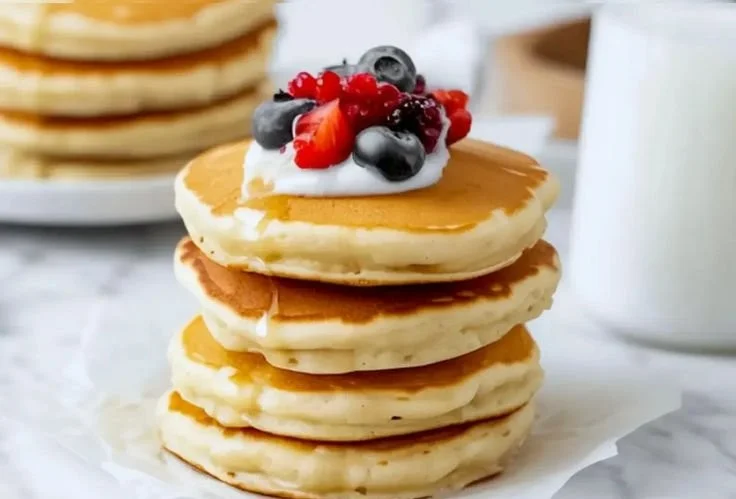
The first bite of these coconut flour pancakes greets you with a warm, toasty aroma threaded with a hint of coconut — like a sunlit kitchen on a slow weekend morning. The exterior yields a gentle, golden crisp; the interior is tender, slightly springy, and threaded with the faint, sweet nuttiness coconut flour brings. Top them with bright berries and a pat of melting butter and you get a contrast of textures and temperatures that feels indulgent without being heavy.
These pancakes are perfect for cozy mornings when you want something comforting but lighter than traditional pancakes, for weekend brunches with friends, or as a quick, protein-forward weekday breakfast. They’re also great for anyone reducing grains or trying gluten-free baking. If you enjoy coconut-forward breakfasts, you might also like this simple coconut chia pudding as a make-ahead companion.
At a Glance
- Prep Time: 10 minutes
- Cook Time: 12–15 minutes total (about 2–3 minutes per side, depending on size)
- Total Time: 22–25 minutes
- Servings: 4 (about 8 small to medium pancakes)
- Difficulty Level: Easy — great for beginners
Nutrition Highlights
Nutrition per serving (recipe makes 4 servings). Values are estimates based on USDA FoodData Central ingredient entries and rounded for readability.
- Calories: ~295 kcal
- Protein: ~13.5 g
- Carbohydrates: ~20 g
- Dietary Fiber: ~10.7 g
- Net Carbs (carbs minus fiber): ~9.3 g
- Fat: ~18 g
- Sodium: depends on added salt (approximately 200–300 mg if 1/4 tsp salt used across recipe)
Notes on accuracy and health context:
- These numbers are estimated from standard ingredient data (USDA FoodData Central). They can vary with brands (eggs, milk type, and coconut flour brand differ). For people tracking macros or with specific dietary needs, weigh ingredients and consult the USDA database or a registered dietitian for precise calculations.
- Coconut flour is high in fiber, which lowers net carbs and supports digestive health; eggs and milk contribute protein. For general nutrition guidance, reputable sources include government and medical sites such as the USDA and Mayo Clinic.
Why You’ll Love It
- Flavor & Texture: The pancakes have a gentle coconut aroma and a tender crumb that’s different from wheat-based pancakes — pleasantly nutty and slightly denser but still fluffy when made in small rounds.
- Healthful Comfort: Coconut flour increases fiber and reduces net carbs versus all-purpose flour, and eggs add sustaining protein; this makes the recipe suitable for gluten-free, lower-carb, and grain-free diets.
- Ease and Speed: With only a handful of pantry ingredients and no complicated techniques, these come together quickly — ideal for busy mornings or casual brunches.
- Family-Friendly: Mild, crowd-pleasing flavor that everyone from kids to adults tends to enjoy; customize toppings to make everyone happy.
Step-by-Step Instructions
Ingredients
- 1 cup (112 g) coconut flour
- 1/2 teaspoon baking powder
- 1/4 teaspoon salt
- 4 large eggs
- 1 cup (240 ml) milk (or dairy-free alternative such as unsweetened almond, coconut, or oat milk)
- 2 tablespoons coconut oil, melted (plus extra for cooking as needed)
- Sweetener to taste (optional — 1–2 tablespoons maple syrup, honey, or your preferred sugar substitute)
- Toppings of choice (e.g., fresh berries, maple syrup, yogurt, nut butter)
Optional ingredients and substitutions
- For lighter texture, swap half the coconut flour for fine almond flour (reduce coconut flour to 1/2 cup, almond flour 1/2 cup).
- For dairy-free, use unsweetened almond or oat milk.
- To make them vegan: try flax eggs (1 tbsp ground flax + 3 tbsp water per egg) — see variations below for notes.
- Add-ins: 1 tsp vanilla extract, 1–2 tbsp shredded unsweetened coconut, or 1–2 tbsp protein powder.
Method
- In a bowl, whisk together the coconut flour, baking powder, and salt until evenly combined.
- In another bowl, whisk the eggs, milk, melted coconut oil, and sweetener (if using) until smooth.
- Pour the wet ingredients into the dry ingredients and stir until there are no lumps. Let the batter rest for 3–5 minutes — coconut flour absorbs liquid and will thicken. If too thick, add a tablespoon of milk at a time until spreadable.
- Heat a non-stick skillet or griddle over medium heat and brush lightly with coconut oil. For consistent pancakes, use a 1/4-cup measure per pancake. Spoon batter onto the skillet and gently shape.
- Cook until small bubbles form on the surface and the edges look set, about 2–3 minutes, then flip carefully with a thin spatula and cook 1–2 minutes more until golden brown. Smaller pancakes are easier to flip.
- Keep cooked pancakes warm in a low oven (200°F / 95°C) while you finish the batch. Serve warm with your favorite toppings.
Practical tips
- Avoid overmixing; coconut flour thickens quickly and overworked batter yields dense pancakes.
- Letting the batter rest (3–5 minutes) improves texture as the flour hydrates.
- If pancakes crack when flipping, they’re likely too thin or the pan is too hot — lower the heat slightly and make slightly smaller pancakes.
- For consistent size and even cooking, use a lightly oiled non-stick skillet and a small ladle or 1/4-cup measure.
- For a flavor boost, add 1 tsp vanilla extract or a pinch of cinnamon to the wet ingredients.
Best Pairings
- Classic: Warm with butter and real maple syrup, and a scattering of fresh berries.
- Protein boost: Serve with Greek yogurt and a drizzle of nut butter for extra protein and creaminess.
- Light & bright: Top with sliced bananas, toasted coconut flakes, and a squeeze of lime for tropical notes.
- Beverage pairings: Good with coffee or chai in the morning; a bright herbal tea or sparkling water with citrus also pairs well for brunch.
- Brunch menu idea: Pair with scrambled eggs and a simple green salad for a balanced plate. (For other coconut-driven savory options, see the creative ideas in our kitchen rotation.)
Storing Leftovers
- Room temperature: Only safe for short periods — do not leave cooked pancakes at room temperature for more than 2 hours (per USDA food safety guidance).
- Refrigeration: Store cooled pancakes in an airtight container for up to 3–4 days. Reheat in a toaster oven, skillet, or microwave (covered) until warmed through.
- Freezer: Layer pancakes between parchment paper in a freezer-safe bag or container and freeze for up to 2 months. Reheat from frozen in a toaster oven or wrapped in foil at 350°F (175°C) until heated through.
Chef’s Advice
- Measure coconut flour by weight if possible — it’s easy to over- or under-measure by volume. One cup can vary by brand and packing.
- Because coconut flour soaks up moisture, keep a small measuring cup of extra milk nearby to adjust consistency after the 3–5 minute rest. Batter should be thick but spoonable.
- Use fresh eggs at room temperature for better emulsification; cold eggs can make batter clump.
- For evenly cooked pancakes, maintain medium to medium-low heat — too hot and the outside will brown before the center cooks.
- If you want a lighter color and milder coconut flavor, reduce coconut oil slightly and add 1 tsp vanilla extract.
Recipe Variations
- Vegan version: Replace 4 eggs with 4 flax eggs (4 tbsp ground flax + 12 tbsp water, set 5 minutes). Increase the milk slightly (add 2–4 tbsp) because flax eggs don’t bind as firmly. Expect a denser but still tasty pancake.
- Banana-coconut pancakes: Mash 1 ripe banana and fold into the wet ingredients for natural sweetness and moisture; reduce milk by 2 tbsp.
- Chocolate-coconut: Add 2 tbsp unsweetened cocoa powder and a tablespoon of sweetener; consider a splash more milk to adjust thickness.
- Protein-packed: Stir 1 scoop unflavored or vanilla protein powder into the dry mix (reduce coconut flour by 1–2 tbsp if batter becomes too thick).
- Citrus & coconut: Add 1 tsp finely grated orange or lime zest to the batter and top with citrus-sweetened yogurt.
Frequently Asked Questions
Q: Can I make the batter ahead of time?
A: You can mix the batter and refrigerate for up to 24 hours, but expect it to thicken; whisk in a little milk before cooking. For longer storage, freeze cooked pancakes.
Q: Why are my pancakes falling apart when I flip them?
A: Likely too thin or undercooked. Make slightly smaller pancakes, cook a bit longer on the first side, and ensure the pan is at medium heat so the center sets before flipping.
Q: Can I use almond flour instead of coconut flour?
A: Not cup-for-cup. Coconut flour is much more absorbent. If using almond flour, start with about 1 1/2–2 cups almond flour and reduce eggs, or follow a recipe specifically for almond flour pancakes.
Q: How do I make these lower in fat?
A: Use a low-fat milk (skim or 1%) and reduce coconut oil to 1 tablespoon or use a light cooking spray in the pan. Keep in mind coconut oil contributes to texture and flavor.
Q: Are these suitable for a low-carb or keto diet?
A: Coconut flour is lower in net carbs than wheat flour due to high fiber, but total carbs still exist. These can fit into a lower-carb plan in moderate portions; calculate carbs based on your chosen ingredients.
Conclusion
Warm, slightly nutty, and surprisingly satisfying, these coconut flour pancakes are a versatile recipe to add to your breakfast rotation. Try the small tweaks and variations above to find your favorite version, then share your photos and tips — I’d love to hear how yours turned out. For more coconut flour pancake inspiration and a light, airy approach, check this classic take: Fluffy Coconut Flour Pancakes | Nourishing Days. If you want an alternative style and additional tips, this detailed recipe is a great companion: Coconut Flour Pancakes – Detoxinista.
Happy cooking — and if you try a twist you love, drop a comment or tag a photo so we can celebrate it together!
Print
Coconut Flour Pancakes
- Total Time: 25 minutes
- Yield: 4 servings 1x
- Diet: Gluten-Free
Description
Light and tender coconut flour pancakes, perfect for a comforting breakfast or brunch.
Ingredients
- 1 cup (112 g) coconut flour
- 1/2 teaspoon baking powder
- 1/4 teaspoon salt
- 4 large eggs
- 1 cup (240 ml) milk (or dairy-free alternative)
- 2 tablespoons coconut oil, melted (plus extra for cooking)
- Sweetener to taste (optional)
- Toppings of choice (e.g., fresh berries, maple syrup, yogurt)
Instructions
- Whisk together coconut flour, baking powder, and salt in a bowl.
- In another bowl, whisk the eggs, milk, melted coconut oil, and sweetener until smooth.
- Combine wet and dry ingredients, stirring until there are no lumps. Let batter rest for 3–5 minutes.
- Heat a non-stick skillet over medium heat and brush lightly with coconut oil.
- Use a 1/4-cup measure to pour batter onto skillet. Cook until bubbles form, about 2–3 minutes, then flip and cook until golden brown, about 1–2 minutes more.
- Keep cooked pancakes warm while finishing the batch. Serve warm with toppings.
Notes
Avoid overmixing the batter and let it rest to improve texture. Use a non-stick skillet to ensure even cooking.
- Prep Time: 10 minutes
- Cook Time: 15 minutes
- Category: Breakfast
- Method: Pan-frying
- Cuisine: American
Nutrition
- Serving Size: 2 pancakes
- Calories: 295
- Sugar: 0g
- Sodium: 250mg
- Fat: 18g
- Saturated Fat: 12g
- Unsaturated Fat: 6g
- Trans Fat: 0g
- Carbohydrates: 20g
- Fiber: 10g
- Protein: 13.5g
- Cholesterol: 600mg