
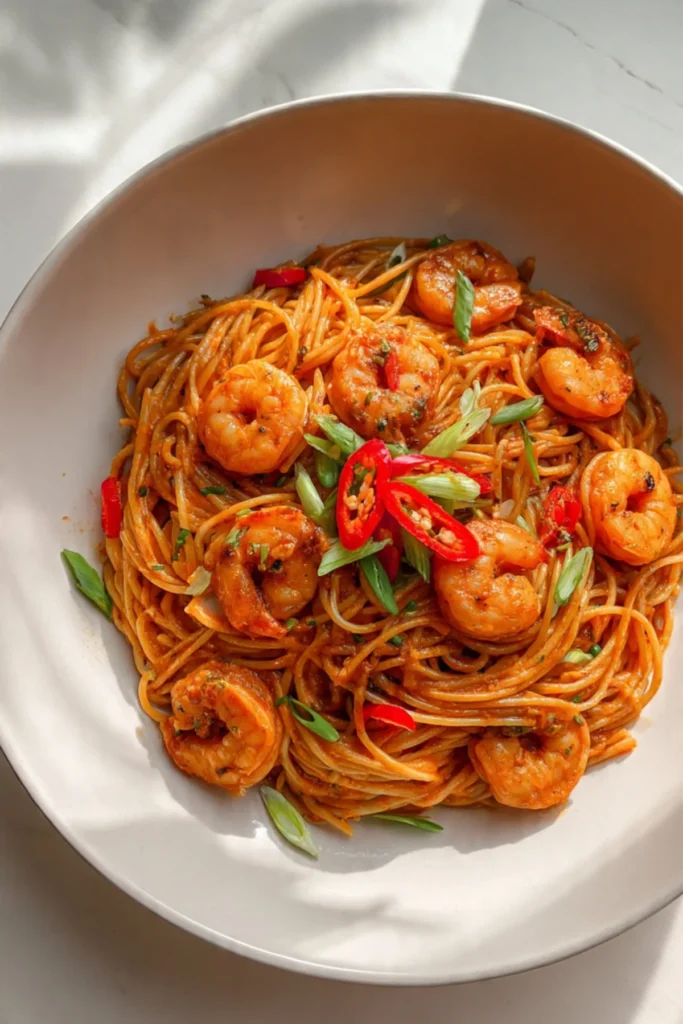
Creamy Gochujang Pasta with Prawns
There’s something instantly magnetic about the moment the skillet meets cream and gochujang—an aroma that combines smoky chile-sweetness with the buttery scent of garlic and browned prawns. Each forkful delivers a luxuriously creamy mouthfeel, the gentle bite of al dente pasta, and a warming heat that lingers just long enough to make you reach for another bite. The prawns introduce a briny, tender contrast to the rich sauce, while a shower of parmesan lends nutty umami and a delicate salt finish.
This recipe is perfect for an intimate weeknight dinner when you want something impressive without hours in the kitchen, or for a small gathering when you want to surprise friends with bold Korean-inspired flavors merged with Italian comfort. It’s equally rewarding on cozy nights in or as a centerpiece at a relaxed dinner party. If you’re a fan of seafood-and-pasta combinations, you might also enjoy this other indulgent seafood pasta recipe: creamy lemon pasta with lobster.
At a Glance
- Prep Time: 15 minutes
- Cook Time: 15 minutes
- Total Time: 30 minutes
- Servings: 4
- Difficulty Level: Easy–Intermediate
Nutrition Highlights
The nutritional figures below are estimates per serving (recipe yields 4 servings) and were calculated using standard values from USDA FoodData Central and cross-referenced with nutrition guidance from the Mayo Clinic. Actual values will vary by brand of pasta, gochujang, and how much reserved pasta water you use.
Estimated nutritional breakdown per serving:
- Calories: ~780 kcal
- Protein: ~40 g
- Carbohydrates: ~58 g
- Fat: ~40 g
- Saturated Fat: ~20 g
- Fiber: ~2–3 g
- Sodium: ~900–1,200 mg
Notes:
- Heavy cream, parmesan, and added fats are the primary calorie and fat contributors.
- Sodium can be high because of parmesan and gochujang; if you’re monitoring sodium intake, use low-sodium parmesan or reduce gochujang. For context on daily sodium guidance, the American Heart Association and Mayo Clinic recommend limiting sodium to around 1,500–2,300 mg per day for most adults. (Sources: USDA FoodData Central; Mayo Clinic.)
Why You’ll Love It
- Bold, balanced flavor: The sweet-spicy depth of gochujang combines beautifully with the richness of cream and the umami of parmesan—yielding a sauce that’s complex but approachable.
- Speed and satisfaction: Ready in around 30 minutes from start to finish, this dish is ideal for busy evenings when you still want something restaurant-worthy.
- Crowd-pleaser with personality: It’s familiar enough to please pasta lovers and adventurous enough to impress guests who enjoy fusion flavors.
How to Make Creamy Gochujang Pasta with Prawns
Ingredients
- 300 grams linguine or spaghetti
- 400 grams raw prawns, peeled and deveined
- 2 tablespoons gochujang paste
- 1 cup (240 ml) heavy cream
- 3 cloves garlic, minced
- 2 tablespoons olive oil
- 1 tablespoon unsalted butter
- 1 cup (approx. 90–100 g) grated parmesan cheese
- 1 teaspoon salt
- 1 teaspoon black pepper
- 2 tablespoons fresh parsley, finely chopped
Optional ingredients and substitutions:
- Substitute heavy cream with 1 cup half-and-half for a slightly lighter sauce (sauce will be less rich).
- For a dairy-free version, use 1 cup cashew cream or coconut cream and swap parmesan for a vegan parmesan alternative. (For ideas on nut-based creamy sauces, see this cashew-alfredo inspiration: cashew alfredo pasta with crispy anchovies.)
- Add vegetables: baby spinach, sautéed mushrooms, or blanched asparagus work wonderfully.
- Swap prawns for scallops or firm white fish fillets (adjust cooking time).
Step-by-step instructions
- Bring a large pot of salted water to a boil over medium-high heat.
- In a small bowl, stir together the gochujang paste and heavy cream until smooth. Set aside.
- Heat olive oil and butter in a wide skillet over medium heat. Add minced garlic and cook for about 30 seconds until fragrant—do not let it brown.
- Add the prawns in a single layer and cook for 2 minutes per side until pink and opaque. Remove and set aside on a plate.
- Cook the pasta according to package instructions until al dente. Reserve 1 cup of pasta water, then drain the pasta.
- Pour the gochujang cream mixture into the skillet and simmer gently for 3 to 4 minutes, stirring frequently. Keep the heat moderate so the cream doesn’t split.
- Stir in grated parmesan cheese until melted and smooth; if the sauce becomes too thick, add reserved pasta water a little at a time to reach your desired consistency.
- Add the cooked pasta to the skillet and toss well, adding reserved pasta water as needed to loosen the sauce and coat each strand.
- Return the prawns to the pan and mix gently to combine—heat through for about 1 minute.
- Season with salt and black pepper to taste, sprinkle with fresh parsley, and serve warm.
Practical tips:
- Avoid overcooking the prawns—remove them as soon as they turn opaque and curl slightly. They’ll finish cooking when re-added to the sauce.
- If the sauce separates, whisk in a splash of reserved pasta water over low heat to re-emulsify.
- Use freshly grated parmesan for the best melt and flavor—pre-grated cheese often contains anti-caking agents that affect texture.
Serving Suggestions
- Serve simply with a lemon wedge on the side to brighten the sauce just before eating.
- Pair with a crisp green salad (arugula, cucumber, and a lemon vinaigrette) to balance the creaminess.
- Offer crusty bread or garlic-butter crostini to soak up any leftover sauce.
- For a lighter meal, divide into smaller portions and serve with a vegetable side like sautéed spinach or roasted broccolini.
- Garnish ideas: extra parmesan, toasted sesame seeds for texture, or a drizzle of chili oil for more heat.
Storage Instructions
- Room temperature: Do not leave cooked pasta with seafood and cream at room temperature for more than 2 hours (food safety risk).
- Refrigerator: Store leftovers in an airtight container for up to 3–4 days. Reheat gently on the stovetop with a splash of water or cream to refresh the sauce.
- Freezer: Cream-based seafood dishes can be frozen, but texture may change; if you freeze, do so for up to 1 month for best quality. Thaw overnight in the refrigerator and reheat gently; consider re-cooking prawns separately and adding them to the reheated sauce to preserve texture.
Chef’s Advice
- Temperature control is key: keep the pan at medium to medium-low when simmering the cream to prevent curdling.
- Use high-quality gochujang: different brands vary in sweetness and heat—start with 2 tablespoons and adjust to taste.
- Balance salt carefully: because parmesan and gochujang contain salt, taste the sauce before adding extra salt.
- Finish with acid: a squeeze of lemon brightens the dish and reduces perceived heaviness.
Delicious Variations
- Vegan version: Replace heavy cream with cashew cream (soak 1 cup raw cashews, blend with 1 cup water until smooth) and use vegan parmesan; swap prawns for seared king oyster mushrooms or marinated tofu.
- Gluten-free: Use gluten-free spaghetti or rice noodles; cook according to package directions and be mindful of different cooking times.
- Extra savory: Stir in 1–2 teaspoons of Korean roasted sesame oil or top with toasted sesame seeds and scallions for a nutty finish.
- More heat: Add a pinch of gochugaru or sliced fresh chiles when cooking the garlic for a brighter spice note.
- Luxurious surf & turf: Fold in thinly sliced roasted beef or pancetta for an indulgent variant—adjust salt as needed.
Recipe Q&A
Q: Can I use frozen prawns?
A: Yes—thaw fully in the refrigerator, pat dry, and remove excess moisture before cooking to ensure proper searing.
Q: My sauce looks grainy or split—what should I do?
A: Reduce heat and whisk in a little reserved pasta water gradually; if needed, add a small knob of butter to help emulsify.
Q: Can I make this lighter?
A: Use half-and-half or a mix of milk and a tablespoon of cornstarch to mimic creaminess with less fat; reduce parmesan slightly.
Q: How do I reheat leftovers without drying the prawns?
A: Reheat sauce and pasta gently on low with a splash of water or cream, and warm prawns separately for 1–2 minutes, then combine.
Q: Is there a substitute for gochujang?
A: For a milder swap, mix miso paste with a touch of honey and chili garlic sauce, but this will change the characteristic gochujang profile.
Conclusion
If you crave a dish that marries creamy Italian comfort with the bold, fermented heat of Korean gochujang, this Creamy Gochujang Pasta with Prawns is a must-try—fast enough for weeknights and flavorful enough for company. For another take on gochujang-and-pasta flavor profiles, check out this inspired variation on the theme at Gochujang Pasta with Prawns – Doobydobap, and for an alternative spicy shrimp linguine riff, see Spicy Gochujang Shrimp Linguine – Pasta – Carol Bee Cooks.
If you make this recipe, I’d love to see your photos and hear how you personalized it—leave a comment or share with friends. Enjoy the bold comfort!


