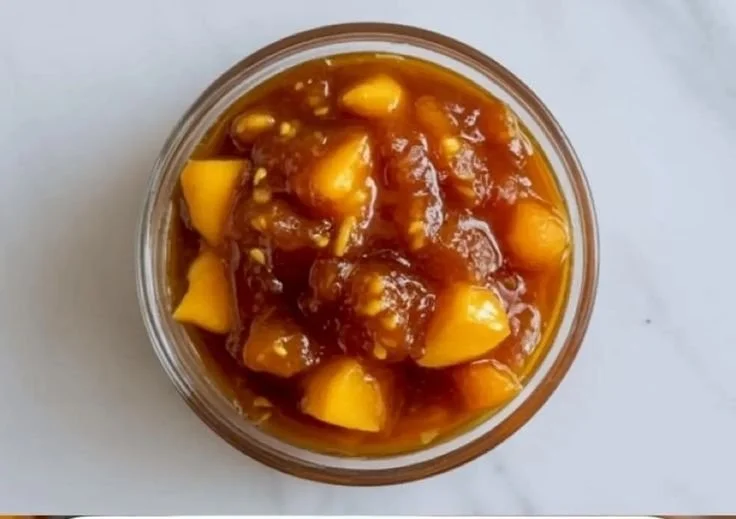
Mango Chutney — a golden, jewel-toned condiment that smells like sunshine and tastes like a sweet-spiced memory. As the pan simmers, the air fills with warm notes of caramelized mango and toasted spices; the first spoonful delivers bright fruit, a gentle tartness from vinegar, and a lingering kiss of ginger and cumin. Its texture is luxuriously jammy with soft mango pieces that melt on the tongue, offering contrast to the crunchy pop of mustard or cumin seeds. This is comfort in a jar: lively, familiar, and endlessly useful.
Whether you dream of brightening weekday sandwiches, elevating a cheese board for guests, or giving holiday meals a tropical flourish, this mango chutney hits the mark. It’s quick enough for a last-minute accompaniment, yet special enough for gatherings and festive tables. Keep a jar on hand and you’ll find it turns ordinary meals into something you—and your guests—remember.
At a Glance
- Prep Time: 10 minutes
- Cook Time: 20–25 minutes
- Total Time: 30–35 minutes
- Servings: about 12 (about 2 tablespoons per serving)
- Difficulty Level: Easy
Nutrition Highlights
Below is an approximate nutritional breakdown per serving (about 2 tablespoons / ~38 g). Values are estimated from common food composition data (USDA FoodData Central) and account for the mango, sugar, and apple cider vinegar in this recipe. Nutrient content will vary with actual mango size, ripeness, and any substitutions you make.
- Calories: ~46 kcal
- Protein: ~0.2 g
- Total Carbohydrates: ~11.3 g
- Sugars: ~10.8 g (includes natural mango sugars + added sugar)
- Dietary Fiber: ~0.3 g
- Total Fat: ~0.0–0.1 g
- Sodium: variable (depends on added salt; naturally low without extra salt)
Notes on health context:
- This chutney is a sugar-forward condiment; if you’re monitoring added sugar, keep portion size small. Trusted sources such as the Mayo Clinic and the American Heart Association recommend limiting added sugars—using chutney sparingly is a good strategy for staying within those guidelines.
- Mango provides vitamin C and small amounts of folate and potassium, while the spices contribute negligible calories but significant flavor. For detailed nutrient values of raw mango and sugar products, see USDA FoodData Central.
Why You’ll Love It
- Flavor & Aroma: The bright sweetness of ripe mango balanced by apple cider vinegar gives a lively sweet‑tart backbone; ginger and warm spices add aromatic depth.
- Versatility: Use it to brighten everything from curries and grilled proteins to sandwiches and cheese boards.
- Seasonal joy: At mango season’s peak you’ll capture fresh, sun-ripened flavor—an edible reminder of summer in a jar.
- Ease: It’s a quick one-pot simmer that yields pantry-worthy results without complicated preserves techniques.
Preparation Guide
Ingredients
- 2 ripe mangoes, peeled and diced (about 2 cups / ~240 g diced)
- 1/2 cup granulated sugar (about 100 g)
- 1/2 cup apple cider vinegar (120 ml)
- 1 teaspoon grated fresh ginger
- 1/2 teaspoon cumin seeds
- 1/2 teaspoon mustard seeds
- 1/4 teaspoon ground cinnamon
- 1/4 teaspoon turmeric powder
- Salt to taste (start with 1/4 teaspoon)
Optional ingredients / substitutions - 1 small shallot or 1/4 cup finely chopped onion (for savory depth)
- 1–2 tablespoons raisins or chopped dried apricot (for extra chew and sweetness)
- 1 small chopped fresh chili, 1/2 teaspoon red pepper flakes, or 1/2 teaspoon ground cayenne (for heat)
- Swap white sugar for brown sugar or coconut sugar for deeper flavor; reduce quantity slightly if using liquid sweeteners (honey, maple syrup).
- For low-sugar version: replace up to half the sugar with erythritol or monk fruit blend—expect a different texture and slightly less gelling.
Step-by-step directions
- In a medium saucepan, combine the diced mangoes, sugar, and apple cider vinegar.
- Add the grated ginger, cumin seeds, mustard seeds, cinnamon, turmeric, and salt. If using shallot/onion or dried fruit, add them now.
- Bring mixture to a gentle simmer over medium heat. Reduce heat to medium-low and cook, stirring frequently to prevent sticking.
- Simmer until the mangoes break down and the mixture thickens to a jammy consistency, about 20–25 minutes. Use a wooden spoon to mash any large pieces if you prefer a smoother chutney.
- Taste and adjust: add a splash of lemon juice or more vinegar for brightness, a pinch more salt to balance sweetness, or a touch of heat if desired.
- Remove from heat and allow to cool to room temperature before transferring to a clean jar.
Practical tips:
- Toast whole spices (cumin & mustard seeds) briefly in a dry pan before adding for a more pronounced, nutty aroma.
- Avoid overcooking: when chutney coats the back of a spoon and holds shape for a few seconds, it’s done.
- If you want a very smooth chutney, pulse briefly with an immersion blender once cooled slightly.
Best Pairings
- Cheese boards: pairs beautifully with sharp cheddar, goat cheese, or aged Manchego.
- Grilled meats: brush onto pork chops or serve alongside roasted chicken or lamb.
- Sandwiches & wraps: spread on toasted bread with roasted vegetables, grilled chicken, or turkey.
- Indian-style: serve with samosas, pakoras, or as a side to dal and curry.
- Breakfast: swirl into plain yogurt or serve on buttered toast or scones.
- Snacks: pair with crackers or use as a dip for vegetable crudités.
Presentation tips: - Spoon into a small ramekin for parties, or serve with a soft cheese and crackers on a wooden board. Garnish with a sprig of cilantro or finely chopped mint for color.
Shelf Life & Storage
- Room temperature: Not recommended for long-term storage unless processed in a proper water-bath canning method. If left at room temp in a sealed jar without canning, refrigerate within 1–2 days.
- Refrigeration: Store in a clean, airtight jar for up to 3 weeks.
- Freezer: Freeze in portions (ice-cube trays or small containers) for up to 6 months. Thaw overnight in the fridge and bring to room temperature or warm gently before serving.
- If you wish to preserve shelf-stable jars for gifting or pantry storage, follow recommended canning procedures (sterilize jars and process in a water bath) to ensure food safety.
Insider Secrets
- Mango selection: Choose ripe but firm mangoes that give slightly to pressure—overripe fruit can become mealy and overly sweet. Varieties like Ataulfo/Honey or Tommy Atkins work well.
- Spice technique: Bloom whole seeds briefly in the dry pan or in the hot chutney to unlock oils and deepen flavor. Add delicate spices like cinnamon early; fresh herbs should be added off heat.
- Texture control: Cook less for chunkier chutney, longer for spreadable jam-like consistency. If it thickens too much, stir in a splash of water or additional vinegar and reheat briefly.
- Balancing act: Always taste and tweak—acid brightens, salt amplifies, and a touch more sugar will mellow harsh acidity if needed.
- Thickening tip: If you want a firmer set, mash some of the fruit or add a teaspoon of pectin; remember pectin will set as it cools.
Creative Twists
- Spicy Mango Chutney: Add 1–2 chopped green chilies or 1/2–1 teaspoon chili flakes and a pinch of smoked paprika for heat and smoky warmth.
- Tropical Fusion: Stir in 1/2 cup chopped pineapple or toasted shredded coconut during the last 5 minutes of cooking for a beachy, fruity layer.
- Savory Onion-Mango Chutney: Sauté 1 small sliced onion until golden before adding mango mixture for a deeper, savory profile—great with grilled meats.
- Low-Sugar / Healthier Version: Replace half the granulated sugar with a natural sweetener like erythritol or reduce sugar by 25% and increase vinegar/lemon slightly—expect looser set and brighter tang.
- Herb & Citrus: Finish with a tablespoon of lime juice and 1 tablespoon finely chopped cilantro for a fresh, zesty finish—excellent with fish tacos.
Common Questions & Answers
Q: Can I use frozen mango for this chutney?
A: Yes. Thaw and drain excess liquid first; you may need to cook a little longer to reach desired thickness.
Q: How can I reduce the sugar without losing texture?
A: Reduce sugar by 25–50% and add a small amount of apple pectin or a mashed apple (natural pectin) to help the chutney set. Expect a brighter, tarter flavor.
Q: My chutney is too watery—how do I fix it?
A: Simmer uncovered a little longer to evaporate excess liquid, stirring frequently to avoid scorching. Alternatively, mash some fruit to help thicken or add 1/2–1 teaspoon pectin.
Q: Is this chutney vegan and gluten-free?
A: Yes—using the ingredients listed, it is naturally vegan and gluten-free. Watch for cross-contamination if using pre-made spice blends.
Q: Can I can this chutney for shelf stability?
A: Yes, but follow proper water-bath canning instructions and sterilize jars to ensure safety. If unsure, refrigerate or freeze instead.
Conclusion
This mango chutney is a small jar of sunshine—simple to make, endlessly flexible, and capable of lifting everyday meals into memorable ones. Try the basic recipe, then experiment with the creative twists to match your pantry and palate. If you want another tried-and-true reference or alternative technique, check this classic guide to an Indian-style chutney from Indian Mango Chutney Recipe – The Daring Gourmet or a clear, approachable version at Homemade Easy Mango Chutney Recipe – Savory Spin. Share your results, variations, and photos—I’d love to hear how you use your jar(s) of mango magic.
Print
Mango Chutney
- Total Time: 35 minutes
- Yield: 12 servings 1x
- Diet: Vegan
Description
A golden, jewel-toned condiment that captures the essence of summer with its sweet-tart flavor and aromatic spices.
Ingredients
- 2 ripe mangoes, peeled and diced (about 2 cups / ~240 g diced)
- 1/2 cup granulated sugar (about 100 g)
- 1/2 cup apple cider vinegar (120 ml)
- 1 teaspoon grated fresh ginger
- 1/2 teaspoon cumin seeds
- 1/2 teaspoon mustard seeds
- 1/4 teaspoon ground cinnamon
- 1/4 teaspoon turmeric powder
- Salt to taste (start with 1/4 teaspoon)
Instructions
- In a medium saucepan, combine the diced mangoes, sugar, and apple cider vinegar.
- Add the grated ginger, cumin seeds, mustard seeds, cinnamon, turmeric, and salt. If using shallot/onion or dried fruit, add them now.
- Bring mixture to a gentle simmer over medium heat. Reduce heat to medium-low and cook, stirring frequently to prevent sticking.
- Simmer until the mangoes break down and the mixture thickens to a jammy consistency, about 20–25 minutes. Use a wooden spoon to mash any large pieces if you prefer a smoother chutney.
- Taste and adjust: add a splash of lemon juice or more vinegar for brightness, a pinch more salt to balance sweetness, or a touch of heat if desired.
- Remove from heat and allow to cool to room temperature before transferring to a clean jar.
Notes
This chutney is a sugar-forward condiment; if you’re monitoring added sugar, keep portion size small. It pairs beautifully with grilled meats, sandwiches, and cheese boards.
- Prep Time: 10 minutes
- Cook Time: 25 minutes
- Category: Condiment
- Method: Simmering
- Cuisine: Indian
Nutrition
- Serving Size: 2 tablespoons
- Calories: 46
- Sugar: 10.8g
- Sodium: 5mg
- Fat: 0g
- Saturated Fat: 0g
- Unsaturated Fat: 0g
- Trans Fat: 0g
- Carbohydrates: 11.3g
- Fiber: 0.3g
- Protein: 0.2g
- Cholesterol: 0mg