Mango Pineapple Smoothie Bowl: An Incredible Ultimate Recipe for 2023
Introduction
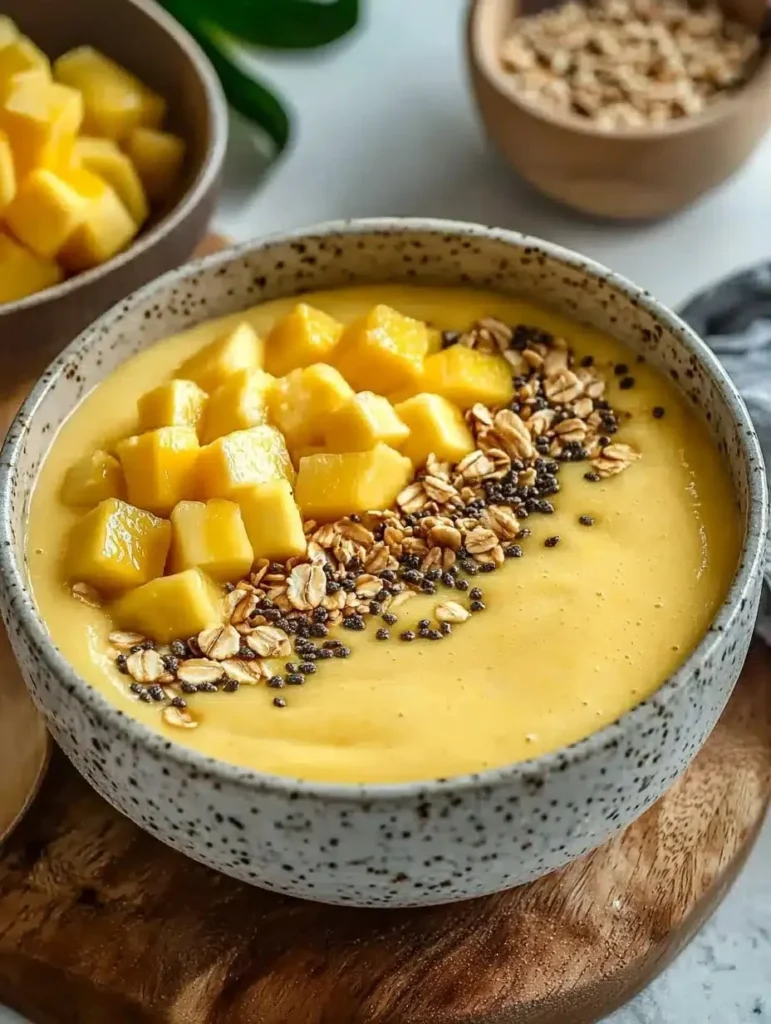
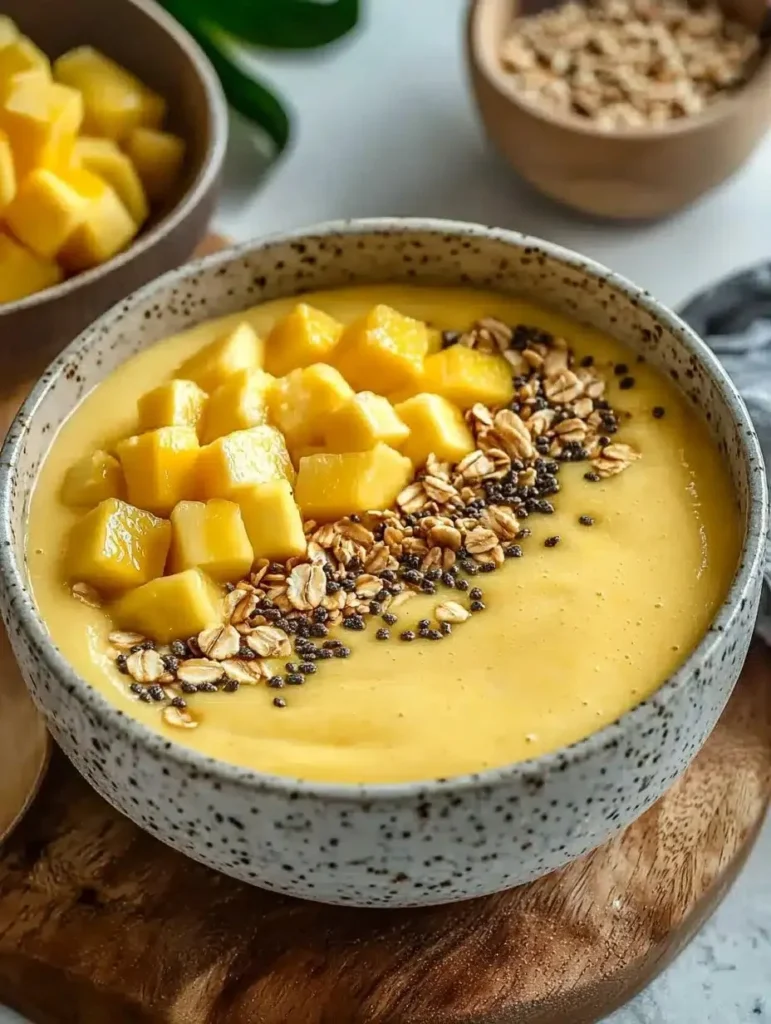
Close your eyes and imagine the first spoonful: the sun-warm sweetness of ripe mangoes, a bright, tangy kiss of fresh pineapple, and a velvety, cool swirl of yogurt that slides across your tongue. The aroma is tropical and inviting — floral mango top notes with a citrusy pineapple zip. Texture plays center stage: lush, creamy base punctuated by the gentle crunch of chia seeds and the toasted snap of granola. This Mango Pineapple Smoothie Bowl feels like a mini vacation in a bowl, one that lifts you the moment morning light hits the kitchen.
It’s perfect for lazy weekend brunches, quick weekday breakfasts, post-workout refueling, or as a colorful addition to summer gatherings. If you love bright breakfast bowls that pair well with baked treats, you might also enjoy the hearty sweetness of gluten-free pancakes for a leisurely brunch — they complement this smoothie bowl wonderfully.
At a Glance
- Prep Time: 5–8 minutes
- Cook Time: 0 minutes
- Total Time: 5–8 minutes
- Servings: 2 bowls (adjust proportions as needed)
- Difficulty Level: Easy — blender required
Nutrition Highlights
Estimated nutrition per serving (recipe yields 2 servings). Values are approximated using USDA FoodData Central reference values and rounded for clarity; actual values will vary with ingredient brands and substitutions.
Nutrition per serving (using plain nonfat Greek yogurt and unsweetened almond milk):
- Calories: ~250 kcal
- Protein: ~14 g
- Carbohydrates: ~45 g (including ~10 g fiber)
- Fat: ~3.5 g
- Sugars: ~22–28 g (naturally occurring from fruit; lower if honey omitted)
- Fiber: ~5 g
Notes on sources and accuracy: These estimates are based on standard portion sizes from USDA FoodData Central and general nutrition guidance from trusted sources such as the Mayo Clinic. If you choose coconut yogurt, sweetened milk, or add extra toppings like nut butters, expect higher calories and fat.
Why You’ll Love It
- Bright, tropical flavor that’s instantly uplifting — it tastes like summer even on gray mornings.
- Fast and fuss-free: ready in under ten minutes for busy schedules.
- Nutrient-dense: fruit provides vitamins A and C, Greek yogurt adds protein and probiotics (if live cultures), and chia seeds contribute fiber and omega-3s. (See Mayo Clinic guidance on dietary fiber for health benefits.)
- Versatile for diets: easy to make vegan, dairy-free, or protein-packed to match your goals.
- Social and Instagram-friendly: vibrant color and beautiful toppings make it a hit at brunches or casual get-togethers.
Step-by-Step Instructions
Ingredients (for 2 bowls)
- 1 ripe mango, peeled and diced (about 1 to 1 1/4 cups diced)
- 1 cup fresh pineapple, diced (about 165 g)
- 1 cup plain nonfat Greek yogurt (or 1 cup coconut yogurt for dairy-free)
- 1 cup unsweetened almond milk (or milk of choice)
- 1 tablespoon honey or maple syrup (optional, adjust to taste)
- 1 tablespoon chia seeds (for thickening)
Optional toppings (choose any):
- 1/2 cup granola
- 1 tablespoon shredded coconut (toasted if desired)
- 1 kiwi, sliced
- 1–2 tablespoons toasted almonds or cashews
- Fresh mint leaves
- Extra chia or hemp seeds
Substitutions:
- Dairy-free: use coconut or soy yogurt; choose full-fat coconut yogurt for creaminess (note the higher calories).
- Thicker base without yogurt: use 1/2 frozen banana or add an extra tablespoon of chia seeds.
- Sweetener: swap honey for pure maple syrup to make it vegan.
Directions
- Freeze option (optional): For an extra-thick, ice-cream-like texture, freeze diced mango and pineapple for 1–2 hours before blending.
- Add base ingredients to blender: place mango, pineapple, yogurt, almond milk, honey (if using), and chia seeds into a high-speed blender.
- Pulse and blend: blend on high until smooth and thick. Use short pulses at first, then blend continuously. If the mixture is too runny, add a few ice cubes or a small piece of frozen banana; if it’s too thick, add a splash more almond milk.
- Check texture: aim for a spoonable, soft-serve consistency — thick enough to hold toppings without sinking. Avoid overmixing; blending too long can warm the mixture and make it thinner.
- Portion into bowls: divide evenly between two bowls.
- Top and serve: add your chosen toppings (granola, sliced fruit, nuts, seeds, coconut) and serve immediately.
Practical tips:
- If using coconut yogurt, blend a little longer to fully integrate the creaminess.
- Chill bowls in the freezer for 5 minutes before serving to keep the bowl cold longer.
- If making ahead, slightly under-blend the base and finish blending just before serving for best texture.
Serving Suggestions
- Classic bowl: top with granola, sliced banana, shredded coconut, and a drizzle of honey.
- Tropical parfait: layer the smoothie base with alternating spoonfuls of crushed pineapple and toasted coconut flakes.
- Post-workout: add a scoop of vanilla whey or plant-based protein powder to the blender and top with sliced almonds for extra protein.
- For a cozy brunch spread: serve alongside a loaves or baked sweet breads such as a caramel banana loaf — try pairing with banana bread with caramel swirl for a sweet-salty balance.
- Beverage pairings: bright coffee blends, lightly brewed green tea, or iced herbal teas complement the tropical acidity well.
Shelf Life & Storage
- Room temperature: Do not leave smoothie bowls at room temperature for more than 1–2 hours (perishable dairy and fruit; follow general food safety guidance).
- Refrigeration: Store leftover smoothie base (without crunchy toppings) in an airtight container in the refrigerator for up to 24–48 hours. Stir well before serving; texture may thin — thicken with a little frozen fruit or additional chia.
- Freezer: The smoothie base can be frozen in portions for up to 2 months. Thaw in the fridge overnight and re-blend with a splash of milk before serving. Freeze fruit chunks separately for up to 3 months for quick future bowls.
Chef’s Advice
- Texture is everything: use some frozen fruit to create a creamy, thick base. If you want it scoopable like soft-serve, freeze half the mango or pineapple.
- Balance sweetness: choose ripe mangoes and pineapple so you can skip added sugars. Taste before adding honey or maple syrup.
- Use a tall, narrow blender jar for better circulation and creamier results; scrape down the sides between pulses.
- For extra silkiness, add a tablespoon of nut butter or a splash of coconut cream.
- Toast any seeds or nuts lightly in a dry pan for a minute to boost aroma and crunch.
Creative Twists
- Vegan & Protein-Packed: Use unsweetened soy yogurt (higher in protein than coconut yogurt), add 1 scoop plant-based protein powder, and top with roasted peanuts.
- Green Tropical Bowl: Add a handful of baby spinach or kale to the blender — the mango and pineapple will mask the greens while boosting nutrient density.
- Spiced Mango-Pineapple: Add 1/4 teaspoon ground turmeric and a pinch of black pepper for anti-inflammatory benefits, plus a subtle warm flavor.
- Dessert Version: Blend in 2 tablespoons coconut cream and top with dark chocolate shavings and macadamia nuts for a richer treat.
Recipe Q&A
Q: Can I use frozen fruit instead of fresh?
A: Yes — frozen fruit works great and yields a thicker, colder bowl. If all fruit is frozen, you may need slightly more liquid; add a splash of milk as needed.
Q: How do I fix a smoothie bowl that’s too runny?
A: Add a small handful of frozen fruit, an extra tablespoon of chia seeds, or refrigerate for 10–15 minutes to thicken. Re-blend briefly to combine.
Q: Is this bowl suitable for weight loss or a healthy diet?
A: It can be — the recipe provides vitamins, fiber, and protein (if using Greek yogurt). Be mindful of portion sizes and high-calorie toppings (e.g., lots of nut butters or sweetened granola). The Mayo Clinic recommends focusing on whole foods and appropriate portion control.
Q: Can I prepare the toppings ahead of time?
A: Absolutely. Toasted nuts, seeds, and granola keep well in airtight containers for a week or more, and sliced fruit can be prepped the morning of.
Q: What if I’m allergic to chia or nuts?
A: Swap chia for ground flaxseed for similar thickening and omega-3 benefits, and use seed-based toppings like pumpkin seeds if nuts are a concern.
Conclusion
This Mango Pineapple Smoothie Bowl is a bright, simple way to bring tropical flavor and nourishing ingredients to your table in minutes — perfect for busy mornings, casual brunches, or anytime you need a sunny pick-me-up. Try the optional variations to tailor it to your diet and appetite, and share your favorite topping combos with the community.
For a speedy fruit-forward bowl with a slightly different base and extra-quick technique, see this easy 5-Minute Acai Bowl Recipe (Vegan + Extra Easy!) – Bakerita, and for another tropical spin that emphasizes presentation and layerings, check out Tropical Mango Smoothie Bowl – Kitchen Confidante®.
Enjoy — and don’t forget to post a photo and tag your favorite brunch crew!