
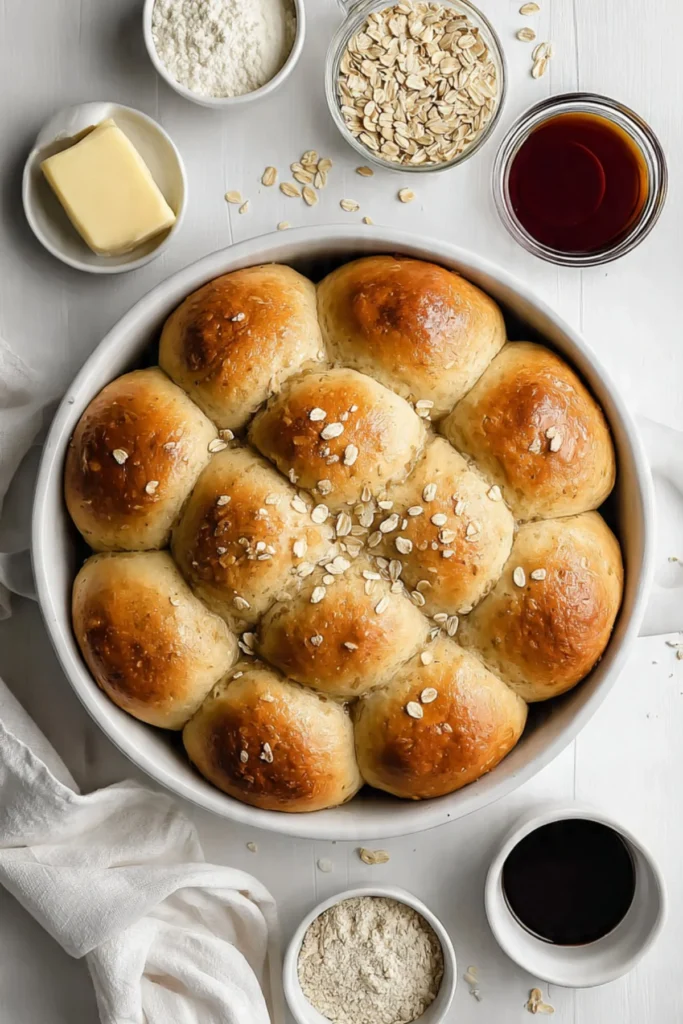
Oatmeal Molasses Dinner Rolls
Introduction
Close your eyes and imagine opening a pan of freshly baked rolls: the warm, caramel-rich scent of molasses mingles with toasted oats and butter; the crust gives a gentle crackle under your fingers and a pillow-soft crumb yields a melt-in-your-mouth bite. These oatmeal molasses dinner rolls are comfort shaped into twelve golden rounds—sweet but not cloying, hearty yet tender, and just the sort of thing that turns ordinary meals into moments worth savoring.
This recipe is perfect for chilly breakfasts, cozy dinner tables, holiday spreads, or when you want a simple, warming bread to share with friends. If you need a gluten-free option, check this helpful guide to gluten-free dinner rolls with oats for ideas on adapting oat-forward recipes while keeping texture and flavor.
Dish Snapshot
- Prep Time: 20 minutes active (plus 10 minutes to soak oats, 1 hour + 30–40 minutes rising)
- Cook Time: 20–25 minutes
- Total Time: Approximately 2 hours (including rising)
- Servings: 12 rolls
- Difficulty Level: Beginner to Intermediate — straightforward steps, a little kneading and patience required
Nutrition Highlights
Estimated nutrition per roll (1 of 12). Values calculated using USDA FoodData Central ingredient profiles and rounded for clarity; consider this an estimate for home baking rather than a clinical measurement.
- Calories: ~208 kcal
- Protein: ~5.5 g
- Carbohydrates: ~33 g
- Sugars: ~6 g
- Fiber: ~1.5 g
- Fat: ~5.6 g
- Sodium: ~250 mg
These values are derived from standard entries for rolled oats, whole milk, molasses, butter, egg, and all-purpose flour (USDA FoodData Central). For modifications (lower-fat milk, less butter, or whole-grain flour) these numbers will change—refer to authoritative sources like the USDA database or guidance from the Mayo Clinic for diet-specific adjustments.
Why You’ll Love It
There’s a lot to adore here: the aroma alone invites people to the table, and the molasses lends a deep, almost toasty sweetness that balances the wholesome chew of oats. These rolls evoke family dinners and holiday gatherings—the kind of bread that disappears first at the table. They’re also forgiving: the recipe is straightforward, and the oats add moisture so the rolls stay tender for a day or two. If you’re feeding a crowd or craving something that feels both rustic and refined, these hits all the right notes.
Step-by-Step Instructions
Ingredients
- 1 cup rolled oats
- 1 cup warm milk (about 110°F / 43°C)
- 2 teaspoons active dry yeast
- 1/4 cup molasses
- 1/4 cup unsalted butter, melted
- 1 large egg
- 3 cups all-purpose flour
- 1 teaspoon salt
- 1/4 cup warm water if needed (optional)
Optional ingredients and substitutions:
- Swap whole milk for low-fat or non-dairy milk (almond or oat milk) for a lighter or dairy-free option.
- Replace butter with neutral oil (canola or melted coconut) to make the rolls dairy-free.
- For a deeper flavor, use dark molasses; for milder sweetness, use light molasses or reduce quantity by 1 tablespoon.
- To make them whole-grain: substitute up to 1 cup of the all-purpose flour with whole-wheat flour (expect slightly denser rolls).
- For a vegan version: replace the egg with a flax "egg" (1 tbsp ground flax + 3 tbsp water, rested until gelled) and use a plant-based butter.
Directions
- Combine oats and warm milk in a medium bowl. Let sit 10 minutes to soften the oats and cool slightly.
- Stir in the active dry yeast into the oat-milk mixture and let it sit 5 minutes until foamy.
- Add the molasses, melted butter, and the egg to the mixture; whisk lightly to combine.
- In a large bowl, whisk together the all-purpose flour and salt. Add the wet mixture to the dry and stir until a shaggy dough forms.
- Turn the dough out onto a lightly floured surface and knead for 8 to 10 minutes until smooth and elastic. If dough feels very dry, add warm water 1 tablespoon at a time (up to 1/4 cup) until it comes together.
- Place the kneaded dough in a lightly oiled bowl, cover with a clean towel or plastic wrap, and let rise in a warm place for about 1 hour or until doubled in size.
- Punch down the risen dough and divide into 12 equal pieces. Shape each into a tight ball and arrange in a greased 9×13-inch (or similar) baking dish, leaving small gaps between rolls.
- Cover and let the rolls rise a second time for 30 to 40 minutes until puffy.
- Preheat your oven to 180°C (350°F). Bake the rolls for 20 to 25 minutes, or until golden brown on top and the internal temperature reads about 190–200°F (88–93°C) with an instant-read thermometer.
- Remove from oven, brush tops with a little extra melted butter if desired, and serve warm.
Practical tips:
- Avoid overmixing once the flour is added; mix until just combined before kneading to develop gluten without toughening the rolls.
- If you don’t have a warm spot for rising, set the bowl in your oven with the oven light on (do not turn the oven on).
- Test doneness by tapping the bottom of a roll—it should sound hollow—or use an instant-read thermometer.
- For evenly sized rolls, weigh the total dough and divide by 12 for consistent portions.
Best Pairings
- Classic: Warm with salted butter—simple and irresistible.
- Breakfast: Split and toast lightly, then spread with cream cheese or honey butter; pair with coffee or a spiced chai.
- Dinner: Serve alongside roast chicken, stews, or a winter vegetable pot roast—the hearty oats stand up well to saucy mains.
- Sandwich-style: Use the cooled roll as a bun for leftover turkey or a ham-and-cheddar slider.
- For a sweet touch: Brush with honey-butter before serving and sprinkle with toasted oats or coarse sea salt for contrast.
Also, if you’re exploring more specialized roll recipes, this resource on gluten-free dinner roll options may spark ideas for serving to guests with dietary needs.
Keeping it Fresh
- Room temperature: Store cooled rolls in an airtight container or tightly wrapped at room temperature for up to 2 days. Keep them away from direct sunlight or heat.
- Refrigeration: If you prefer or need longer storage, refrigerate in an airtight container for up to 4–5 days. Note: refrigeration can slightly dry bread; briefly reheat in a warm oven or microwave with a damp paper towel to refresh.
- Freezer: For longer storage, freeze rolls individually wrapped in plastic and then placed in a freezer bag for up to 3 months. Thaw overnight in the fridge or reheat from frozen at 300°F (150°C) for 10–15 minutes until warmed through.
Chef’s Advice
- Oat texture: Use old-fashioned rolled oats for the best chew and texture—instant oats become too mushy and steel-cut oats are too coarse in this application.
- Molasses balance: Molasses is strong—if you prefer subtler sweetness, reduce the amount by 1 tablespoon and compensate with a touch of brown sugar or honey.
- Knead for elasticity: Proper kneading (8–10 minutes) develops the gluten needed for a light, airy crumb. If you have a stand mixer with a dough hook, knead on low for 6–7 minutes instead.
- Temperature cues: Dough that doesn’t rise well often indicates the yeast was exposed to liquid that was too hot (killed the yeast) or too cold (inactive). Aim for milk around 110°F/43°C.
- Browning tip: If the tops brown too quickly during baking, tent loosely with foil for the last 5–10 minutes.
Switch It Up!
- Vegan variation: Replace egg with a flax egg (1 tablespoon ground flax + 3 tablespoons water, set 5 minutes), swap butter for a plant-based spread, and use plant milk. The oats keep the crumb moist.
- Honey-Molasses Twist: Replace half the molasses with honey for a floral, less intense molasses flavor. Adds a great glaze potential when mixed with a little butter.
- Spice & Seed Rolls: Add 1 teaspoon cinnamon and 1/2 teaspoon ground ginger to the dough for autumnal warmth; press a sprinkle of sesame, poppy, or rolled oats on top before baking.
- Gluten-reduced approach: Replace up to 1 cup of the all-purpose flour with oat flour (home-ground rolled oats) and add 1 tablespoon vital wheat gluten if you want to maintain elasticity; for fully gluten-free, follow tested gluten-free roll recipes like those linked above.
All Your Questions Answered
Q: Can I make this dough ahead and refrigerate the rise overnight?
A: Yes—after the first knead, refrigerate the dough (covered) for up to 24 hours. Allow it to come to room temperature and finish the second rise before shaping and baking.
Q: My rolls are dense—what went wrong?
A: Likely under-kneading (not enough gluten development), too little rise time, or the yeast was inactive. Check yeast freshness and give the dough time to double.
Q: How can I reduce sugar without losing texture?
A: Molasses contributes both flavor and moisture; reduce by 1 tablespoon and replace with an equal small amount of brown sugar or apple sauce if needed to maintain moisture.
Q: Are these suitable for kids or meal prep?
A: Absolutely—these rolls freeze well and make great snack or sandwich bases for lunches. Reheat briefly before serving.
Q: Can I make smaller dinner rolls or sliders?
A: Yes—divide dough into 18–24 pieces instead of 12 and reduce baking time by a few minutes; monitor color and internal temperature.
Conclusion
If you love bread that feels like a warm hug—slightly sweet, wholesome, and perfect for sharing—these oatmeal molasses dinner rolls are worth the time. For an inspiring, tested take on this classic, see the detailed technique and notes at Sally’s Baking Addiction: Oatmeal Molasses Dinner Rolls, and for another beloved variation with tips on shaping and flavor, check out Food52’s Heavenly Oatmeal-Molasses Rolls.
Try the recipe, tuck a warm roll into your hands, and let me know how they turn out—share photos or questions in the comments so we can bake together.