Pulled Beef Yorkshire Pudding
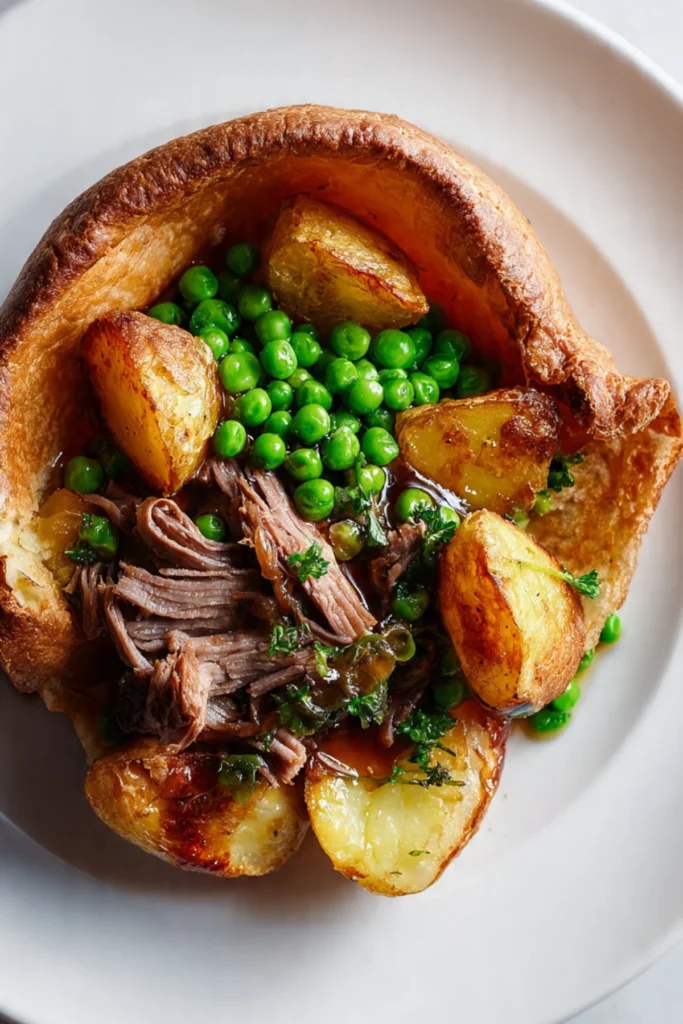
The first bite of a Pulled Beef Yorkshire Pudding is pure comfort: steam rises as the warm, savory aroma of slow-braised beef and roasted potatoes mingles with a faint, toasty scent from the Yorkshire shell. The pulled beef is meltingly tender, peppered with caramelized onion and sweet carrot notes; the potatoes give a golden, crisp contrast; and the Yorkshire pudding wraps it all in a light, eggy cradle that soaks up jus without going soggy. It’s rich, homey, and oddly celebratory — the kind of food that feels like a hug on a plate.
This dish is perfect for lazy weekends, cozy dinners, or when you want to impress guests without fuss. It’s equally at home on a Sunday roast table or as a shareable crowd-pleaser for casual gatherings. If you enjoy pulled beef in other formats, you might also like this flavorful Mexican pulled beef for a different spice profile.
At a Glance
- Prep Time: 30 minutes active (plus 4–6 hours slow-cooking)
- Cook Time: 4–6 hours (slow cooker or low oven) + 30–40 minutes for potatoes and Yorkshire pudding
- Total Time: 5–7 hours (including resting and roasting)
- Servings: 6
- Difficulty Level: Moderate — mostly hands-off slow cooking with a short finishing push in the oven
Dietary Insights
Nutrition estimates per serving (serves 6). These are approximate values calculated using USDA FoodData Central values for individual ingredients and typical preparation methods. For context on daily values and healthy intake, sources such as the CDC and Mayo Clinic were referenced.
- Calories: ~614 kcal
- Protein: ~40 g
- Carbohydrates: ~42 g
- Total fat: ~33 g
- Dietary fiber: ~4 g
- Sodium: variable depending on added salt (estimate: 350–600 mg)
- Vitamins & minerals: Good source of iron (from beef), B vitamins (eggs and beef), potassium (potatoes), vitamin A (carrots), and fiber (peas and potatoes)
Notes:
- These values are estimates and will shift if you use fattier or leaner beef, low-fat milk, or change oil amounts.
- For precise nutrition tracking, weigh your actual portions and consult USDA FoodData Central or a nutrition calculator.
Why You’ll Love It
This dish combines nostalgia and novelty: familiar British comfort (Yorkshire pudding) meets the modern, shareable allure of pulled beef. It smells like Sunday afternoons; it feeds a crowd without fuss and offers layers of texture — silky pulled beef, crisp-roasted potatoes, tender vegetables, and a pillowy, slightly crisp pudding. It’s perfect for family dinners, weekend brunch twists, or when you want a cozy main that doubles as a conversation piece.
How to Make Pulled Beef Yorkshire Pudding
Ingredients
- Beef chuck or brisket: 1.5 to 2 pounds
- Onion: 1 medium, chopped
- Carrots: 2, peeled and chopped
- Potatoes: 4 medium, peeled and diced
- Frozen peas: 1 cup
- Eggs: 3 large
- Flour: 1 cup
- Milk: 1 cup
- Salt and pepper: To taste
- Vegetable oil: For roasting and pudding (about 3–4 tablespoons total)
- Water or beef broth: Enough to cover the bottom of the roasting pan (about 1–2 cups)
- Optional: Worcestershire sauce or red wine (1/4 cup) to enrich the braising liquid
Optional ingredients and substitutions:
- Use low-fat milk to reduce calories (note: texture of pudding slightly lighter).
- Swap vegetable oil with beef drippings for richer flavor.
- For a gluten-free pudding: substitute a gluten-free flour blend designed 1:1 for wheat flour.
- Replace potatoes with sweet potatoes for a sweeter finish.
- Add a sprig of rosemary or thyme to the roasting pan for aromatics.
Step-by-step Instructions
- Preheat the oven to 400°F (200°C).
- Season the beef generously with salt and pepper. In a heavy roasting pan or braising dish, combine the beef, chopped onion, and carrots. Add water or beef broth to cover the bottom of the pan (about 1–2 cups) so the vegetables and beef can braise rather than boil.
- Add optional Worcestershire sauce or red wine if using. Cover tightly with foil or a lid and place in the oven, or transfer to a slow cooker set to low.
- Slow-cook the beef for 4–6 hours (or until it shreds easily with a fork). If using a slow cooker, check at 4 hours for tenderness. Tip: The beef is ready when an inserted fork meets very little resistance and strands pull apart.
- While the beef is finishing, prepare the potatoes: toss diced potatoes with 1–2 tablespoons oil, salt, and pepper. Roast on a separate baking sheet at 400°F (200°C) for 30–40 minutes until golden and crisp, turning once.
- Prepare the Yorkshire pudding batter about 30 minutes before you plan to bake it: whisk together eggs, flour, milk, and a pinch of salt until smooth. Rest the batter at room temperature for 20–30 minutes (this helps create a better rise).
- Heat the vegetable oil in a muffin tin or a large baking dish for the Yorkshire pudding in the oven until it’s very hot (a drop of batter should sizzle on contact).
- Pour the rested batter into the hot oil (fill each well ~1/2–2/3 full) and return to the oven. Bake until the puddings are puffed and golden, about 15–20 minutes. Do not open the oven while they’re rising.
- Once the pulled beef is ready, shred it with two forks, reserving some of the braising liquid to moisten if needed. Stir in frozen peas and warm through for 2–3 minutes.
- Assemble: place a Yorkshire pudding on a plate, fill with a generous portion of pulled beef, roasted potatoes, and peas. Garnish with chopped parsley or extra seasoning if desired.
- Serve immediately while the puddings are still puffed and the filling is hot. Enjoy the comforting flavors!
Practical tips:
- Avoid overmixing the batter; a few small lumps are fine. Overmixing can make puddings tough.
- Ensure oil is screaming hot before adding batter — this jump-starts the rise.
- If your beef is dry after shredding, add reserved braising liquid a tablespoon at a time to restore moisture.
- For an alternate, hands-off approach, try adapting the braise for a slow cooker similar to slow-cooker pulled beef bowls and finish puddings in the oven.
Presentation Tips
- Serve each pudding open-faced and overflowing with beef and potatoes for a rustic, generous presentation.
- Garnish with chopped parsley, a squeeze of lemon (for brightness), or horseradish cream on the side for a little kick.
- For a buffet, present puddings in a shallow tray and let guests top their own; include small bowls of pickles or chutney for contrast.
- Pair with a simple green salad dressed in vinaigrette to cut through richness.
Storage Instructions
- Room temperature: Not recommended to keep for more than 2 hours; food safety standards advise against prolonged room-temp storage.
- Refrigeration: Store in airtight containers for up to 3–4 days. Keep the beef and Yorkshire puddings separate where possible (puddings retain better texture if reheated alone).
- Freezer: Freeze pulled beef (without potatoes/puddings) for up to 3 months in a freezer-safe container. Thaw overnight in the refrigerator before reheating.
- Reheating: Gently reheat shredded beef in a saucepan with a splash of beef broth. Re-crisp Yorkshire puddings in a 350°F oven for 5–8 minutes rather than the microwave to restore texture.
Chef’s Advice
- Choose well-marbled chuck for the best flavor and tenderness when slow-cooked; brisket works well too but can be slightly firmer.
- Patience is key: low and slow braising breaks down collagen into gelatin, giving you that silky pulled texture.
- Keep some of the braising liquid aside — it’s gold for moistening meat and making a quick gravy.
- For taller puddings, use a hot, preheated metal muffin tin and avoid opening the oven during baking.
- When shredding, pull across the grain for the most tender strands.
Fun Flavor Ideas
- Smoky & Spicy: Add 1–2 teaspoons smoked paprika and a splash of chipotle in adobo to the braise for warmth and depth.
- Red Wine Braise: Substitute 1 cup of beef broth with red wine in the braising liquid for a richer, more robust gravy (similar in concept to classic braises).
- Vegetarian Twist: Make a hearty mushroom and root-vegetable filling (use portobello, lentils, and slow-roasted carrots) and serve in the same Yorkshire pudding shells for a meat-free alternative.
- Gluten-free: Use a certified gluten-free flour blend for the pudding; ensure any Worcestershire sauce or broth used is gluten-free.
All Your Questions Answered
Q: Can I use a different cut of beef?
A: Yes — brisket or chuck are best for braising. Leaner cuts (like round) can be used but may be less tender and require careful attention to moisture.
Q: My Yorkshire puddings didn’t rise — what happened?
A: Common reasons are batter too cold, oil not hot enough, or opening the oven during baking. Let the batter rest and ensure oil is smoking hot.
Q: Can I make this ahead?
A: Yes. Braise the beef a day ahead and reheat gently. Bake Yorkshire puddings just before serving for best texture.
Q: How can I make a lighter version?
A: Use leaner beef, low-fat milk, and reduce oil. Substitute some roasted potatoes with additional vegetables or cauliflower mash to lower carbs.
Conclusion
If you’re searching for a dish that blends the cozy familiarity of a British classic with the pull-apart satisfaction of slow-braised beef, this Pulled Beef Yorkshire Pudding is a winner — soulful, shareable, and surprisingly versatile. For inspiration on an even richer braise technique, check out this excellent recipe for red wine-braised shredded beef brisket at The Best Red Wine Braised Shredded Beef Brisket – Tastes of Thyme, and for bite-sized party-friendly presentation ideas, see these mini roast beef Yorkshire pudding bites at Mini Roast Beef Yorkshire Pudding Bites – Culinary Ginger.
I’d love to hear how your puddings rise and which variations you try — share your photos and tips in the comments or on social media and let’s build a community around good, comforting food.