
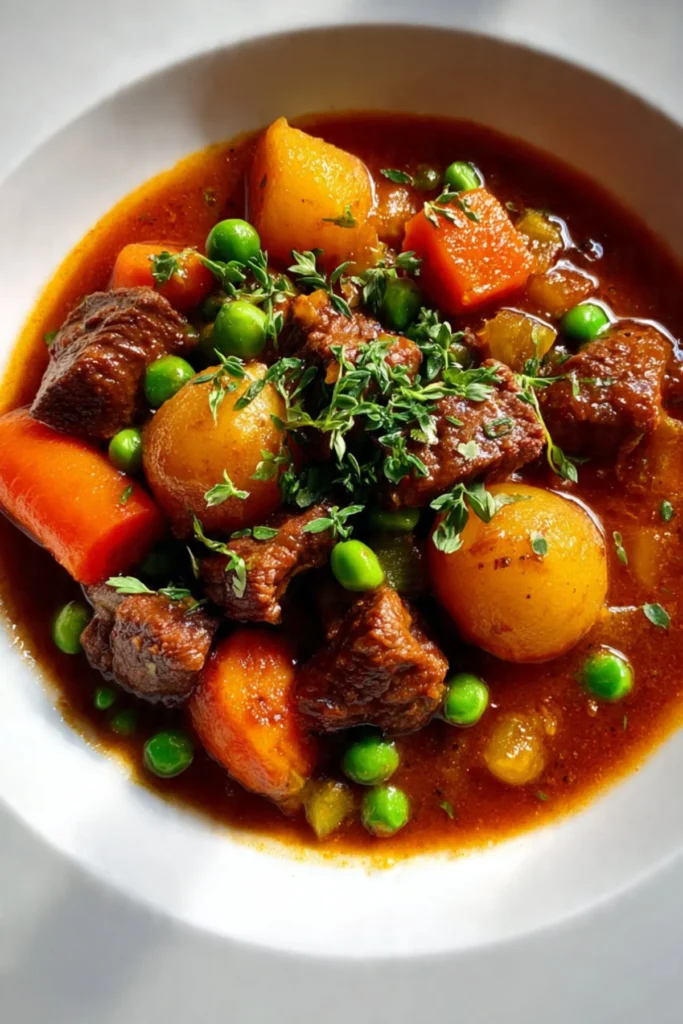
Slow Cooked Beef Stew
There’s something almost magical about a pot of slow cooked beef stew: the kitchen fills with a warm, savory perfume of searing beef, garlic, thyme, and rich tomato that promises comfort before the first spoonful. When you finally lift the lid, the beef pulls apart into tender ribbons and the vegetables surrender into soft, melt-in-your-mouth goodness. Each bowl delivers a harmony of textures — silky broth, fork-tender beef, and chunks of potato that hold just enough shape to give each bite a satisfying bite — and a nostalgic flavor that feels like home.
This recipe is perfect for chilly evenings when you want to come home to a ready-made meal, for relaxed weekend gatherings where the slow cooker does the heavy lifting, or for meal-prep days when you want a hearty, reheatable dinner all week. If you’re in the mood to explore variations or compare techniques, check out this take on a tangy twist with red apple vinegar here: best beef stew with red apple vinegar sauce.
Dish Snapshot
- Prep Time: 20 minutes
- Cook Time: 6–7 hours (low)
- Total Time: 6 hours 20 minutes (active time ~20 minutes)
- Servings: 6
- Difficulty Level: Easy — great for beginners and busy cooks
Nutrition Information
The nutritional values below are approximate per serving (serves 6) and were estimated using USDA FoodData Central nutrient profiles and general guidance from government nutrition resources. Actual values will vary depending on exact cut of beef, the brand of beef broth, and whether additional oil or garnishes are used.
Approximate nutrition per serving:
- Calories: ~520 kcal
- Protein: ~43 g
- Carbohydrates: ~29 g
- Fat: ~26 g
- Fiber: ~5 g
- Sodium: variable — typically 400–900 mg (use low-sodium broth to reduce this)
Notes on accuracy: these estimates combine numeric data for the full recipe and divide by six servings. For precise tracking (important for strict dietary plans), weigh your specific ingredients and consult USDA FoodData Central or professional nutrition tools.
Why You’ll Love It
- Irresistible aroma and flavor: The slow, gentle cooking lets the beef develop deep, savory notes while the tomato paste and thyme create a rounded, slightly sweet backbone.
- Comfort and memories: This stew evokes cozy family dinners and slow Sundays. It’s the kind of recipe that becomes associated with warmth and hospitality.
- Hands-off convenience: Once the stew is assembled and the slow cooker is set, the hard work is done — perfect for busy days or when you want dinner ready without fuss.
- Balanced and hearty: With a solid protein content and plenty of vegetables, it’s a satisfying single-dish meal that pairs well with bread or a simple salad for balance.
Step-by-Step Instructions
Ingredients
- Beef stew meat: 2 pounds
- Carrots: 3 medium, chopped
- Potatoes: 3 medium, diced
- Frozen peas: 1 cup
- Onion: 1 large, chopped
- Beef broth: 4 cups
- Garlic: 4 cloves, minced
- Tomato paste: 2 tablespoons
- Thyme: 2 teaspoons, dried
- Bay leaves: 2
- Salt and pepper: To taste
Optional ingredients and substitutions
- Use low-sodium beef broth to control sodium.
- Substitute sweet potatoes for regular potatoes for a slightly sweeter profile and more vitamin A.
- For added depth, deglaze the sauté pan with 1/2 cup red wine before transferring to the slow cooker.
- Swap 1–2 teaspoons of smoked paprika or a tablespoon of Worcestershire sauce for extra umami.
Method
- Set your slow cooker to low heat.
- In a sauté pan over medium-high heat, brown the beef stew meat for about 5 minutes, turning to get a good sear on all sides. (Tip: do not crowd the pan — brown in batches if needed.)
- Transfer the browned beef to the slow cooker.
- Add the carrots, potatoes, onion, garlic, thyme, bay leaves, tomato paste, and beef broth to the slow cooker. Stir to combine and scrape any browned bits from the pan into the cooker for extra flavor.
- Cover the slow cooker and cook on low for 6–7 hours, or until the beef and vegetables are tender and the flavors are melded.
- Add the frozen peas in the last 30 minutes of cooking, and season with salt and pepper to taste.
- Once the stew is cooked, remove the bay leaves and adjust seasoning as needed.
- Ladle the stew into bowls, garnish with fresh parsley, and serve with crusty bread for dipping.
Practical tips
- Avoid over-stirring in the last hour to prevent the potatoes from breaking down into mush.
- Check doneness at the 6-hour mark; slow cookers and cuts of meat vary — if meat isn’t fork-tender, extend cooking 30–60 minutes.
- If the stew is too thin at the end, whisk 1–2 tablespoons of cornstarch with cold water and stir into the hot stew, cooking an extra 10–15 minutes to thicken.
Best Pairings
- Crusty bread or sourdough for soaking up the broth.
- Buttery mashed potatoes in place of diced potatoes for a silkier texture.
- A simple green salad with a bright vinaigrette to cut through the richness.
- For drinks: a medium-bodied red wine (Merlot or Malbec) or a malty ale complements the beef.
- For a cozy brunch twist: serve leftovers with a fried egg on top and crusty toast.
Shelf Life & Storage
- Room temperature: Do not store stew at room temperature for more than 2 hours (follow food-safety guidelines).
- Refrigeration: Keep in an airtight container for up to 3–4 days.
- Freezer: Freeze in airtight containers for up to 3 months. Thaw overnight in the refrigerator before reheating.
- Reheating: Reheat on the stovetop over medium-low heat, stirring occasionally, until steaming. Add a splash of broth or water if it’s thickened too much.
Chef’s Advice
- Best cuts of beef: Choose chuck roast or stewing beef with some marbling — the connective tissue melts into gelatin while slow cooking, giving rich mouthfeel.
- Browning matters: Searing adds Maillard flavor; don’t skip it if you want depth.
- Texture cues: Beef is done when it shreds with a fork; potatoes are done when a fork slides through but they still hold shape.
- Salt late: Add most salt toward the end because stock reduction concentrates saltiness during long cooks.
- Make ahead advantage: Stew often tastes better the next day as flavors marry — consider making it a day ahead for gatherings.
Creative Twists
- Mediterranean twist: Add a splash of red wine, a teaspoon of smoked paprika, and finish with chopped olives and a squeeze of lemon for brightness.
- Hearty Guinness-style: Substitute 1 cup beef broth with 1 cup stout beer and add a tablespoon of Worcestershire sauce for deep, savory notes.
- Lighter & gluten-free: Swap potatoes for extra root vegetables (parsnips, rutabaga) and ensure cornstarch is used as a thickener if needed — naturally gluten-free.
- Vegetarian option: Replace beef with robust mushrooms (king oyster or portobello slices), use vegetable broth, and add a can of drained beans for protein — cook similarly but on low for 4–5 hours.
Recipe Q&A
Q: Can I use bone-in beef or a different cut?
A: Yes — bone-in short ribs or chuck add flavor; adjust cooking time if pieces are much larger. Ensure meat is fork-tender.
Q: My stew is watery — how can I thicken it?
A: Mix 1–2 teaspoons cornstarch with cold water and stir into the hot stew; simmer 10–15 minutes. Alternatively, mash a few potato chunks into the broth to thicken naturally.
Q: How do I reduce sodium?
A: Use low-sodium or homemade broth and taste before adding extra salt. Herbs, citrus, and acid (a splash of vinegar) enhance flavor without salt.
Q: Can I brown everything in the slow cooker instead of sautéing?
A: Some slow cookers have a sauté function. If yours does, you can brown in it. Otherwise, searing in a pan adds better caramelization.
Q: What can I do with leftovers?
A: Leftover stew is excellent over mashed potatoes, with pasta, inside a baked potato, or as a hearty pie filling topped with puff pastry.
Conclusion
This slow cooked beef stew is a dependable, soulful recipe that rewards patience with layers of comforting flavor. Whether you’re feeding a family, hosting friends, or prepping meals for the week, it’s a versatile dish that invites creativity and sharing. For an alternate slow-cooker approach and extra tips, see this cozy variation at Slow Cooker Beef Stew – The Cozy Cook, and for a budget-friendly crockpot method try this guide at Crockpot Beef Stew – Budget Bytes.
If you make this stew, please share your photos and tweaks — I’d love to hear how you made it your own. And if you’re curious about other classic beef stew variations, take a look at this Italian-inspired version for more ideas: Italian beef stew inspiration.
