
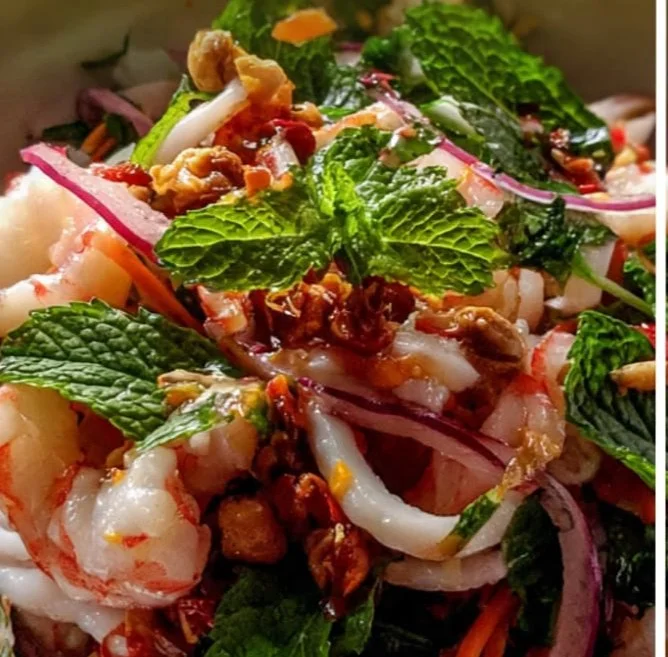
Vietnamese Seafood Salad
There’s a bright, lively hum to this Vietnamese Seafood Salad the moment it comes together—the citrusy snap of lime, the saline whisper of fish sauce, the sweet, briny perfume of just-cooked shrimp and tender squid. Each bite gives a pleasing contrast: the snap of cucumber and bell pepper, the silky chew of seafood, the cool sweetness of grated carrot, and the herbaceous lift of mint and cilantro. Close your eyes and you’ll feel beach-day freedom and kitchen-table comfort at once.
This salad is perfect for warm evenings when you want something light but satisfying, for lively gatherings as a refreshing shared plate, or as a quick, healthful lunch that feels anything but ordinary. If you enjoy pairing bold flavors across cuisines, you might also like exploring a Mediterranean counterpart; one great reference is this Mediterranean potato salad recipe, which shares the same spirit of bright, herb-forward dressing and crunchy veg.
Dish Snapshot
- Prep Time: 15 minutes
- Cook Time: 5–7 minutes (for seafood)
- Total Time: 20–25 minutes
- Servings: 4 as a light main, 6 as an appetizer
- Difficulty Level: Easy — great for cooks of all levels
Nutrition Highlights
Approximate nutrition per serving (recipe yields 4 servings). These estimates are calculated using standard values from USDA FoodData Central and rounded for clarity; actual values will vary with exact seafood size and brands used.
- Calories: ~195 kcal
- Protein: ~30 g
- Carbohydrates: ~14 g
- Fat: ~1.5 g
- Fiber: ~1.8 g
- Sodium: variable; often 700–900 mg (depending largely on fish sauce quantity)
Notes: seafood provides the bulk of the protein with very little fat, while the dressing contributes most carbohydrates when sugar is used. If you’re watching sodium, choose a low-sodium fish sauce or reduce the amount—fish sauce is the main source of salt. (Source: USDA FoodData Central; general sodium guidance from Mayo Clinic.)
Why You’ll Love It
- Flavor & Texture Highlights: This salad balances sweet, sour, salty, and (if you like) spicy in one bowl. The contrast between tender seafood and crisp vegetables keeps each bite lively.
- Ease & Speed: Ready in about 20 minutes—ideal when you want something fresh without a long cook.
- Social & Seasonal Appeal: It’s a favorite for alfresco entertaining and summer potlucks, but also brightens holiday spreads as a palate-cleansing starter.
- Health Benefits: Low in saturated fat, high in lean protein, packed with fresh vegetables and herbs—this is a nutrient-dense dish that feels indulgent without heaviness.
Preparation Guide
Ingredients (serves 4)
- 12 oz (340 g) medium shrimp, peeled and deveined
- 8 oz (225 g) squid (calamari) tubes, cleaned and sliced into rings
- 1 large red bell pepper (about 150 g), thinly sliced
- 1 medium cucumber (about 200 g), halved lengthwise and thinly sliced
- 1 large carrot (about 70 g), grated or julienned
- 1/2 cup fresh mint leaves, roughly torn
- 1/2 cup fresh cilantro leaves, roughly chopped
- 3 tbsp fresh lime juice (about 1–2 limes)
- 2 tbsp fish sauce (use low-sodium if preferred)
- 2 tbsp granulated sugar (or 1 tbsp honey or to taste)
- 1 fresh red chili, thinly sliced (optional; to taste)
- 1–2 tbsp toasted peanuts or fried shallots for garnish (optional)
Optional ingredients and substitutions
- Swap lime juice for rice vinegar (1–1) for a milder tang.
- Replace sugar with honey, agave, or a low-calorie sweetener to taste.
- Omit seafood and use firm tofu (pressed and quickly pan-seared) for a vegetarian version.
- Add rice vermicelli or glass noodles to make it heartier.
Step-by-step instructions
- Bring a large pot of water to a rolling boil and season lightly. Add shrimp; cook until pink and opaque, about 1–2 minutes depending on size. Remove with a slotted spoon. Add squid to the same boiling water and cook 30–60 seconds until just tender (squid becomes rubbery if overcooked). Drain both and transfer to a bowl of ice water to stop cooking; drain again and pat dry.
- Tip: Don’t overcook—shrimp should be firm and pink, squid should be opaque and tender. Using ice water keeps seafood firm and prevents carryover cooking.
- Prepare the vegetables: thinly slice the bell pepper and cucumber; grate or julienne the carrot; place them in a large mixing bowl.
- Tip: For uniform texture and quicker assembly, slice vegetables into similar-width matchsticks.
- Make the dressing: in a small bowl, whisk together lime juice, fish sauce, sugar (or sweetener), and sliced chili if using. Taste and adjust—add more lime for acidity, a touch more sugar to balance, or more fish sauce for saltiness.
- Combine: add the drained shrimp and squid to the bowl with vegetables, then add mint and cilantro. Pour the dressing over the salad and toss gently to combine.
- Tip: Toss gently and briefly to avoid bruising delicate herbs; let the salad rest 5–10 minutes for flavors to marry.
- Garnish with toasted peanuts or fried shallots for crunch. Serve chilled or at cool room temperature.
- Enjoy! This salad is best the day it’s made but keeps well refrigerated for short-term storage (see Storage Instructions).
Best Pairings
- As a light main: serve with steamed jasmine rice or a bed of cold rice noodles for a more filling meal.
- As part of a spread: pair with grilled lemongrass chicken, fresh spring rolls, or crisp Vietnamese-style banh mi sandwiches.
- Beverage pairings: a crisp dry Riesling or a citrusy lager complements the salad’s acidity; for nonalcoholic options, iced jasmine tea or sparkling lime soda works beautifully.
- For a contrasting texture, serve with warm buttered baguette slices or simple rice crackers.
Storage Instructions
- Room temperature: Not recommended for seafood salads—do not keep at room temperature for more than 2 hours (1 hour in hot conditions) due to food-safety concerns.
- Refrigeration: Store in an airtight container for up to 2 days. For best texture, keep dressing separate and toss just before serving if you plan to store leftovers. Note: vegetables will soften over time and seafood texture will change after the first day.
- Freezer: Not recommended. Freezing cooked shrimp and squid changes texture (becoming rubbery and watery) and will degrade the fresh vegetables.
Chef’s Advice
- Seafood selection: Use fresh, firm shrimp and squid from a trusted supplier. If using frozen, thaw in the fridge overnight and pat thoroughly dry before cooking.
- Don’t skip the rest: Allowing the salad to sit 5–10 minutes after dressing lets the flavors meld without losing crunch.
- Balance is everything: Taste the dressing before combining—the lime-to-fish-sauce-to-sugar ratio can be adjusted to personal preference. If the dressing tastes too salty, add more lime or a pinch of sugar; if too tangy, a small touch more fish sauce or sugar will round it out.
- Texture keys: Keep the herbs added at the end to preserve their fresh texture and color. Garnishes (peanuts, shallots) are optional but elevate the mouthfeel.
Creative Twists
- Vegan version: Replace seafood with firm tofu (pressed and pan-seared) or blanched king oyster mushroom strips for a meaty bite, and swap fish sauce for a mixture of soy sauce + a little miso or mushroom seasoning.
- Tropical flair: Add segmented mango or pineapple for a sweet-tart counterpoint; reduce sugar in dressing accordingly.
- Spicy-sesame variant: Stir 1 tsp toasted sesame oil and 1 tsp sesame seeds into the dressing, and add a drizzle of sriracha for heat.
- Noodle salad: Toss the salad with cold rice vermicelli for a heartier Vietnamese noodle salad (this turns it into a complete main).
Frequently Asked Questions
Q: Can I make this ahead?
A: You can prep the components (cook seafood, slice vegetables, make dressing) a few hours ahead. Store separately and toss just before serving to preserve crunch.
Q: What can I substitute for fish sauce?
A: For vegetarian or lower-sodium options, use a blend of low-sodium soy sauce with a splash of lime and a pinch of seaweed powder or mushroom broth to mimic umami.
Q: How do I prevent squid from getting rubbery?
A: Cook squid very briefly—30–60 seconds in boiling water—or braise slowly for longer times; rapid overcooking is what makes it tough.
Q: Is this salad gluten-free?
A: As written, yes—shrimp, squid, and fresh produce are naturally gluten-free. If you substitute soy sauce for fish sauce, choose gluten-free tamari to keep it safe.
Q: How can I lower the sodium?
A: Reduce the fish sauce by half and add a pinch of salt only if needed; increase lime and herbs for flavor. You can also rinse canned seafood (if used) to reduce salt.
Conclusion
I hope this Vietnamese Seafood Salad inspires you to bring bold, fresh flavors to your table—quickly and confidently. If you’d like a noodle-centered take that pairs similar ingredients with rice vermicelli, check out Vietnamese Noodle Salad with Shrimp (Prawn) – RecipeTin Eats, and for another bright shrimp salad interpretation, see Vietnamese Shrimp Salad – The Lemon Bowl. Share your photos and variations in the comments—I love seeing how home cooks make a recipe their own.


